
The Comprehensive Guide to Modern Diets: What Actually Works in 2026
- What Do the New 2025–2030 Dietary Guidelines Actually Say?
- What Is a “Modern Diet” and Why Does It Matter?
- Which Established Diet Frameworks Have the Strongest Evidence?
- What Are the Major 2025–2026 Diet Trends Worth Paying Attention To?
- How Do You Actually Build a Diet That Works for You?
- What Are the Most Common Diet Mistakes Adults Make?
- How Does Inflammation Fit Into Modern Diet Thinking?
- Diet Finder: Which Modern Diet Suits You?
- Conclusion: What to Actually Do Next
Last updated: March 27, 2026
Quick Answer: There is no single best diet for everyone. The strongest evidence in 2026 points to whole, minimally processed foods, adequate protein (1.2–1.6g per kg of body weight), high-fiber carbohydrates, and healthy fats as the foundation of any sound eating pattern. The new 2025–2030 Dietary Guidelines for Americans [1] reinforce this direction. Everything else — timing, specific protocols, trending approaches — builds on that base.
In this article
- Featured Video: What Is a “Modern Diet” and Why Does It Matter?
- What Do the New 2025–2030 Dietary Guidelines Actually Say?
- What Is a “Modern Diet” and Why Does It Matter?
- Which Established Diet Frameworks Have the Strongest Evidence?
- What Are the Major 2025–2026 Diet Trends Worth Paying Attention To?
- How Do You Actually Build a Diet That Works for You?
- What Are the Most Common Diet Mistakes Adults Make?
- How Does Inflammation Fit Into Modern Diet Thinking?
- Diet Finder: Which Modern Diet Suits You?
Key Takeaways
- The 2025–2030 U.S. Dietary Guidelines, released January 7, 2026, mark the most significant shift in federal nutrition policy in decades, with “eat real food” as the central message [1]
- Protein recommendations have risen substantially to 1.2–1.6g per kg of body weight per day, up from the previous 0.8g minimum [2]
- The new guidelines recommend high-fiber carbohydrates and have significantly reduced carbohydrate portion guidance compared to the old food pyramid [3]
- Ultra-processed foods — including soda, chips, breakfast cereals, and packaged snacks — are now explicitly flagged for reduction [6]
- Healthy fats are back. The “low-fat era” guidance has been reversed based on better research [3]
- Emerging approaches like time-restricted eating (TRE), CGM-guided nutrition, GLP-1 compatible diets, and longevity eating are gaining traction — but the evidence base varies
- No diet works if you can’t sustain it. Consistency over perfection is the practical rule
- Always consult a qualified healthcare professional before making major dietary changes, especially if you have existing health conditions
What Do the New 2025–2030 Dietary Guidelines Actually Say?
The 2025–2030 Dietary Guidelines for Americans were released on January 7, 2026, and represent a meaningful departure from previous federal nutrition advice [4]. The central message is straightforward: eat real food, prioritize protein, cut ultra-processed items, and stop fearing healthy fats.
Here is what changed most:
Protein is now front and center. The new guidelines recommend 1.2 to 1.6 grams of protein per kilogram of body weight per day — a significant jump from the previous 0.8g minimum [2]. This is especially relevant for adults over 40, where muscle preservation becomes a genuine health priority. High-quality sources, including full-fat dairy with no added sugars, are specifically encouraged [1].
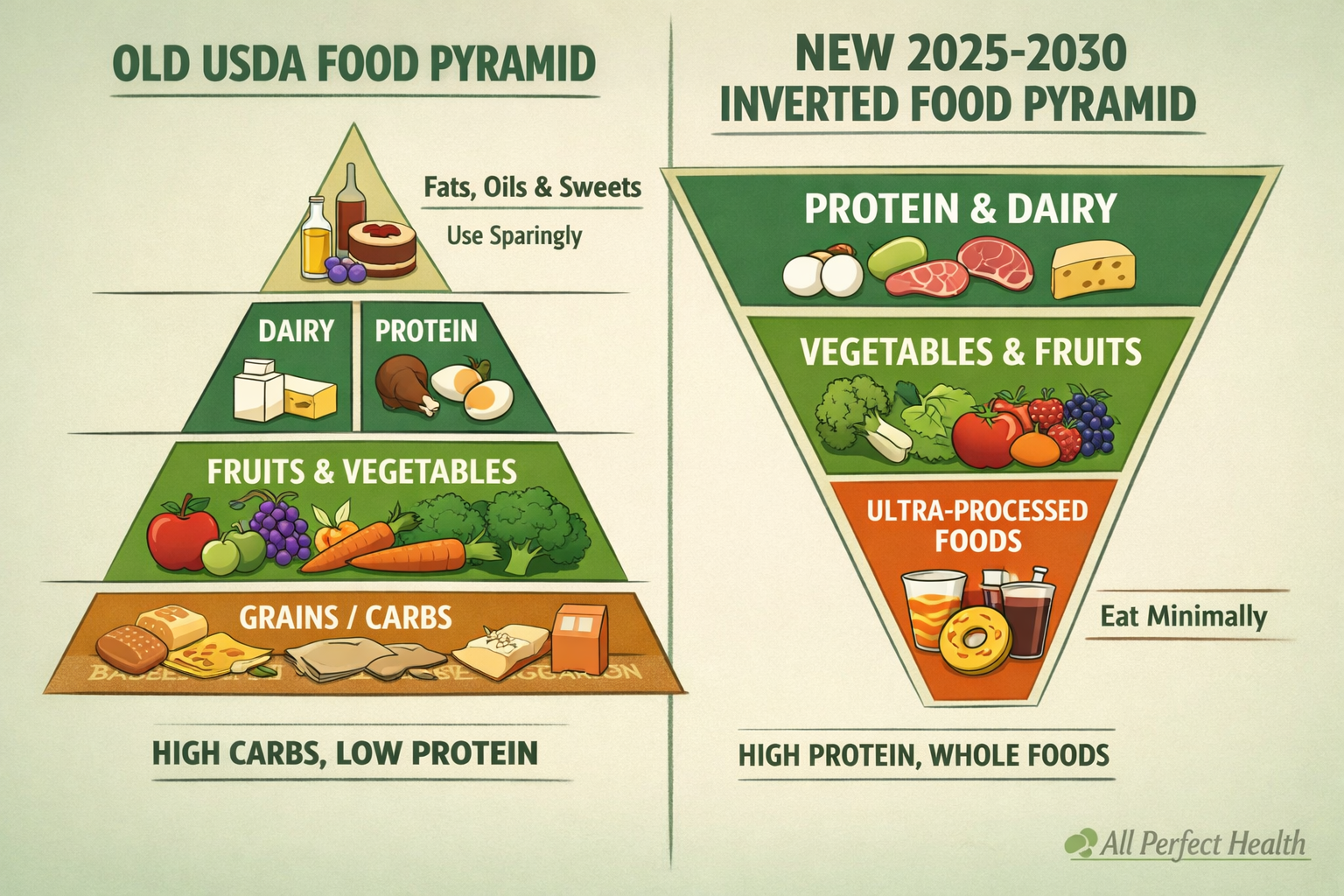
The food pyramid has been inverted. Protein and dairy now sit at the top. Grains — which once formed the entire base of the old pyramid — have been significantly scaled back. Carbohydrate portions have dropped from the original recommendation of 6–11 servings per day [3].
Added sugars and ultra-processed foods are out. The guidelines take a stronger stance here than any previous version, explicitly naming soda, chips, cookies, ice cream, breakfast cereals, soymilk, and canned vegetables with additives as foods to reduce [6].
Healthy fats are rehabilitated. Decades of “low-fat” messaging — based on research that has since been widely criticized — have been reversed. The guidelines now acknowledge the importance of healthy fats for long-term health [3].
One note of caution: Harvard Professor Frank Hu has raised concerns about mixed messaging around saturated-fat-rich foods like red meat and butter, noting the potential for confusion and elevated LDL cholesterol risk [2]. I would be careful with that. The shift toward healthy fats does not mean unlimited saturated fat. Context matters.
What Is a “Modern Diet” and Why Does It Matter?
In plain English, a modern diet refers to any structured or evidence-informed eating pattern that reflects current nutritional science — as opposed to outdated advice or fad-driven trends. This comprehensive guide to modern diets covers the full spectrum: established dietary frameworks, emerging protocols, and the practical decisions that sit between them.
Expert insight: Dave Asprey. Dave Asprey is the founder of Bulletproof and host of The Human Upgrade. His evidence-based approach to protein quality, metabolic flexibility, and ancestral eating patterns has influenced modern diet science.
The reason this matters is simple. Nutrition advice has changed substantially over the past decade. What was considered healthy in 2005 — low-fat yogurt, margarine, six servings of grain per day — looks very different from what the evidence supports in 2026. Health-conscious adults in their 30s to 60s are navigating a landscape where old advice and new research often conflict.
The basics still do the heavy lifting. Whole foods, adequate protein, vegetables, fiber, and limited ultra-processed items remain the foundation. Everything else is refinement.
Which Established Diet Frameworks Have the Strongest Evidence?
The evidence suggests that a small number of dietary patterns consistently outperform the rest across multiple health outcomes. Here is a practical comparison:
| Diet Pattern | Primary Strength | Best Evidence For | Key Limitation |
|---|---|---|---|
| Mediterranean | Cardiovascular health, longevity | Heart disease, cognitive decline | Moderate calorie awareness still needed |
| DASH | Blood pressure reduction | Hypertension, kidney health | Can be low in protein for older adults |
| Whole-food plant-based | Inflammation, metabolic markers | Type 2 diabetes prevention | Requires careful protein and B12 planning |
| Low-carbohydrate / ketogenic | Short-term weight loss, blood sugar | Insulin resistance, epilepsy | Long-term adherence and lipid effects vary |
| High-protein | Muscle preservation, satiety | Aging adults, weight management | Kidney load in those with existing renal issues |
Choose Mediterranean or DASH if your primary concern is cardiovascular health and you want a flexible, sustainable pattern.
Choose a higher-protein approach if you are over 45, physically active, or concerned about muscle loss — which aligns directly with the new 2026 guidelines [2].
Choose low-carbohydrate if you have insulin resistance or type 2 diabetes and have medical supervision in place.
The best diets for weight loss depend heavily on individual metabolic response, adherence, and health goals. There is no universal winner.
What Are the Major 2025–2026 Diet Trends Worth Paying Attention To?
This is where hype gets in the way. Let’s separate what is genuinely useful from what is mostly noise.
1. GLP-1 Compatible Diets
GLP-1 receptor agonists (like semaglutide) have reshaped the weight loss conversation. People using these medications experience reduced appetite, slower gastric emptying, and significant weight reduction. The dietary implication: when appetite is suppressed, food quality matters even more. Protein intake can drop dangerously low if not managed. A GLP-1 compatible diet emphasizes:
- High-protein foods at every meal (to preserve muscle)
- Small, nutrient-dense portions
- Minimal ultra-processed foods (which can cause nausea on these medications)
- Adequate hydration and fiber to manage GI side effects
That is a strong claim and needs strong proof — and the evidence here is still maturing. If you are on GLP-1 therapy, work with a registered dietitian, not a social media protocol.
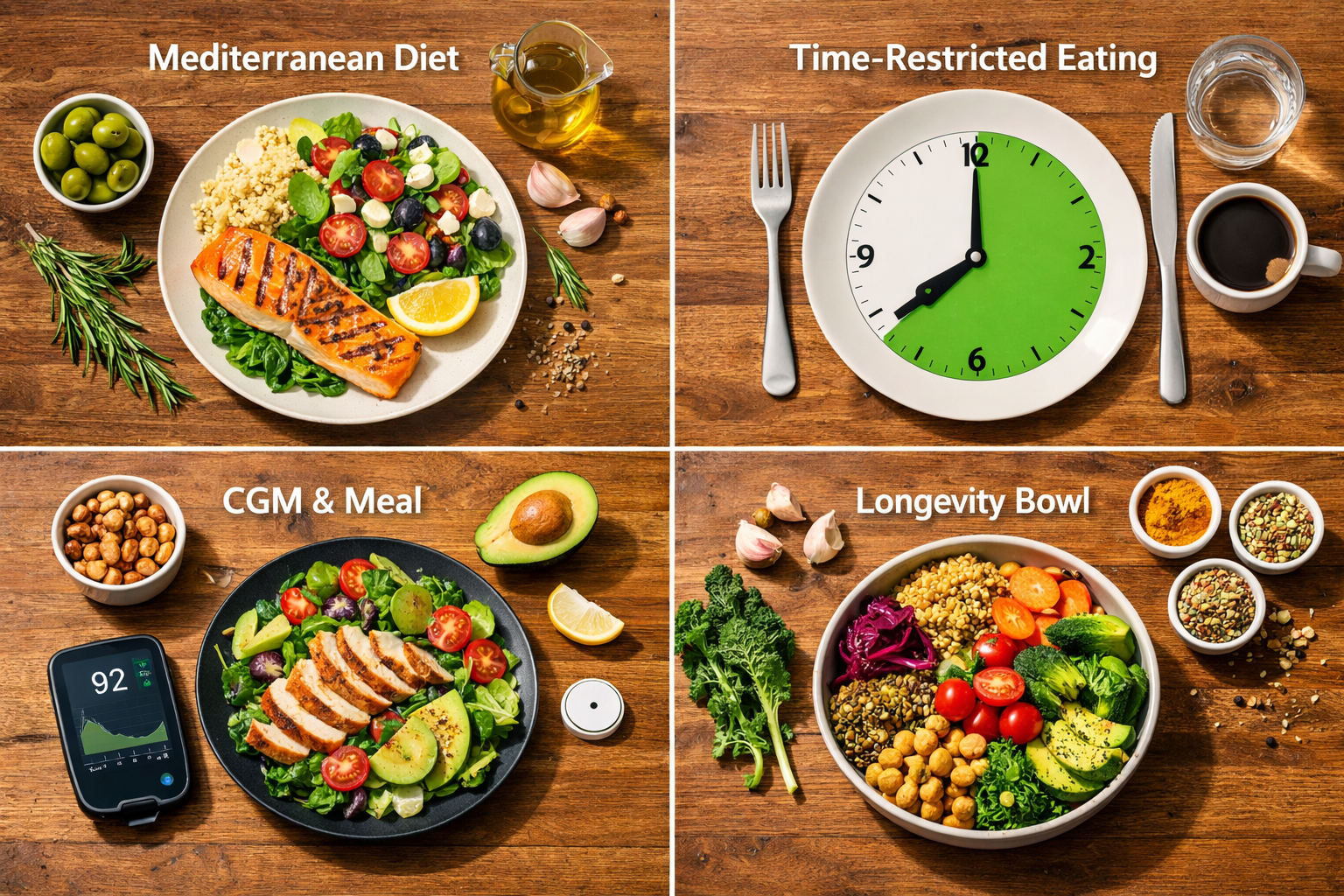
2. Time-Restricted Eating (TRE)
TRE involves eating within a defined window — commonly 8 to 10 hours — and fasting for the remainder. The proposed mechanisms include improved insulin sensitivity, circadian rhythm alignment, and reduced overall calorie intake.
The evidence is promising but not conclusive for all populations. For adults over 50, skipping meals can compromise protein targets and muscle maintenance. A sensible starting point is a 10-hour eating window (e.g., 8am to 6pm) rather than aggressive 16:8 protocols.
Common mistake: Using TRE as a reason to eat poorly within the window. The quality of what you eat still matters more than the timing.
3. CGM-Guided Nutrition
Continuous glucose monitors (CGMs), once reserved for people with diabetes, are now used by healthy adults to observe how individual foods affect blood sugar. The idea is that glucose response varies significantly between people eating the same meal.
From a practical point of view, CGM data can be useful for identifying personal trigger foods and optimizing meal composition. However, I would be careful with that — interpreting CGM data without clinical context can lead to unnecessary food restriction. It is a tool, not a diagnosis.
4. Longevity Eating
Longevity-focused dietary patterns draw on research from long-lived populations (Blue Zones), caloric restriction studies, and emerging science around senescence, mTOR signaling, and autophagy. The practical takeaways:
- Prioritize plant diversity (aim for 30+ different plant foods per week)
- Moderate protein cycling (some researchers suggest lower protein on rest days)
- Limit ultra-processed foods consistently
- Include anti-inflammatory foods like olive oil, fatty fish, berries, and leafy greens
The numbers matter here, but the mechanisms are still being studied. The stronger evidence points to overall dietary pattern rather than any single longevity “superfood.”
How Do You Actually Build a Diet That Works for You?

This is the practical core of any comprehensive guide to modern diets. Most people do not fail because they chose the wrong diet. They fail because the plan did not fit their life.
Here is a straightforward framework:
Step 1: Start with protein. Hit 1.2–1.6g per kg of body weight daily [2]. For a 75kg adult, that is 90–120g of protein per day. Build meals around this first.
Step 2: Add vegetables and fiber. Aim for at least 5 servings of vegetables and fruits per day, with emphasis on vegetables [1]. Whole fruit over juice. Vegetables at most meals.
Step 3: Choose high-fiber carbohydrates. Oats, legumes, sweet potatoes, and whole grains over refined bread, white rice, and packaged cereals [3]. Our practical guide on high fiber foods for weight loss covers exactly which fibers move the needle and how much you actually need.
Step 4: Include healthy fats. Olive oil, avocado, nuts, and fatty fish. These are not optional extras — they support hormone function, brain health, and satiety.
Step 5: Reduce ultra-processed foods systematically. You do not need to eliminate everything at once. Start with what gives the biggest return: cut sugary drinks first, then packaged snacks, then processed breakfast foods [6].
Step 6: Consider timing if relevant. If TRE suits your schedule and helps you maintain protein targets, use it. If it does not, skip it.
For those managing digestive sensitivities alongside dietary changes, our gut health and digestive wellness guide covers the intersection of diet and gut function in practical detail.
What Are the Most Common Diet Mistakes Adults Make?
Let’s keep this practical. These are the patterns I see most often:
- Under-eating protein. Especially common in adults following plant-based or calorie-restricted diets. Low protein accelerates muscle loss after 40.
- Treating “healthy” processed foods as unlimited. Granola bars, flavored yogurts, and “whole grain” crackers are still processed foods with added sugars.
- Chasing short-term results with unsustainable protocols. Extreme restriction works briefly, then fails. Keep it simple and consistent.
- Ignoring total dietary pattern in favor of single foods. No superfood compensates for a poor overall diet. More is not always better when it comes to any single nutrient.
- Failing to account for age-related changes. Protein needs increase with age. Calorie needs often decrease. These two facts together require deliberate planning.
- Copying someone else’s diet without context. What works for a 35-year-old endurance athlete does not automatically apply to a 58-year-old desk worker. It depends on the conditions.
For weight management specifically, our weight loss guide covers the evidence on what actually moves the needle.
How Does Inflammation Fit Into Modern Diet Thinking?
Here’s the real issue with inflammation: it is both a necessary biological process and, when chronic, a driver of most major diseases — cardiovascular disease, type 2 diabetes, cognitive decline, and certain cancers.
Diet is one of the most powerful modulators of chronic inflammation. The evidence suggests that diets high in ultra-processed foods, added sugars, and refined carbohydrates promote inflammatory markers, while diets rich in whole foods, omega-3 fatty acids, polyphenols, and fiber reduce them.
Practical anti-inflammatory food priorities:
- Fatty fish (salmon, mackerel, sardines): 2–3 servings per week
- Extra virgin olive oil: daily use in cooking and dressings
- Berries and dark leafy greens: daily where possible
- Nuts and seeds: small daily portions
- Legumes: 3–4 servings per week
For a deeper look, our anti-inflammatory foods guide covers the mechanisms and practical food choices in detail. Eating seasonally can also support dietary variety and nutrient density — see our seasonal eating guide for a practical framework.
Diet Finder: Which Modern Diet Suits You?
Use the interactive tool below to match your health goals and lifestyle to the most appropriate dietary framework.
Frequently Asked Questions
Q: What is the best diet for adults over 50?
A higher-protein, whole-food dietary pattern is the most evidence-supported choice for adults over 50. The 2025–2030 guidelines recommend 1.2–1.6g of protein per kg of body weight daily [2], with emphasis on muscle preservation, fiber intake, and reduction of ultra-processed foods. Mediterranean-style eating also has strong evidence for cardiovascular and cognitive outcomes in this age group.
Q: Is time-restricted eating safe for everyone?
TRE is generally safe for healthy adults, but it is not appropriate for everyone. People with a history of eating disorders, those on insulin or blood sugar medications, pregnant women, and older adults with low muscle mass should approach TRE carefully and consult a doctor first. The main risk is failing to meet protein targets within a compressed eating window.
Q: Do I need to follow a named diet, or can I just eat whole foods?
You do not need to follow a named protocol. The 2025–2030 Dietary Guidelines make this clear: the central message is “eat real food” [1]. A practical whole-food pattern — adequate protein, vegetables, high-fiber carbohydrates, healthy fats, minimal ultra-processed items — covers the essentials without requiring a label.
Q: Are healthy fats really back after decades of low-fat advice?
Yes. The new guidelines explicitly reverse the low-fat messaging of previous decades, acknowledging that healthy fats — from olive oil, nuts, avocado, and fatty fish — are important for long-term health [3]. However, this does not mean unlimited saturated fat. There is still genuine debate about red meat and butter, and individual lipid response varies [2].
Q: What is a GLP-1 compatible diet?
A GLP-1 compatible diet is designed to complement GLP-1 receptor agonist medications (like semaglutide). It emphasizes high-protein, nutrient-dense, small portions to prevent muscle loss during rapid weight reduction, along with fiber and hydration to manage common GI side effects. It is not a formal protocol — it is a set of practical adjustments best designed with a registered dietitian.
Q: How many carbohydrates should I eat per day?
The new 2025–2030 guidelines have significantly reduced carbohydrate portion recommendations from the old 6–11 servings per day [3]. The right amount depends on your activity level, metabolic health, and overall calorie needs. A practical starting point: replace refined and low-fiber carbohydrates with whole, high-fiber sources and adjust based on how you feel and perform.
Q: Is the Mediterranean diet still the gold standard?
The Mediterranean diet remains one of the most consistently evidence-supported dietary patterns for cardiovascular health, cognitive function, and overall longevity. It is not the only strong option, but it is among the most flexible and sustainable for most adults.
Q: What does “ultra-processed” actually mean?
Ultra-processed foods are industrially manufactured products that contain ingredients not typically found in home cooking — emulsifiers, artificial flavors, preservatives, and added sugars. The 2025–2030 guidelines specifically name soda, chips, cookies, ice cream, breakfast cereals, and soymilk as examples to reduce [6]. The NOVA classification system is the most widely used framework for categorizing food processing levels.
Q: Should I use a CGM if I don’t have diabetes?
A CGM can provide useful personal data about glucose response to specific foods, but it is not necessary for most healthy adults. If you are curious about metabolic health or managing pre-diabetes risk, it can be informative. The risk is over-interpreting normal glucose fluctuations and unnecessarily restricting healthy foods. Use it as a data tool, not a diagnostic device.
Q: How do I know if my diet is working?
Track practical markers: energy levels, sleep quality, hunger patterns, body composition over weeks (not days), and relevant blood markers (fasting glucose, lipids, CRP) at your annual health check. Weight alone is an incomplete measure. The main takeaway is that a diet that is working should be sustainable, not miserable.
Conclusion: What to Actually Do Next
This comprehensive guide to modern diets covers a lot of ground, but the practical path is shorter than it looks.
Start here:
- Calculate your protein target — body weight in kg multiplied by 1.4g is a reasonable starting point [2]. Build your meals around hitting this number.
- Replace one ultra-processed food per week — start with sugary drinks, then packaged snacks. Small, consistent changes outperform dramatic overhauls.
- Add vegetables to most meals — not as a side thought, but as a deliberate component. Variety matters more than volume.
- Choose high-fiber carbohydrates — oats, legumes, sweet potatoes, and whole fruit over juice, white bread, and breakfast cereals [3].
- Stop fearing healthy fats — olive oil, nuts, avocado, and fatty fish belong in your daily diet [3].
- Consider your timing — if TRE suits your schedule and helps you maintain protein targets, it is worth trying. If not, skip it.
- Talk to a professional — if you have a health condition, are on medication, or are making significant dietary changes, a registered dietitian is worth the investment.
References
- [Video] Dave Asprey. YouTube. https://www.youtube.com/watch?v=0fVjKuH6OMo
- The Best Weight Loss Diet in 2026: A Science-Backed Guide to Every Major Approach
- Intermittent Fasting for Weight Loss: Complete 2026 Guide
- Low Carb Diet for Weight Loss
- High Protein Diet for Weight Loss
📂 Diet Frameworks
This article is part of the APH cluster. Use the links below to move between the pillar and child articles.
- YOU ARE HERE The Comprehensive Guide to Modern Diets: What Actually Works in 2026
- → The Carnivore Diet: A Complete Evidence-Based Guide
- → Elimination Diet: A Step-by-Step Guide to Identifying Food Sensitivities
- → Intermittent Fasting for Beginners: A Practical Evidence-Based Guide
- → Metabolic Flexibility: Train Your Body to Burn Fat for Fuel — A Practical Guide to the Metabolic Flexibility Diet
- → Vegan Diet Weight Loss: What the Evidence Actually Shows
- → The Complete Guide to Mediterranean Food: Dishes, Health Benefits, and What to Eat
- → Low Carb Diet for Weight Loss
- → The Ultimate Seasonal Eating Guide: Nourish Your Body Naturally Year-Round
- → The Ultimate Guide to the Liver Shrinking Diet (2026)