How to Win a Weight Loss Challenge: Everything You Should Know

How to Win a Weight Loss Challenge: A Complete Strategy Guide

Last updated: March 28, 2026
Quick Answer
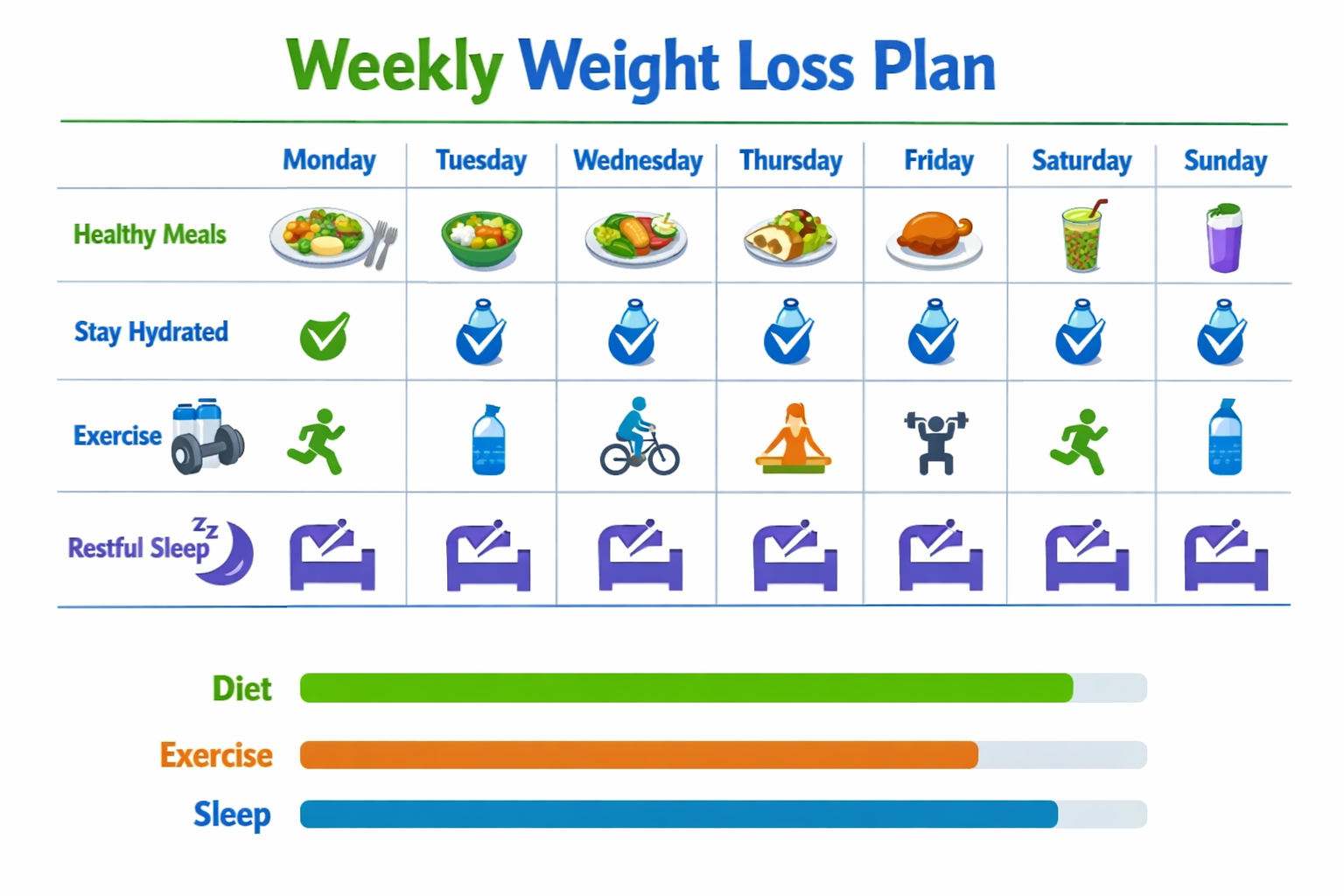
Winning a weight loss challenge comes down to three things: a realistic calorie deficit, consistent exercise you can actually sustain, and a support system that keeps you accountable. The contestants who win aren’t the ones who go hardest in week one — they’re the ones who don’t quit in week four. Aim to lose 1–2 pounds per week, track your food honestly, and treat the challenge as a habit-building exercise, not a crash diet.
Key Takeaways
- Set a goal of losing 1–2 pounds per week — faster rates often lead to muscle loss and rebound weight gain
- Track both weight and body measurements; the scale alone is an unreliable progress indicator
- Hydration directly affects metabolism and hunger signals — most adults need 2–3 liters of water daily
- Protein intake supports muscle retention during fat loss; prioritize it at every meal
- Sleep deprivation increases hunger hormones (ghrelin) and reduces fat-burning efficiency
- The best diet is the one you can follow consistently — not the most restrictive one
- HIIT and strength training burn more calories over 24 hours than steady-state cardio alone
- Processed foods, sugary drinks, and alcohol are the most common hidden sources of excess calories
- Accountability partners and group challenges measurably improve long-term adherence
- Celebrate non-scale victories: better energy, improved sleep, and clothes fitting differently all count
What Does It Actually Take to Win a Weight Loss Challenge?
Winning a weight loss challenge requires a sustainable calorie deficit combined with consistent movement and strong accountability habits. It’s less about willpower and more about structure.
Most challenge formats measure success by percentage of body weight lost over a set period — typically 4 to 12 weeks. That means your strategy should prioritize steady, consistent fat loss rather than dramatic short-term drops that often reverse the moment the challenge ends.
Here’s what separates winners from early dropouts:
- They plan ahead. Meal prepping on Sundays, scheduling workouts like appointments, and tracking food daily removes decision fatigue.
- They don’t rely on motivation alone. Motivation fluctuates. Systems — a set workout time, a meal plan, a check-in partner — don’t.
- They adjust without quitting. Plateaus happen. Winners change one variable (calories, exercise type, sleep) rather than abandoning the plan entirely.
Common mistake: Going too aggressive in week one. Cutting 1,000+ calories daily and doing two-a-day workouts is unsustainable and often leads to burnout by week two. A moderate, consistent approach wins challenges.
How Do You Set Goals That Actually Work?
Effective weight loss goals are specific, time-bound, and tied to behaviors — not just outcomes. “I want to lose weight” is not a goal. “I will eat 1,800 calories per day and walk 8,000 steps daily for 8 weeks” is.
The 1–2 pounds per week rule is not arbitrary. Losing weight faster than this typically means you’re losing muscle alongside fat, which slows your metabolism and makes keeping the weight off harder. For most adults, a daily calorie deficit of 500–750 calories produces this rate safely.
To set your targets:
- Calculate your Total Daily Energy Expenditure (TDEE) using a reliable online calculator based on your age, weight, height, and activity level
- Subtract 500 calories from that number to create a moderate deficit
- Set a behavior goal alongside the outcome goal — for example, “I will cook dinner at home five nights per week”
- Write both goals down and review them weekly
Choose this approach if: You have 8–16 weeks in your challenge and want results that last past the finish line.
Avoid this if: You’re tempted to set a goal based on what someone else lost — individual results vary significantly based on starting weight, hormones, and lifestyle.
What Should You Eat to Maximize Fat Loss During a Challenge?
The best eating strategy for a weight loss challenge is one that creates a calorie deficit without leaving you so hungry that you abandon it. There is no single diet that works for everyone, but several principles apply broadly.
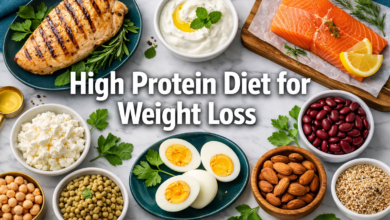
Prioritize protein. Protein keeps you fuller longer, preserves lean muscle during a deficit, and has a higher thermic effect than carbohydrates or fats — meaning your body burns more calories digesting it. Aim for roughly 0.7–1 gram of protein per pound of body weight daily. Good sources include eggs, chicken breast, Greek yogurt, legumes, cottage cheese, and fish.
Build meals around volume. Foods that are high in fiber and water content — vegetables, leafy greens, berries, broth-based soups — let you eat satisfying portions without excessive calories. A large salad with lean protein is far more filling than a small bowl of pasta with the same calorie count.
Practical daily eating habits that support fat loss:
- Eat breakfast with at least 20–30 grams of protein to reduce mid-morning hunger
- Drink a full glass of water before each meal — thirst is frequently misread as hunger
- Use smaller plates to naturally reduce portion sizes without counting every calorie
- Limit liquid calories: sodas, fruit juices, alcohol, and specialty coffees can add 300–600 calories per day without registering as “food”
- Allow one planned treat per week — complete restriction increases the likelihood of binge eating
Foods to reduce or avoid during the challenge:
- Ultra-processed snacks (chips, cookies, crackers) — calorie-dense, low in nutrients, easy to overeat
- Sugary drinks — a single 20 oz soda contains roughly 240 calories with zero nutritional benefit
- Alcohol — metabolized before fat, it effectively pauses fat burning while it’s in your system
- Fried foods and fast food — high in refined oils and hidden calories
For a deeper look at healthy meals for weight loss, including meal ideas and portion guides, that resource covers practical options for every meal of the day.
Which Exercises Burn the Most Fat During a Weight Loss Challenge?
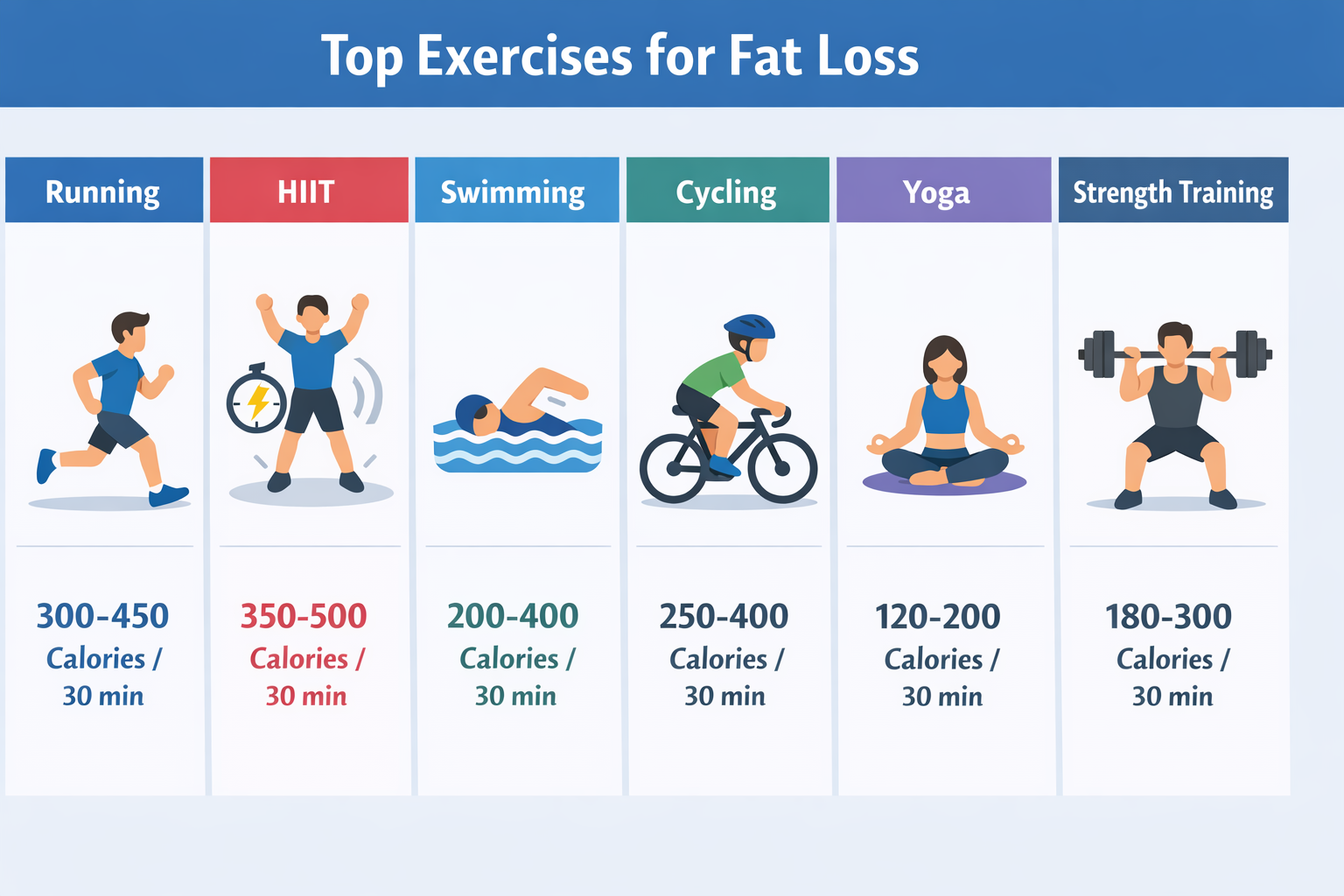
No single exercise is universally “best” for fat loss — the most effective exercise is one you’ll do consistently. That said, certain types of training produce better results per hour invested.
High-Intensity Interval Training (HIIT) is among the most time-efficient fat-burning methods available. A 20–30 minute HIIT session can burn a comparable number of calories to a 45–60 minute moderate jog, and the elevated metabolic rate continues for hours afterward (a phenomenon sometimes called excess post-exercise oxygen consumption, or EPOC).
Strength training is frequently underestimated for fat loss. Building lean muscle increases your resting metabolic rate — meaning you burn more calories even while sitting still. Two to three strength sessions per week, combined with cardio, consistently outperforms cardio-only approaches for body composition.
Exercise options ranked by accessibility and fat-loss effectiveness:
| Exercise | Calories Burned (est. 30 min, 155 lb person) | Joint Impact | Equipment Needed |
|---|---|---|---|
| HIIT | 300–450 | Moderate | None required |
| Running (6 mph) | 300–370 | High | Shoes |
| Cycling (moderate) | 260–300 | Low | Bike or machine |
| Swimming | 250–300 | Very low | Pool |
| Strength Training | 180–250 | Low–Moderate | Weights/bands |
| Yoga (vigorous) | 150–200 | Very low | Mat |
| Elliptical Trainer | 270–320 | Low | Machine |
| Jump Rope | 300–400 | Moderate | Rope |
Estimates based on general exercise science data; individual results vary based on fitness level, body weight, and effort.
Practical exercise strategy for a challenge:
- Aim for at least 150 minutes of moderate-intensity or 75 minutes of vigorous-intensity activity per week
- Add 2–3 strength sessions on non-consecutive days
- Walk more — 8,000–10,000 steps per day adds meaningful calorie burn without recovery demands
- Find activities you genuinely enjoy; adherence matters more than theoretical calorie burn
If you’re working around joint limitations, the best exercise bike for knee issues guide covers low-impact options that still deliver strong cardiovascular results.
How Does Sleep and Stress Affect Weight Loss Challenge Results?
Sleep and stress management are not optional extras — they directly influence fat loss through hormonal pathways. Neglecting them while eating well and exercising is like trying to drive with the handbrake on.
Sleep deprivation raises ghrelin (the hunger hormone) and lowers leptin (the satiety hormone). The practical result: you feel hungrier, crave higher-calorie foods, and have less willpower to resist them. Research consistently links sleeping fewer than 7 hours per night with greater difficulty losing fat and a higher likelihood of regaining lost weight.
Chronic stress elevates cortisol, which encourages the body to store fat — particularly around the abdomen — and can trigger emotional eating. During a weight loss challenge, stress management isn’t a luxury; it’s part of the strategy.
Sleep and stress habits that support fat loss:
- Target 7–9 hours of sleep per night; keep a consistent sleep and wake time, even on weekends
- Avoid screens for 30–60 minutes before bed — blue light disrupts melatonin production
- Incorporate active stress reduction: a 10-minute walk, breathing exercises, or light yoga after high-stress days
- Identify your emotional eating triggers and have a non-food response ready (a walk, a phone call, a short workout)
How Do You Stay Motivated Through a Long Weight Loss Challenge?
Motivation is unreliable — it peaks at the start and fades within weeks. The contestants who win long challenges replace motivation with accountability structures and process-based rewards.
Accountability strategies that work:
- Weekly check-ins with a partner or group. Knowing someone will ask about your progress changes behavior more than internal resolve alone.
- Progress photos every two weeks. The scale often doesn’t reflect real body composition changes. Photos do.
- Track behaviors, not just outcomes. Log workouts completed, water consumed, and meals cooked at home. These are within your control; the number on the scale is not.
- Set milestone rewards. Plan something you genuinely look forward to at the 25%, 50%, and 75% marks — a new workout outfit, a massage, a day trip. Make sure the reward isn’t food-based.
When motivation drops (and it will):
- Revisit your original “why” — write it down somewhere visible
- Reduce the goal temporarily rather than abandoning it entirely; a 10-minute walk beats skipping the day
- Change one variable: a new recipe, a new workout, a different walking route — novelty restores engagement
- Connect with your challenge group; shared struggle is a powerful motivator
For more on breaking the cycle of emotional and stress-driven eating, the mindful eating guide offers practical techniques for identifying and interrupting automatic eating behaviors.
What Are the Best Diets for a Weight Loss Challenge?
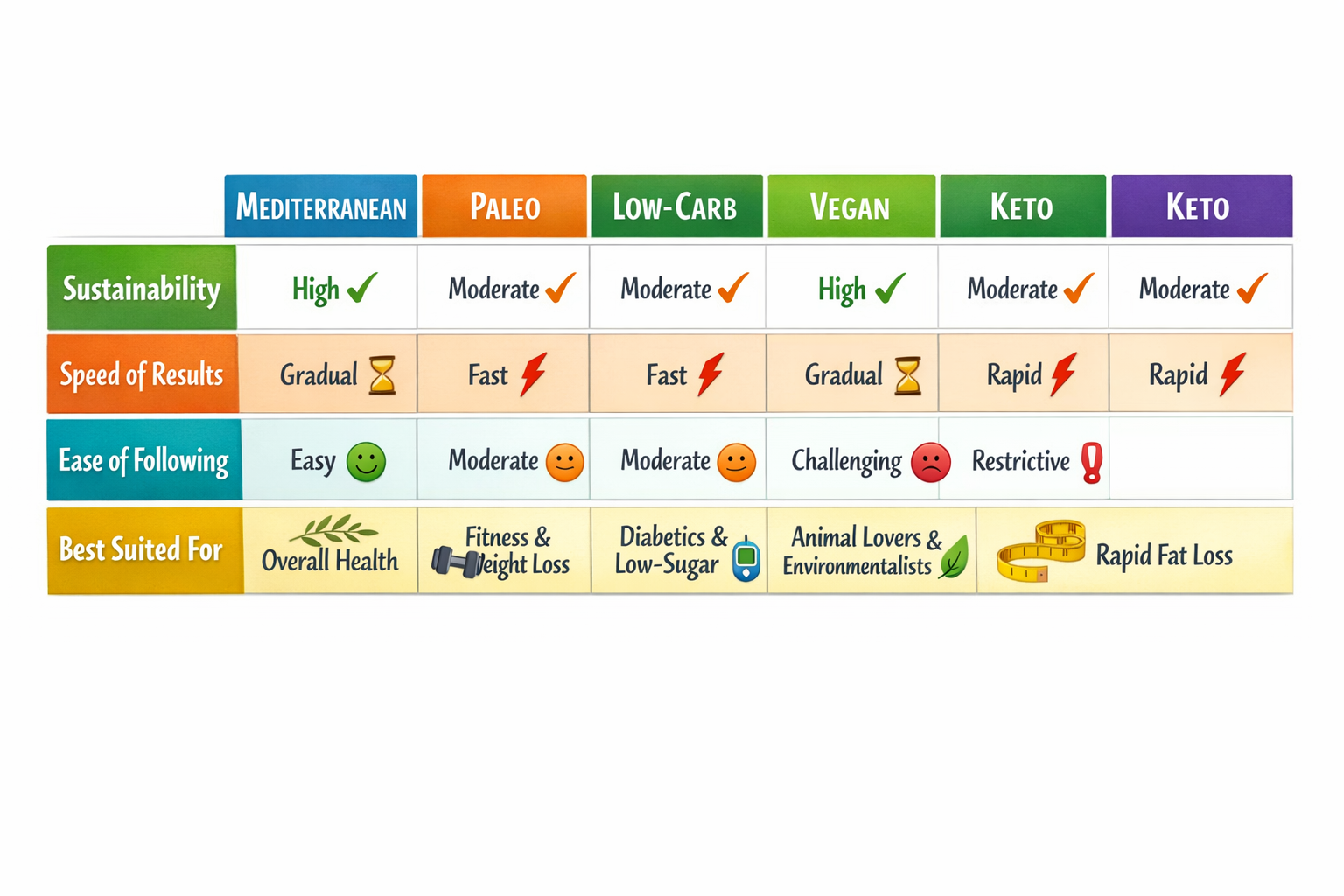
The best diet for a weight loss challenge creates a calorie deficit, provides adequate protein, and is realistic enough to follow for the full duration. Extreme restriction almost always backfires.
Here’s a practical comparison of the most commonly used approaches:
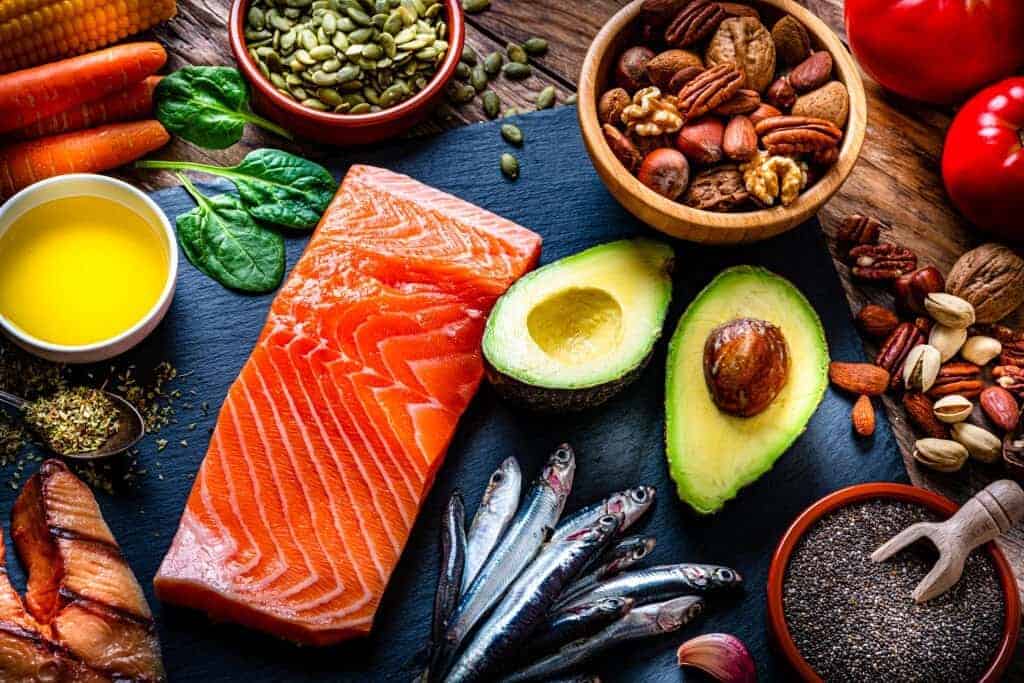
Mediterranean Diet
Emphasizes vegetables, fruits, whole grains, legumes, fish, and olive oil. Moderate in calories, high in fiber and healthy fats. Sustainable long-term and associated with broad health benefits beyond weight loss. Best for people who want a flexible, food-positive approach. Explore Mediterranean food options for meal inspiration.
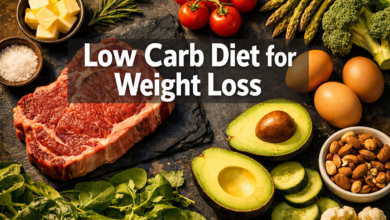
Low-Carbohydrate Diet
Reduces carbohydrates significantly (typically under 100g per day) in favor of protein and fat. Produces rapid initial weight loss, largely from water weight. Effective for people who respond poorly to high-carb eating or have blood sugar management concerns. Can be harder to sustain socially.
Paleo Diet
Focuses on whole, unprocessed foods: meat, fish, eggs, vegetables, fruits, nuts. Eliminates grains, dairy, and legumes. Naturally reduces calorie intake for many people. More restrictive than Mediterranean but straightforward to follow.
Vegan Diet
Plant-based eating that eliminates all animal products. Can be highly effective for weight loss when whole foods are prioritized, but requires attention to protein, B12, iron, and omega-3 intake.
Keto Diet
Very low carbohydrate (under 50g per day), high fat, moderate protein. Puts the body into ketosis, where fat becomes the primary fuel source. Effective for rapid fat loss in some individuals but restrictive and can cause initial fatigue (“keto flu”). Not ideal for people who train intensely.
Weight Watchers (WW)
Points-based system that doesn’t eliminate any food group. Proven track record for sustainable weight loss. Works well for people who want flexibility and community support.
Choose based on your lifestyle:
- If you love cooking varied meals: Mediterranean or Paleo
- If you want fast initial results and can handle restriction: Low-carb or Keto
- If you prefer flexibility without tracking macros: Weight Watchers
- If ethical eating matters to you: Vegan
For a broader breakdown, the comprehensive guide to modern diets covers each approach in more detail, including who each diet suits best.
What Are the Biggest Mistakes People Make in Weight Loss Challenges?
The most common mistakes in weight loss challenges are going too extreme too fast, neglecting strength training, and measuring progress only by the scale.
Mistake 1: Cutting calories too aggressively
Dropping below 1,200 calories (women) or 1,500 calories (men) per day without medical supervision typically causes muscle loss, nutrient deficiencies, and metabolic adaptation — making the body more efficient at surviving on fewer calories, which slows further fat loss.
Mistake 2: Relying only on cardio
Cardio burns calories during the session. Strength training builds muscle that burns calories continuously. Combining both produces better body composition results than either alone.
Mistake 3: Ignoring liquid calories
Smoothies, protein shakes, coffee drinks, alcohol, and juices can easily add 500–800 calories per day that most people don’t account for. Track everything you drink.
Mistake 4: Weighing daily and reacting emotionally
Body weight fluctuates by 2–5 pounds day to day based on water retention, sodium intake, hormones, and digestion. Daily weigh-ins create noise. Weekly averages tell the real story.
Mistake 5: Not eating enough protein
In a calorie deficit, insufficient protein leads to muscle loss. Losing muscle reduces metabolic rate and leads to the “skinny fat” outcome — lower weight but poor body composition.
Mistake 6: Treating the challenge as temporary
The behaviors that win a challenge should become permanent habits. If the plan is too restrictive to maintain after the challenge ends, the weight will return.
For more on avoiding common pitfalls, the fool-proof techniques for rapid weight loss article covers evidence-based approaches that avoid these traps.
Step-by-Step Checklist: How to Win Your Weight Loss Challenge
Use this as your weekly operating system throughout the challenge:
Before the challenge starts:
- Calculate your TDEE and set a daily calorie target (500 below TDEE)
- Take starting photos and measurements (waist, hips, chest, arms, thighs)
- Plan your weekly meals and grocery shop accordingly
- Schedule all workouts for the week as calendar appointments
- Identify your accountability partner or group
Each day:
- Drink at least 2–3 liters of water
- Log all food and drink consumed
- Hit your step goal (aim for 8,000–10,000 steps)
- Get 7–9 hours of sleep
- Complete your planned workout or active recovery
Each week:
- Weigh yourself on the same day, same time, same conditions
- Take progress measurements
- Review what worked and what didn’t
- Prep meals for the coming week
- Check in with your accountability partner
FAQ: Winning a Weight Loss Challenge
How much weight can I realistically lose in an 8-week challenge?
Most adults can lose 8–16 pounds of actual fat in 8 weeks at a rate of 1–2 pounds per week. Initial weeks may show higher losses due to water weight reduction, especially on lower-carb approaches.
Should I weigh myself every day during a challenge?
Weighing daily is fine if you track weekly averages rather than reacting to individual readings. Daily fluctuations of 2–5 pounds are normal and don’t reflect fat gain or loss.
What’s the fastest way to lose weight for a challenge without harming my health?
Combine a moderate calorie deficit (500 calories below TDEE), high protein intake (0.7–1g per pound of body weight), strength training 2–3 times per week, and 7–9 hours of sleep. Avoid extreme restriction.
Is it better to do cardio or weights for a weight loss challenge?
Both. Cardio burns calories during exercise; strength training builds muscle that raises resting metabolism. A combination of the two produces better fat loss and body composition results than either alone.
How do I break a weight loss plateau during a challenge?
Recalculate your TDEE (it decreases as you lose weight), add or change your exercise routine, ensure you’re sleeping enough, and check that you’re not underestimating food portions. A brief diet break at maintenance calories can also reset hormones.
Can I drink alcohol during a weight loss challenge?
Alcohol significantly slows fat loss because the body prioritizes metabolizing it over burning fat. If you choose to drink, limit it to one occasion per week and account for the calories. Spirits with low-calorie mixers are lower in carbohydrates than beer or wine.
What should I eat the night before a weigh-in?
Eat a light, low-sodium dinner, avoid alcohol, and drink water normally. Extreme water restriction before a weigh-in is not recommended and doesn’t reflect real fat loss.
How important is meal timing for weight loss?
Meal timing matters less than total daily calorie and protein intake. That said, eating most of your calories earlier in the day and avoiding large meals close to bedtime can support better sleep and appetite regulation.
What if I miss a workout or have a bad eating day?
One missed workout or one high-calorie day does not derail a challenge. The problem is the response to it — skipping the next day too, or deciding the challenge is ruined. Get back to your plan at the next meal or next day.
Do detox teas or supplements help win weight loss challenges?
Most supplements have limited evidence for meaningful fat loss. Some detox teas for weight loss contain mild diuretics or appetite-suppressing compounds, but they’re not a substitute for diet and exercise. Be cautious of products with proprietary blends or unverified claims.
How do I handle social situations and eating out during a challenge?
Review menus in advance, choose grilled over fried, ask for sauces on the side, and prioritize protein and vegetables. One restaurant meal won’t break your progress — just make the best available choice and move on.
What’s the best way to handle hunger during a calorie deficit?
Increase protein and fiber intake, eat more volume with lower-calorie foods (vegetables, broth-based soups), drink water before meals, and space meals to avoid going more than 4–5 hours without eating. Persistent extreme hunger usually signals too aggressive a calorie cut.
Related Reading
- Healthy meals for weight loss — practical meal ideas organized by calorie range
- Herbs to boost metabolism and lose weight — natural compounds with evidence for metabolic support
- Fat burn heart rate guide — how to train in the right zone for maximum fat oxidation
- Simple and detailed weight loss suggestions — a beginner-friendly overview of the fundamentals
- Anti-inflammatory foods guide — how reducing inflammation supports better body composition
The information in this article is intended for general educational purposes. Consult a qualified healthcare provider before beginning any new diet or exercise program, particularly if you have existing health conditions.