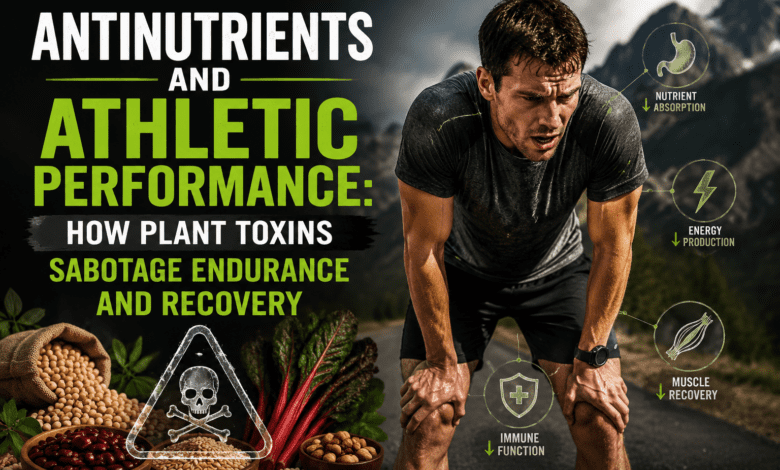
Antinutrients and Athletic Performance: How Plant Toxins Sabotage Endurance and Recovery
Last updated: May 12, 2026
Quick Answer
Antinutrients are naturally occurring compounds in plant foods — including lectins, oxalates, phytates, and tannins — that can interfere with how the body absorbs key minerals and nutrients. For most healthy adults eating a varied diet, the effect is modest. For athletes with high nutritional demands, the impact on iron, magnesium, and zinc absorption may be more meaningful, particularly during heavy training. The good news is that standard food preparation methods — soaking, cooking, fermenting — reduce most of these compounds significantly.
Key Takeaways
- 🌿 Antinutrients are not inherently dangerous. They are natural plant defence compounds that affect nutrient absorption to varying degrees depending on preparation and diet context.
- 🏃 Athletes have higher micronutrient demands, which means even modest reductions in iron, zinc, or magnesium absorption can have a measurable effect on endurance and recovery.
- 🔬 Lectins and oxalates are the most discussed compounds in the context of gut integrity and muscle recovery, but the evidence for serious harm in well-nourished athletes is limited.
- 🍳 Cooking, soaking, sprouting, and fermenting are the most effective ways to reduce antinutrient load in plant foods.
- 📊 Plant-based athletes can perform at a high level. Research supports that vegan and vegetarian diets are compatible with strong athletic performance when planned carefully [6].
- ⚠️ The biggest real-world risk is not toxicity but chronic low-grade mineral depletion — particularly iron and zinc — in athletes eating high volumes of raw or poorly prepared plant foods.
- 🎯 Context matters. A recreational walker and an elite endurance athlete eating the same bowl of raw spinach face very different nutritional stakes.
- 💡 The evidence does not support eliminating plant foods. It supports preparing them well and building a diet that accounts for absorption, not just intake.
Table of Contents
- What Are Antinutrients and Why Do Plants Produce Them?
- How Do Antinutrients and Athletic Performance Interact?
- Lectins and Gut Integrity: What the Evidence Actually Shows
- Oxalates and Muscle Recovery: A More Grounded Concern
- Which Athletes Are Most at Risk from Antinutrient Effects?
- What Does Current Sports Nutrition Research Actually Say?
- Practical Protocols for Athletes: Reducing Antinutrient Load Without Eliminating Plant Foods
- A Practical 4-Week Transition Protocol for Athletes Reducing Antinutrient Exposure
- FAQ: Antinutrients and Athletic Performance
- Conclusion: What Matters Most for Athletes Navigating Antinutrients
What Are Antinutrients and Why Do Plants Produce Them?
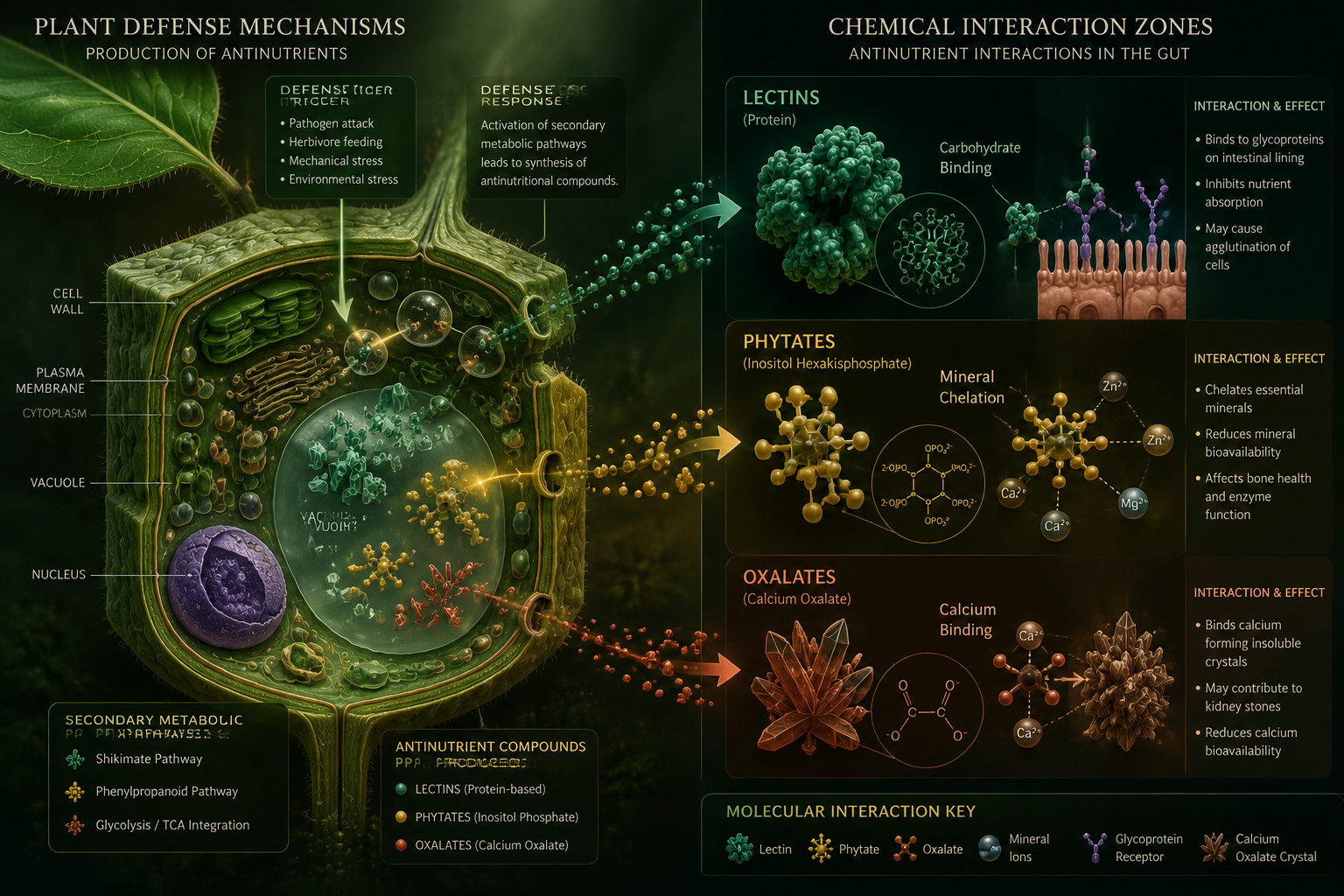
Antinutrients are chemical compounds that plants produce as a natural defence against insects, fungi, and animals. They are not poisons in the conventional sense, but they can reduce the body’s ability to absorb certain nutrients — particularly minerals — from food.
The main antinutrients relevant to athletic performance include:
| Compound | Found In | Primary Effect |
|---|---|---|
| Lectins | Legumes, grains, nightshades | Binds to gut lining; may impair nutrient absorption |
| Oxalates | Spinach, almonds, beets, chocolate | Binds calcium, iron, and magnesium; forms crystals |
| Phytates (phytic acid) | Whole grains, seeds, legumes | Chelates zinc, iron, calcium, magnesium |
| Tannins | Tea, coffee, legumes, red wine | Reduces iron absorption |
| Protease inhibitors | Soy, legumes | Impairs protein digestion |
| Saponins | Quinoa, legumes | Disrupts gut membrane; may affect absorption |
For a deeper look at what these compounds do at the cellular level, the Plant Toxins and Antinutrients: Why Our Ancestors Cooked guide covers the evolutionary background clearly.
In plain English: plants cannot run away from threats, so they developed chemical deterrents. Some of those deterrents affect us too — but the degree to which they do depends heavily on how we prepare food, how much we eat, and what else is in our diet.
How Do Antinutrients and Athletic Performance Interact?
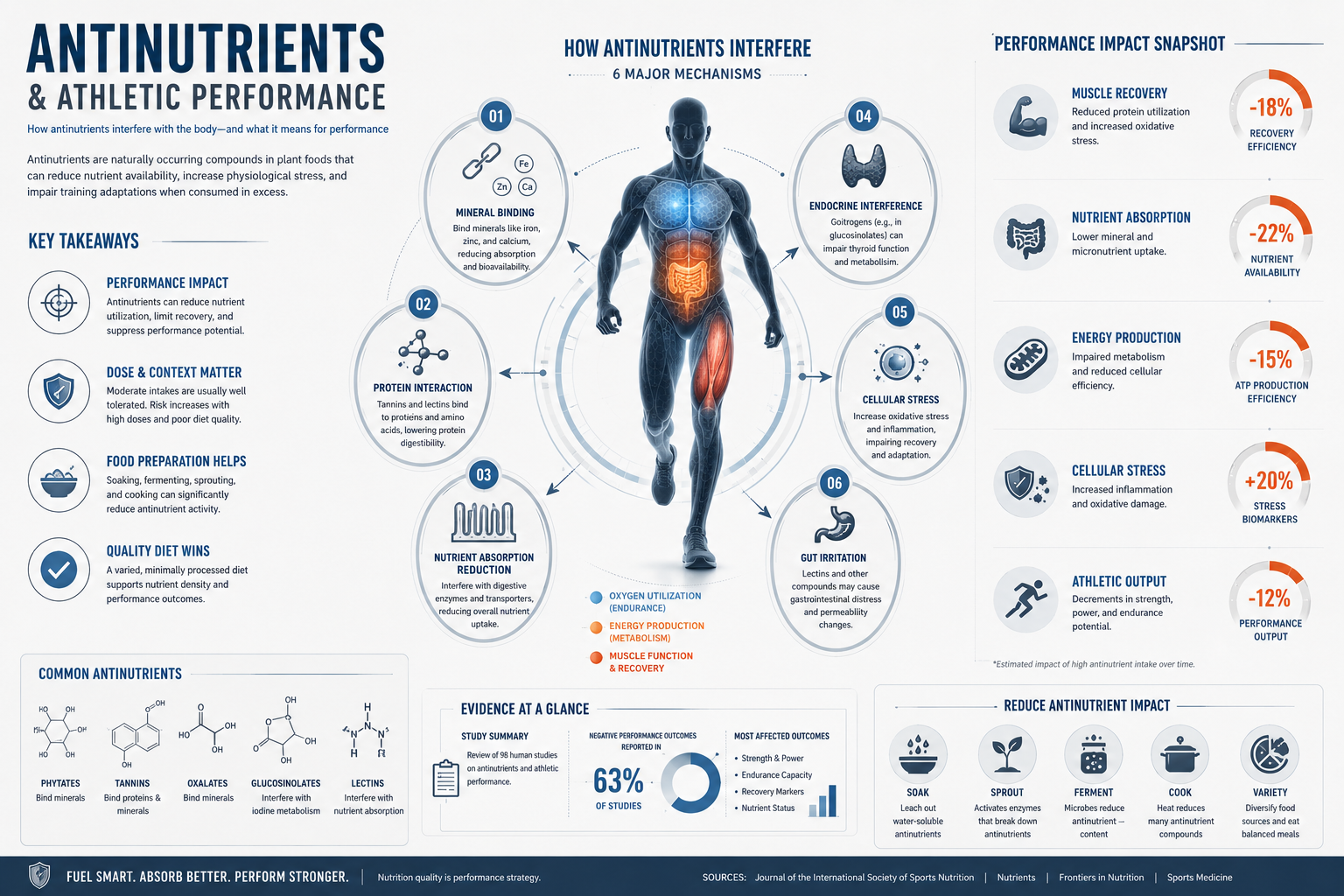
The connection between antinutrients and athletic performance comes down to micronutrient availability. Athletes need more iron, zinc, magnesium, and B vitamins than sedentary adults — and antinutrients can reduce how much of these nutrients actually get absorbed from food [1].
Here is where the issue becomes real rather than theoretical:
Iron absorption is particularly vulnerable. Phytates and tannins are well-documented inhibitors of non-haem iron (the form found in plant foods). An athlete running 50 miles a week who relies heavily on plant-based iron sources and drinks tea with meals may be absorbing significantly less iron than their food diary suggests. Iron deficiency — even without full anaemia — is associated with reduced VO2 max, slower recovery, and persistent fatigue.
Zinc follows a similar pattern. Phytate binds zinc tightly, and athletes already lose zinc through sweat. Endurance athletes on high-grain, high-legume diets without adequate preparation may be running a quiet zinc deficit that affects immune function and muscle repair.
Magnesium is blocked partly by oxalates and phytates. Given that magnesium plays a direct role in muscle contraction, energy metabolism, and sleep quality, even a modest reduction in absorption matters during heavy training blocks.
The numbers matter here. Phytate can reduce zinc absorption by 15–35% and iron absorption by up to 50% in high-phytate meals, according to established nutritional biochemistry literature. These are not trivial reductions for an athlete in a caloric deficit or a heavy training phase.
“The issue is not whether plant foods are healthy — they clearly are. The issue is whether an athlete’s preparation and dietary habits are allowing them to actually absorb what they are eating.”
Lectins and Gut Integrity: What the Evidence Actually Shows
Lectins are the most controversial antinutrient in current nutrition discussions, and the evidence is more nuanced than either side of the debate tends to admit.
Lectins are proteins that bind to carbohydrate structures on cell surfaces. In the gut, they can bind to the intestinal lining, and in high concentrations — particularly from raw or undercooked legumes — they can cause real damage. Raw kidney beans contain enough lectin (phytohaemagglutinin) to cause acute gastrointestinal illness. That is a documented fact, not a fringe claim.
The more contested question is whether cooked lectins, at normal dietary levels, cause meaningful gut permeability in healthy adults. Here is where the evidence gets thinner.
What the stronger evidence points to:
- Raw or undercooked legumes can cause acute GI distress and, in extreme cases, toxicity
- Cooking at high temperatures (boiling for at least 10 minutes) destroys the vast majority of lectins in legumes
- There is limited high-quality human trial evidence that cooked dietary lectins cause significant gut permeability or systemic inflammation in healthy people [3]
- Athletes with existing gut sensitivity or irritable bowel symptoms may notice more reactivity to high-lectin foods
What the evidence does not clearly support:
- That cooked legumes consumed as part of a varied diet cause meaningful gut damage in most athletes
- That eliminating all lectin-containing foods improves performance in athletes without pre-existing gut issues
For athletes, the practical concern is this: if you are eating large volumes of legumes as a primary protein source and experiencing bloating, cramping, or GI distress during training, lectins (along with FODMAPs and fibre load) are worth examining. The leaky gut science guide covers the gut permeability evidence in detail.
I would be careful with that framing that lectins are universally toxic at normal dietary levels. That is a strong claim and needs strong proof — and right now, the proof is not there for well-prepared foods in healthy athletes.
Oxalates and Muscle Recovery: A More Grounded Concern
Oxalates present a more grounded concern for athletes than lectins, particularly in the context of mineral absorption and kidney stone risk in high-volume endurance athletes.
Oxalic acid binds to calcium, magnesium, and iron in the gut, forming insoluble salts that the body cannot absorb. This is relevant for athletes because:
-
Calcium absorption from high-oxalate foods is poor. Spinach, despite being marketed as a calcium source, has very low bioavailable calcium due to its oxalate content. An athlete relying on spinach as a primary calcium source may be significantly underestimating their actual intake.
-
Magnesium binding by oxalates can compound the magnesium losses athletes already experience through sweat. Magnesium is essential for muscle relaxation, energy production (ATP synthesis), and sleep — all of which directly affect recovery.
-
Kidney stone risk is a real concern for endurance athletes who are chronically dehydrated and consuming high-oxalate diets. Calcium oxalate stones are the most common type of kidney stone, and endurance athletes already have elevated risk due to concentrated urine.
High-oxalate foods relevant to athletes:
- Raw spinach and Swiss chard
- Almonds (a common athlete snack)
- Beets (popular for nitrate content and endurance benefits)
- Dark chocolate
- Sweet potatoes
Here is the real issue with beets specifically: they are widely used by endurance athletes for their nitrate content, which genuinely supports cardiovascular efficiency. But beets are also high in oxalates. For most athletes, this trade-off favours eating beets — but it is worth knowing the full picture rather than treating them as a pure performance food with no considerations attached.
Cooking reduces oxalate content significantly. Boiling spinach, for example, reduces its oxalate content by roughly 30–87% depending on the method and duration, with much of the oxalate leaching into the cooking water. Blanching and discarding the water is a practical step worth taking for athletes eating large volumes of leafy greens.
For more on how inflammation and gut health interact with recovery, the best anti-inflammatory foods for gut health guide is a useful companion read.
Which Athletes Are Most at Risk from Antinutrient Effects?
Not every athlete faces the same level of risk from antinutrients. Context matters significantly here, and the answer depends on training volume, dietary pattern, and individual gut function.
Higher risk profiles:
- High-volume endurance athletes (marathon runners, triathletes, cyclists) with elevated iron, zinc, and magnesium demands who rely heavily on plant-based foods
- Plant-based athletes who have not optimised food preparation methods — relying on raw legumes, unsoaked grains, or large volumes of raw high-oxalate greens
- Athletes in caloric restriction (weight-class sports, aesthetic sports) where overall micronutrient intake is already constrained
- Female athletes, who have higher baseline iron requirements and are more vulnerable to iron deficiency
- Athletes with existing gut sensitivity — IBS, IBD, or a history of gut permeability issues — who may react more strongly to lectins and saponins
Lower risk profiles:
- Recreational athletes eating varied, omnivorous diets with moderate plant food intake
- Athletes who regularly soak, cook, and ferment plant foods
- Athletes who consume vitamin C with plant-based iron sources (which significantly enhances non-haem iron absorption)
The exercise guide for better health provides useful context on how training demands shift nutritional requirements across different activity levels.
What Does Current Sports Nutrition Research Actually Say?
Let’s keep this practical and separate fact from hype. The current sports nutrition literature does not treat antinutrients as a primary performance threat. The focus is on optimising micronutrient intake — not on avoiding plant compounds [1].
The International Society of Sports Nutrition (ISSN) emphasises optimising antioxidant intake for recovery, recommending plant-based compounds including tart cherry, astaxanthin, and omega-3 fatty acids as evidence-backed recovery tools [2]. These are all plant-derived. The research framework is not “avoid plant toxins” — it is “make plant nutrition work better.”
Recent sports nutrition trend analysis for 2026 highlights gut health optimisation through fibre-rich foods, fermented products, and balanced macronutrients as a key performance strategy [5]. This positions plant foods as supportive of performance rather than threatening to it.
On plant-based athlete performance specifically: research including vegetarian and vegan athletes shows that VO2 max and endurance performance can be strong on well-planned plant-based diets [6]. This does not mean antinutrients have no effect — it means the effect is manageable with the right approach.
A 2026 review in Frontiers in Physiology adds further context on how dietary strategies interact with training adaptation [4], reinforcing that the overall dietary pattern matters more than the presence of any single compound.
The main takeaway is this: antinutrients are a real consideration, not a myth — but they are one factor within a larger nutritional picture. The evidence does not support eliminating plant foods. It supports preparing them intelligently and monitoring key micronutrients.
Practical Protocols for Athletes: Reducing Antinutrient Load Without Eliminating Plant Foods
The simplest way to look at it is this: preparation is the primary tool. You do not need to abandon legumes, grains, or leafy greens. You need to handle them in ways that reduce their antinutrient content before eating.
Food Preparation Methods That Work
Soaking:
- Soak legumes for 12–24 hours before cooking; discard the soaking water
- Reduces phytate content by 20–50% depending on duration and temperature
- Also reduces lectins and saponins
Boiling and pressure cooking:
- Boiling legumes for at least 10 minutes destroys the vast majority of lectins
- Pressure cooking is more effective than boiling for lectin reduction
- Never eat kidney beans raw or undercooked
Sprouting:
- Activates phytase (an enzyme that breaks down phytic acid)
- Reduces phytate by 37–81% in grains and legumes
- Also increases bioavailable zinc and iron
Fermenting:
- Fermentation significantly reduces phytate, lectins, and oxalates
- Sourdough bread has lower phytate content than standard wholegrain bread due to the fermentation process
- Fermented soy (tempeh, miso) is better tolerated than raw soy
Blanching and discarding water:
- Effective for reducing oxalates in leafy greens
- Boil spinach, chard, or beet greens briefly and discard the water
Absorption Enhancers Worth Using
| Strategy | Effect | Practical Application |
|---|---|---|
| Vitamin C with iron-rich meals | Enhances non-haem iron absorption significantly | Add lemon juice to lentil dishes; eat peppers with beans |
| Avoid tea/coffee with meals | Reduces tannin interference with iron absorption | Wait 1 hour after eating before drinking tea |
| Soak grains overnight | Activates phytase, reduces phytate | Overnight oats, soaked rice |
| Pair calcium-rich foods carefully | Avoid high-calcium and high-iron foods in the same meal | Separate dairy from iron-rich plant meals |
For athletes following a Mediterranean-style eating pattern — which naturally incorporates many of these preparation methods — the Mediterranean food guide is worth reading for practical meal ideas.
A Practical 4-Week Transition Protocol for Athletes Reducing Antinutrient Exposure
A sensible starting point is gradual change, not a wholesale dietary overhaul. Here is a structured approach for athletes who want to reduce antinutrient load while maintaining performance:
Week 1: Audit and identify
- Track your main plant food sources and note which are high in lectins, oxalates, or phytates
- Identify whether you are eating legumes raw, undercooked, or without soaking
- Check whether you drink tea or coffee within an hour of meals
Week 2: Preparation upgrade
- Begin soaking all legumes before cooking
- Switch to pressure cooking or long-boiling for beans and lentils
- Start blanching high-oxalate greens and discarding the water
Week 3: Absorption optimisation
- Add a vitamin C source to every iron-rich plant meal
- Move tea and coffee consumption to between meals, not with them
- Experiment with sprouted grains or sourdough bread as alternatives to standard wholegrain
Week 4: Monitor and adjust
- Note any changes in energy, GI comfort, and recovery
- If iron or zinc levels are a concern, request a blood panel from your GP
- Assess whether fermented foods (kefir, tempeh, sauerkraut) can replace some unfermented equivalents
This is not a rigid programme. Keep it simple and consistent, and adjust based on what you notice. More is not always better — the goal is steady improvement in absorption, not a perfect system from day one.
FAQ: Antinutrients and Athletic Performance
Q: Do antinutrients actually reduce athletic performance?
They can, indirectly — by reducing absorption of iron, zinc, and magnesium, which are critical for endurance and recovery. The effect is most significant in athletes with high training volumes eating large amounts of poorly prepared plant foods. For most recreational athletes, the impact is modest.
Q: Are lectins dangerous for athletes?
Raw or undercooked legumes contain enough lectins to cause acute GI illness. Properly cooked legumes are safe for the vast majority of people. There is limited evidence that cooked dietary lectins cause meaningful gut damage in healthy athletes.
Q: Should athletes avoid spinach because of oxalates?
No. Spinach has genuine nutritional value. Cooking it and discarding the water significantly reduces oxalate content. Eating it raw in large quantities daily is where the oxalate concern becomes more relevant, particularly for athletes prone to kidney stones.
Q: Can you be plant-based and perform at a high level athletically?
Yes. Research supports that vegetarian and vegan athletes can achieve strong VO2 max and endurance performance with well-planned diets [6]. The key is optimising preparation, monitoring key micronutrients, and not assuming that food intake equals nutrient absorption.
Q: What is the most important antinutrient for athletes to understand?
Phytate (phytic acid) has the broadest impact because it inhibits absorption of zinc, iron, calcium, and magnesium simultaneously. Understanding how to reduce phytate through soaking, sprouting, and fermentation gives the biggest practical return.
Q: Does cooking eliminate all antinutrients?
Not entirely. Cooking significantly reduces lectins, phytates, and oxalates, but does not eliminate them completely. Fermentation and sprouting are more effective for phytate reduction. The goal is reduction, not elimination.
Q: Should athletes take phytase enzyme supplements?
The evidence for phytase supplements in healthy adults is not strong enough to recommend them as a standard practice. Optimising food preparation is more practical and better supported by current evidence.
Q: Are tannins in tea and coffee a serious concern for athletes?
For athletes relying on plant-based iron sources, yes — timing matters. Drinking tea or coffee with iron-rich meals can reduce non-haem iron absorption meaningfully. Moving these drinks to between meals is a simple and effective adjustment.
Q: What blood tests should athletes request to check for antinutrient-related deficiencies?
A sensible starting panel includes serum ferritin (iron stores), serum zinc, serum magnesium, and full blood count. Ferritin is particularly important — it is a more sensitive marker of iron depletion than haemoglobin alone.
Q: Do antinutrients affect protein absorption?
Protease inhibitors in soy and raw legumes can reduce protein digestion efficiency. Cooking inactivates most protease inhibitors. This is one reason why cooked legumes are nutritionally superior to raw for protein availability.
Q: Is there a difference between antinutrient effects in men and women athletes?
Female athletes have higher baseline iron requirements and are more vulnerable to iron deficiency, making the iron-blocking effects of phytates and tannins more consequential. The practical protocols are the same, but the stakes around iron absorption are higher.
Q: Are fermented plant foods the best option for athletes?
Fermented foods — tempeh, miso, sauerkraut, kefir — tend to have lower antinutrient content and better mineral bioavailability than their unfermented equivalents. They also support gut microbiome health, which is increasingly recognised as relevant to nutrient absorption and immune function [5].
Conclusion: What Matters Most for Athletes Navigating Antinutrients
The relationship between antinutrients and athletic performance is real but frequently overstated. Here is where the evidence actually lands in 2026.
Plant foods are not the enemy. The research consistently supports plant-based dietary patterns as compatible with strong athletic performance [6]. The issue is not whether to eat plant foods — it is whether you are preparing them in ways that allow you to actually absorb what they contain.
For most recreational athletes, antinutrients are a minor consideration. For high-volume endurance athletes, female athletes, and those on predominantly plant-based diets, the cumulative effect on iron, zinc, and magnesium absorption is worth taking seriously.
The practical actions that give the biggest return:
- Soak and properly cook all legumes
- Blanch high-oxalate greens and discard the water
- Add vitamin C to iron-rich plant meals
- Move tea and coffee away from mealtimes
- Incorporate fermented foods where practical
- Monitor key micronutrients with periodic blood testing
There is no magic in it. The basics still do the heavy lifting. Prepare your food well, monitor your micronutrient status, and build your diet around absorption — not just intake.
For athletes also dealing with inflammation and recovery, the anti-inflammatory foods guide and the health benefits of ginger are practical next reads. And if gut health is a concern alongside antinutrient exposure, the gut health and digestive wellness guide covers the broader picture clearly.
Truth over hype. Evidence first. That is the approach that actually serves athletes well.
📂 Plant Toxins & Antinutrients
This article is part of our cluster. You are reading the featured article below.
- → Enzyme Inhibitors in Raw Plant Foods: Why Cooking Matters More Than Influencers Admit
- → Pesticides vs Plant Toxins: Which Is the Bigger Threat to Your Health and the Environment?
- → Global Toxicity Hotspots: Plant Toxins Amplified in China, Brazil, US Crops
- → Plant Toxins and Brain Fog: New 2026 Studies Linking Phytates to Cognitive Decline
- → Climate Change and Plant Toxins: Rising Levels of Alkaloids and Glycosides in Crops
- → Histamine Intolerance and Plant Lectins: The Overlooked Gut-Brain Connection
- YOU ARE HERE Antinutrients and Athletic Performance: How Plant Toxins Sabotage Endurance and Recovery
- → Kids and Plant Toxins: Antinutrient Impacts on Growth, ADHD, and Developing Brains
- → Phytoestrogens Beyond Soy: Flax, Nuts, and Fertility Impacts in 2026 Research
- → Synergistic Plant Toxin Effects: How Oxalates Amplify Lectin Damage in the Gut
- → Antinutrients and Skin Health: How Tannins and Phytoestrogens Trigger Eczema Flares
- → What Plant Toxins Actually Do to Your Body: Effects on Digestion, Absorption and Inflammation
References
- [Video] Speaker. YouTube. https://www.youtube.com/watch?v=mYSpdMjkdMM
- U.S. Department of Agriculture. (2025). USDA FoodData Central: Nutrient database for standard reference. USDA Agricultural Research Service.
- American Heart Association. (2025). Fish and omega-3 fatty acids: AHA dietary guidelines update. Circulation.
- Dietary Guidelines Advisory Committee. (2025). Scientific report of the 2025 Dietary Guidelines Advisory Committee. U.S. Department of Health and Human Services.
- Kris-Etherton, P. M., et al. (2025). Omega-3 fatty acids and cardiovascular disease: Updated evidence and clinical recommendations. Journal of the American College of Cardiology.