What Plant Toxins Actually Do to Your Body: Effects on Digestion, Absorption and Inflammation
Last updated: May 5, 2026
Quick Answer: Plant toxins are natural chemical compounds that plants produce to deter insects, fungi, and animals. In humans, they can disrupt gut barrier function, block nutrient absorption, trigger systemic inflammation, and in high doses, damage organs. The effects depend heavily on the specific toxin, the dose, how the food is prepared, and the individual’s biology. Most plant toxins at normal dietary levels are manageable. But for some people, and in certain conditions, they are not a trivial concern.
Table of Contents
- What Are Plant Toxins and Why Do Plants Make Them?
- How Do Lectins Disrupt Gut Function and Nutrient Absorption?
- What Do Oxalates and Glucosinolates Do to Mineral Absorption?
- How Do Solanines, Furocoumarins, and Cyanogenic Compounds Affect the Body?
- What Plant Toxins Actually Do to Inflammation: The Two-Sided Picture
- How Does Bioavailability Affect the Real-World Impact of Plant Toxins?
- Who Is Most Vulnerable to Plant Toxin Effects?
- What Are the Most Effective Ways to Reduce Plant Toxin Load?
- FAQ: What Plant Toxins Actually Do to Your Body
- Conclusion: What to Actually Do With This Information
Table of Contents
- What Are Plant Toxins and Why Do Plants Make Them?
- How Do Lectins Disrupt Gut Function and Nutrient Absorption?
- What Do Oxalates and Glucosinolates Do to Mineral Absorption?
- How Do Solanines, Furocoumarins, and Cyanogenic Compounds Affect the Body?
- What Plant Toxins Actually Do to Inflammation: The Two-Sided Picture
- How Does Bioavailability Affect the Real-World Impact of Plant Toxins?
- Who Is Most Vulnerable to Plant Toxin Effects?
- What Are the Most Effective Ways to Reduce Plant Toxin Load?
- FAQ: What Plant Toxins Actually Do to Your Body
- Conclusion: What to Actually Do With This Information
Key Takeaways
- 🌿 Plants produce defensive chemicals — lectins, oxalates, glucosinolates, solanines, and others — that can interfere with human digestion and metabolism.
- 🔬 Lectins bind to intestinal wall receptors and can compromise gut barrier integrity, contributing to nutrient malabsorption and chronic digestive symptoms. [1]
- 🧂 Oxalates bind to calcium in the gut, reducing absorption and potentially contributing to kidney stone formation in susceptible individuals.
- 🦋 Glucosinolates in cruciferous vegetables can impair thyroid iodine uptake — a real concern mainly for people with existing thyroid conditions or iodine deficiency. [1]
- 🔥 Some plant compounds actively reduce inflammation via the NF-κB pathway, meaning the picture is not simply “plant toxins = bad.” [3]
- ⚗️ Cooking, soaking, fermenting, and sprouting significantly reduce toxin levels in most foods.
- 🧬 Genetic variation means some people are considerably more sensitive to plant toxins than others.
- ⚖️ Context matters: dose, preparation method, gut health status, and individual biology all determine whether a plant compound causes harm or has no meaningful effect.
What Are Plant Toxins and Why Do Plants Make Them?
Plants cannot run from predators. Instead, they produce chemical compounds that deter insects, bacteria, fungi, and grazing animals. These compounds are sometimes called antinutrients or phytotoxins, and they are a normal part of plant biology — not a manufacturing defect.
The main categories relevant to human health include:
| Toxin Class | Common Food Sources | Primary Mechanism |
|---|---|---|
| Lectins | Beans, grains, nightshades | Bind to gut wall receptors, disrupt absorption |
| Oxalates | Spinach, almonds, beets | Bind minerals, form crystals |
| Glucosinolates | Broccoli, kale, cabbage | Interfere with thyroid iodine uptake |
| Solanines | Potatoes (green/sprouted), tomatoes | Disrupt cell membranes |
| Pyrrolizidine alkaloids | Certain herbs and plants | Liver toxicity |
| Furocoumarins | Celery, parsley, parsnips | Phototoxic skin reactions |
| Cyanogenic glycosides | Bitter almonds, cassava, apple seeds | Block cellular oxygen use |
Understanding what plant toxins actually do to your body — the effects on digestion, absorption, and inflammation — starts with recognising that these are not exotic poisons found only in dangerous plants. They are present in everyday foods, often in small amounts that most people handle without issue.
For a broader look at how our ancestors managed these compounds through food preparation, see this detailed piece on plant toxins and antinutrients and why our ancestors cooked.
How Do Lectins Disrupt Gut Function and Nutrient Absorption?
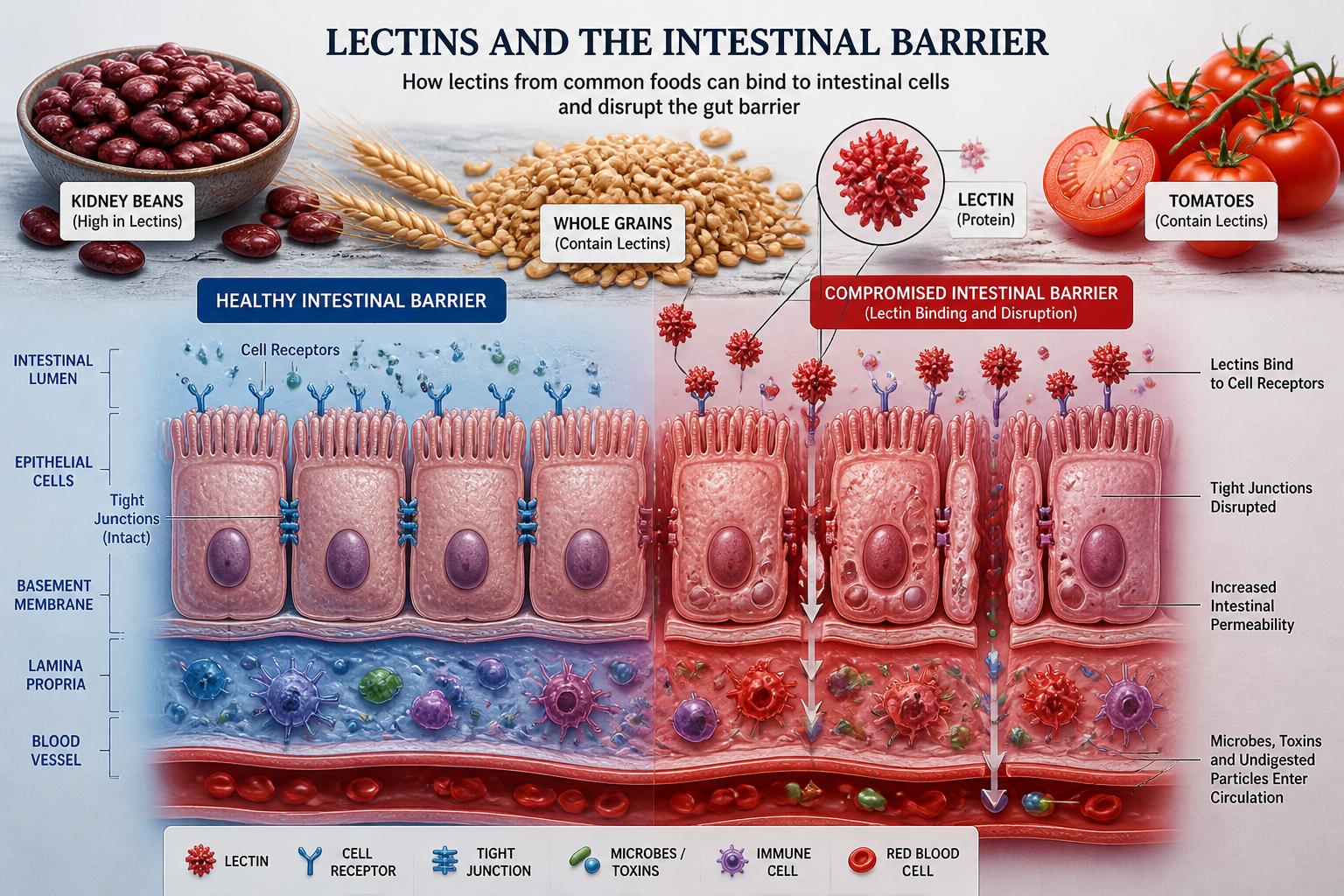
Lectins are carbohydrate-binding proteins found in high concentrations in legumes, whole grains, and nightshade vegetables. They bind to specific receptor sites on intestinal epithelial cells — the cells lining the gut wall — and this is where the trouble starts. [1]
What happens at the gut wall:
- Lectins attach to the surface of intestinal cells and interfere with normal nutrient transport across the gut lining.
- They can alter the tight junctions between cells, potentially allowing partially digested particles into the bloodstream — a process associated with increased gut permeability.
- Repeated exposure can trigger chronic symptoms: nausea, diarrhea, bloating, and vomiting. [1]
The concern about gut permeability is real, but it is also frequently overstated in popular health media. Here’s the real issue: most people eating a normal varied diet, with foods that have been cooked properly, are not consuming enough active lectins to cause measurable gut damage. Raw kidney beans are a different story — they contain haemagglutinin at concentrations high enough to cause acute food poisoning within hours.
The dose distinction matters:
- Raw red kidney beans: genuinely dangerous in moderate quantities
- Cooked kidney beans: lectin activity reduced by over 99% with proper boiling
- Wheat germ agglutinin (WGA): more heat-stable than most lectins, remains partially active after cooking
For people already dealing with gut issues, even low-level lectin exposure may be enough to maintain a cycle of irritation. If you are managing digestive problems, understanding what causes bloating and how to fix it is a useful starting point before eliminating entire food groups.
Common mistake: Assuming that because lectins are problematic in raw legumes, all lectin-containing foods are equally harmful. Preparation method changes the equation entirely.
What Do Oxalates and Glucosinolates Do to Mineral Absorption?
These two toxin classes affect nutrient absorption through different mechanisms, but both have real implications for people eating large quantities of certain “health foods.”
Oxalates: The Calcium Binding Problem
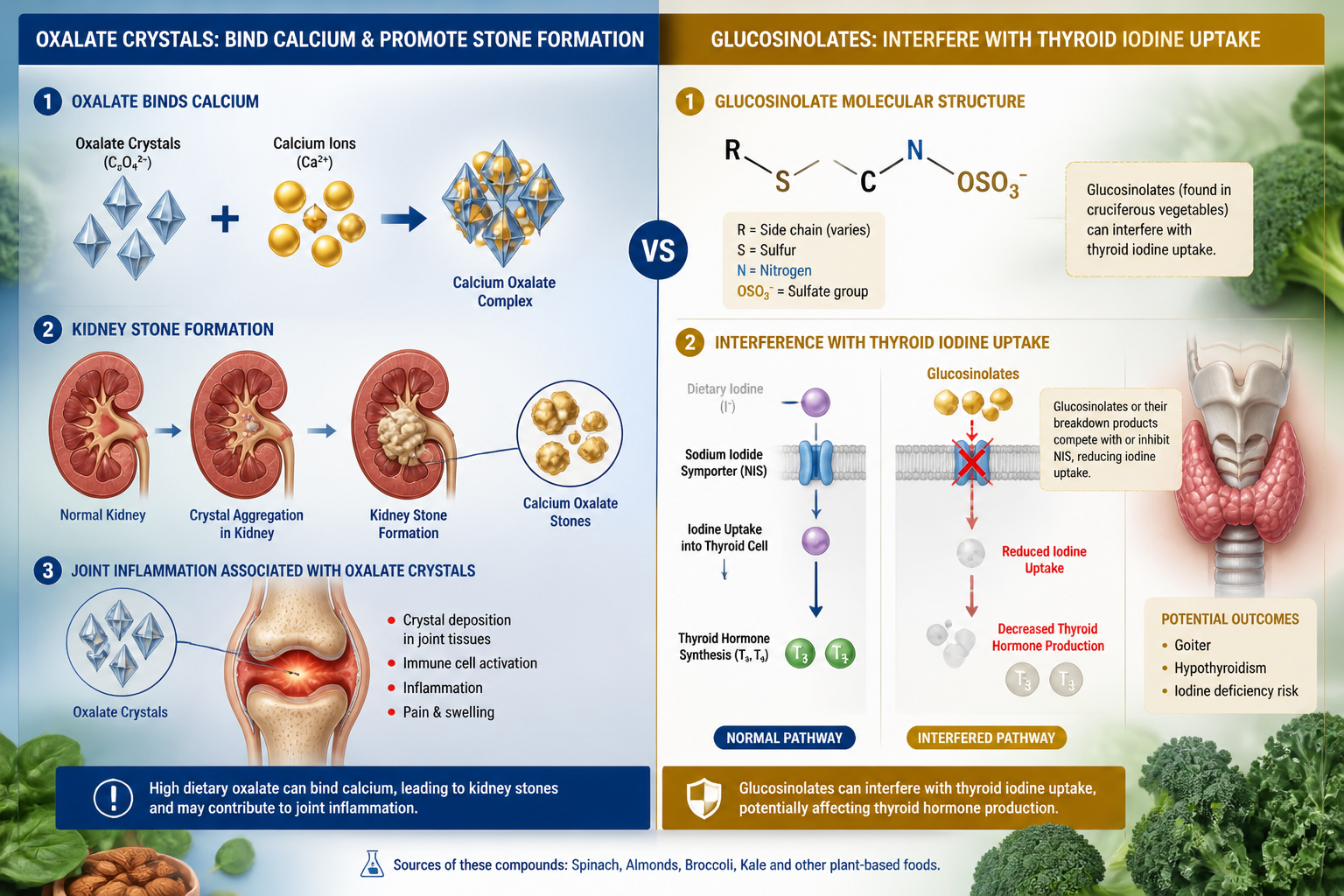
Oxalates are microscopic crystals found in spinach, almonds, beets, sweet potatoes, and rhubarb. In the gut, they bind to calcium and form calcium oxalate — a compound the body cannot absorb. This creates two problems:
- Reduced calcium absorption from the meal containing high-oxalate foods
- Kidney stone risk in people who absorb oxalates into the bloodstream, where they can crystallise in the kidneys
The evidence on kidney stones is solid. People with a history of calcium oxalate kidney stones are routinely advised to moderate high-oxalate foods. For the general population eating a varied diet, oxalate intake is unlikely to cause calcium deficiency on its own. But someone eating large daily quantities of raw spinach smoothies while already low in calcium is stacking risks unnecessarily.
For more on calcium and food sources, see foods rich in calcium: best sources, daily needs and absorption tips.
Glucosinolates: The Thyroid Connection
Glucosinolates are sulfur-containing compounds found in cruciferous vegetables — broccoli, kale, cabbage, Brussels sprouts. When these vegetables are chewed or chopped, glucosinolates break down into compounds (including isothiocyanates and thiocyanates) that can impede iodide uptake by the thyroid gland. [1]
Who this matters for:
- People with existing hypothyroidism or autoimmune thyroid conditions
- People with low iodine intake
- Those eating very large amounts of raw cruciferous vegetables daily
Who this is unlikely to matter for:
- People with healthy thyroid function and adequate iodine intake
- Those eating cooked cruciferous vegetables in normal portions (cooking reduces glucosinolate activity significantly)
The evidence suggests that moderate consumption of cooked cruciferous vegetables does not meaningfully suppress thyroid function in healthy adults. That said, “I eat two raw kale smoothies a day” is a different scenario, and worth considering if thyroid symptoms are present.
How Do Solanines, Furocoumarins, and Cyanogenic Compounds Affect the Body?
These three toxin classes operate through distinct mechanisms, and understanding them helps clarify when plant toxins represent a genuine health risk versus background noise.
Solanines: The Nightshade Glycoalkaloids
Solanine and chaconine are glycoalkaloid toxins found in tomatoes, potatoes, and eggplants. Under normal circumstances, concentrations in ripe, properly stored produce are low. The risk increases significantly in: [4]
- Potato sprouts — solanine concentrates here
- Green or bitter-tasting potato skin
- Green tomatoes — higher solanine than ripe red tomatoes
- Potatoes stored in light — light exposure increases solanine production
Solanines disrupt cell membrane integrity and inhibit acetylcholinesterase, an enzyme involved in nerve signalling. Symptoms of solanine poisoning include nausea, vomiting, diarrhea, headache, and in severe cases, neurological effects. Practical rule: cut off sprouts, avoid green-tinged potato flesh, and do not eat bitter-tasting potatoes.
Furocoumarins: Phototoxic Reactions
Furocoumarins are present in celery, parsley, parsnips, and some citrus peels. They are not primarily a digestive toxin — their main effect occurs when the compound reaches the skin and is then exposed to UVA sunlight. [4]
The result can be severe blistering and hyperpigmentation. This is not a concern at normal dietary intake levels, but it has been documented in people handling large quantities of these vegetables (particularly farm workers and food processors) and occasionally in individuals who consume unusually large amounts.
Cyanogenic Glycosides: Blocking Cellular Oxygen
Cyanide compounds are found in bitter almonds, cassava, apple seeds, and cherry pits. When consumed, cyanide binds to cytochrome oxidase — a key enzyme in cellular energy production — and prevents tissues from using oxygen. [4]
The body shifts from aerobic to anaerobic metabolism, which is not sustainable. Acute cyanide poisoning causes rapid breathing, a drop in blood pressure, dizziness, headache, stomach pain, vomiting, diarrhea, confusion, and convulsions. [4]
In real-world terms, this is primarily a risk with:
- Improperly prepared cassava (a staple food in parts of Africa and South America where preparation methods matter enormously)
- Consuming large quantities of apple seeds or cherry pits deliberately
- Bitter almonds (distinct from sweet almonds sold commercially)
Commercially sold sweet almonds and properly cooked cassava present negligible cyanide risk.
What Plant Toxins Actually Do to Inflammation: The Two-Sided Picture
This is where the topic gets genuinely interesting, and where hype gets in the way of clear thinking — on both sides.
The anti-plant-food argument focuses on lectins, oxalates, and solanines driving inflammation. The pro-plant-food argument points to polyphenols, flavonoids, and fibre as powerful anti-inflammatory agents. Both arguments contain truth. The question is which effect dominates under which conditions.
The Pro-Inflammatory Mechanisms
- Lectins that compromise gut barrier integrity allow bacterial fragments (lipopolysaccharides) to enter circulation, triggering immune activation
- Solanines and other membrane-disrupting compounds can activate local inflammatory responses in the gut
- In genetically susceptible individuals, certain plant proteins may trigger immune responses that sustain low-grade inflammation
The Anti-Inflammatory Mechanisms
Plant-derived polyphenols and flavonoids inhibit the NF-κB transcription factor — a key regulator of inflammatory gene expression. When NF-κB is suppressed, the production of pro-inflammatory cytokines including IL-6, IL-8, and TNF-α is reduced. [3]
Flavonoids also interact with gut microbiota in ways that improve gut barrier function and reduce systemic inflammation. [3] This is a meaningful effect, not a trivial one. Turmeric’s curcumin, green tea’s EGCG, and quercetin from onions and apples all work through overlapping versions of this pathway.
For a detailed look at one of the most researched anti-inflammatory plant compounds, see health benefits of turmeric: what the research actually shows.
The main takeaway is this: Plants contain both pro-inflammatory and anti-inflammatory compounds. The net effect in any individual depends on gut health, genetic factors, preparation methods, dose, and the overall dietary pattern. A diet rich in diverse, well-prepared plant foods tends to be anti-inflammatory in the evidence base. A diet heavy in raw, poorly prepared, or very high quantities of specific plants may not be.
For a broader view of how food choices interact with inflammation, the best anti-inflammatory foods for gut health guide covers this in practical detail.
How Does Bioavailability Affect the Real-World Impact of Plant Toxins?
Not everything that enters the gut reaches the bloodstream. Bioavailability — the proportion of a compound that actually gets absorbed and becomes active in the body — is a critical factor that most discussions of plant toxins overlook.
Factors that limit plant toxin absorption:
- Many polyphenols and flavonoids are poorly soluble in both water and fat, limiting how much crosses the intestinal wall [3]
- Intestinal bacteria break down many plant compounds during digestion, reducing their activity before they can be absorbed
- Liver metabolism (Phase I and Phase II enzyme processing) can eliminate the activity of absorbed compounds before they reach systemic circulation [3]
What this means in practice:
The same compound can have dramatically different effects depending on:
- Gut microbiome composition — different bacteria metabolise plant compounds differently
- Individual enzyme activity — genetic variation in liver detoxification enzymes affects how quickly compounds are cleared
- Food matrix — whether a compound is consumed with fat, fibre, or other foods affects absorption rate
- Gut health status — a compromised gut lining may absorb more of certain toxins than a healthy one
This is why blanket statements about plant toxins — either “they are all dangerous” or “they are all harmless” — fail the evidence test. It depends on the conditions.
For more on how gut health affects these processes, the gut health and digestive wellness complete guide provides a solid foundation.
Who Is Most Vulnerable to Plant Toxin Effects?
Most healthy adults eating a varied, well-prepared diet handle plant toxins without noticeable effects. But certain groups face meaningfully higher risk.
Higher-risk groups include:
- People with existing gut permeability issues — a compromised gut lining is more susceptible to lectin-related damage and may allow more toxins into circulation. See leaky gut: what the science actually says in 2026 for a grounded look at this topic.
- People with autoimmune conditions — immune systems already in a heightened state may react to plant compounds that healthy immune systems ignore
- Those with thyroid conditions — particularly relevant for glucosinolates and iodine status
- People with kidney stone history — oxalate management is clinically relevant for this group
- Individuals with genetic variants affecting detoxification — variation in cytochrome P450 enzymes and other liver detoxification pathways affects how efficiently plant toxins are processed
- Infants and young children — lower body weight means lower threshold doses for toxicity
- People in regions relying heavily on cassava or other cyanogenic staples — preparation method becomes a genuine safety issue, not a lifestyle preference
Genetic susceptibility is real but often overstated in popular media. The evidence does suggest that gut lining integrity, detoxification pathway efficiency, and immune system status all affect individual tolerance. But this does not mean that everyone with any of these vulnerabilities needs to avoid all plant foods. It means they may need to be more careful about preparation methods and quantities of specific foods.
What Are the Most Effective Ways to Reduce Plant Toxin Load?
The practical answer to what plant toxins actually do to your body — and how to manage the effects on digestion, absorption, and inflammation — comes down largely to food preparation. Our ancestors worked this out through trial and error over millennia. The science now explains why their methods worked.
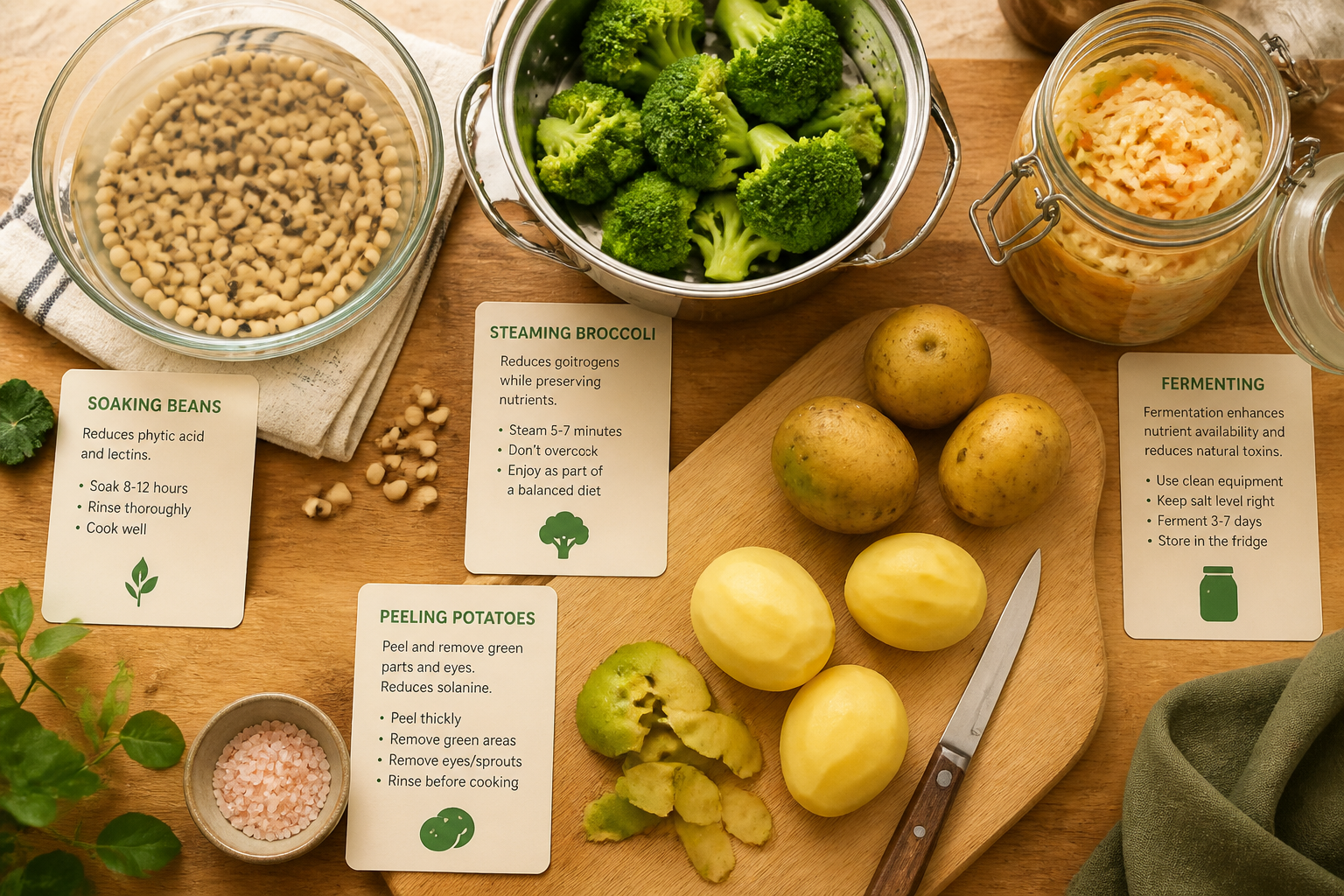
Evidence-based preparation methods:
| Method | Effective Against | Notes |
|---|---|---|
| Boiling/cooking | Lectins, glucosinolates, solanines | Most lectins destroyed by proper boiling; do not just soak raw kidney beans |
| Soaking (12–24 hours) | Lectins, oxalates, phytic acid | Discard soaking water; reduces but does not eliminate |
| Sprouting | Lectins, phytic acid | Increases enzyme activity, reduces some antinutrients |
| Fermentation | Lectins, phytic acid, oxalates | Traditional fermentation (sourdough, tempeh) significantly reduces load |
| Peeling | Solanines in potatoes | Remove green-tinged skin and all sprouts |
| Choosing ripe produce | Solanines in tomatoes/potatoes | Ripe fruit has lower glycoalkaloid content |
A sensible starting point is this: if you are eating a varied diet, cooking your legumes properly, and not relying on any single plant food in extreme quantities, you are already managing most of the risk without needing to think about it.
If you are experiencing persistent digestive symptoms and suspect food sensitivities, a structured elimination approach — rather than eliminating all plant foods — is the more evidence-based route. The complete guide to bland food diets covers how to approach digestive reset methodically.
FAQ: What Plant Toxins Actually Do to Your Body
Q: Are plant toxins dangerous in a normal diet?
For most healthy adults eating varied, cooked foods, plant toxins at typical dietary levels do not cause measurable harm. The risk increases with raw preparation, very high quantities of specific foods, or pre-existing gut or thyroid conditions.
Q: Do cooking and soaking actually eliminate plant toxins?
They significantly reduce most toxins. Boiling destroys over 99% of lectin activity in kidney beans. Soaking reduces oxalates and phytic acid. Fermentation reduces multiple antinutrients. No method eliminates all toxins completely, but the reduction is usually sufficient to make foods safe.
Q: Can plant toxins cause inflammation?
Yes, through specific mechanisms — particularly lectins that compromise gut barrier integrity and allow inflammatory triggers into the bloodstream. But many plant compounds also actively reduce inflammation via the NF-κB pathway. The net effect depends on the individual, the food, and the preparation method. [3]
Q: Is leaky gut caused by plant toxins?
Lectins can contribute to increased gut permeability in susceptible individuals, but leaky gut has multiple causes including stress, alcohol, certain medications, and dysbiosis. Plant toxins are one potential factor, not the only one.
Q: Are nightshade vegetables harmful?
For most people, no. Properly stored, ripe nightshades contain low solanine levels. The risk is primarily from green or sprouted potatoes, green tomatoes, and bitter-tasting nightshades. People with autoimmune arthritis sometimes report symptom improvement on nightshade-free diets, but the evidence for this is limited and individual responses vary.
Q: Should people with kidney stones avoid all high-oxalate foods?
People with a history of calcium oxalate kidney stones are generally advised to moderate high-oxalate foods (spinach, rhubarb, almonds, beets) and ensure adequate hydration and calcium intake. Complete elimination is usually not necessary. A dietitian’s guidance is worthwhile here.
Q: Do plant toxins affect the gut microbiome?
Some do. Certain plant compounds can selectively inhibit or promote specific bacterial species. Additionally, external chemicals like herbicide residues on plant foods have been shown to disrupt gut microbial balance. [6] This is an active area of research.
Q: Are pyrrolizidine alkaloids a concern in everyday foods?
Pyrrolizidine alkaloids (PAs) are mainly a concern in herbal teas and supplements made from plants in the Boraginaceae, Asteraceae, and Fabaceae families, not in standard vegetables. Certain herbal preparations (comfrey, borage) carry real PA risk and should be used with caution. [1]
Q: Can plant toxins cause fatigue?
In people with compromised detoxification pathways or significant gut permeability, chronic low-level plant toxin exposure could theoretically contribute to fatigue through immune activation and mitochondrial stress. This is plausible but not well-established in clinical trials. It is not a first-line explanation for fatigue.
Q: How do polyphenols fit into the plant toxin picture?
Polyphenols are plant compounds that can act as both mild toxins (at high doses) and potent anti-inflammatory agents (at typical dietary doses). Their bioavailability is limited, but gut bacteria convert them into active metabolites. For a detailed look, see what are polyphenols? benefits and food sources explained.
Conclusion: What to Actually Do With This Information
Understanding what plant toxins actually do to your body — the effects on digestion, absorption, and inflammation — does not lead to a simple “eat more plants” or “avoid all plants” conclusion. The evidence is more nuanced than either camp admits.
Here is what the evidence actually supports:
- Prepare food properly. Boil legumes thoroughly, discard soaking water, choose ripe produce, and remove green or sprouted parts of potatoes. These steps eliminate the majority of meaningful toxin risk.
- Variety reduces risk. Eating a wide range of plant foods means no single toxin accumulates to problematic levels. Monotony — eating the same few foods in large quantities daily — is where problems tend to emerge.
- Know your individual context. If you have thyroid disease, a history of kidney stones, autoimmune conditions, or persistent gut symptoms, specific plant toxins are worth taking seriously. For everyone else, the risk at normal dietary levels is low.
- Do not let hype drive decisions in either direction. The carnivore diet community overstates plant toxin dangers. The “all plants are superfoods” community understates them. The truth sits in the middle and depends on conditions.
- If symptoms persist, investigate systematically. Chronic bloating, fatigue, or digestive discomfort that does not resolve with standard dietary improvements is worth investigating properly — not just by eliminating plant foods, but by looking at gut health, food preparation habits, and overall dietary pattern together.
The basics still do the heavy lifting here: cook your food, eat variety, pay attention to how your body responds, and get professional advice when something is not resolving on its own.
📂 Plant Toxins & Antinutrients
This article is part of our cluster. You are reading the featured article below.
- → Enzyme Inhibitors in Raw Plant Foods: Why Cooking Matters More Than Influencers Admit
- → Pesticides vs Plant Toxins: Which Is the Bigger Threat to Your Health and the Environment?
- → Global Toxicity Hotspots: Plant Toxins Amplified in China, Brazil, US Crops
- → Plant Toxins and Brain Fog: New 2026 Studies Linking Phytates to Cognitive Decline
- → Climate Change and Plant Toxins: Rising Levels of Alkaloids and Glycosides in Crops
- → Histamine Intolerance and Plant Lectins: The Overlooked Gut-Brain Connection
- → Antinutrients and Athletic Performance: How Plant Toxins Sabotage Endurance and Recovery
- → Kids and Plant Toxins: Antinutrient Impacts on Growth, ADHD, and Developing Brains
- → Phytoestrogens Beyond Soy: Flax, Nuts, and Fertility Impacts in 2026 Research
- → Synergistic Plant Toxin Effects: How Oxalates Amplify Lectin Damage in the Gut
- → Antinutrients and Skin Health: How Tannins and Phytoestrogens Trigger Eczema Flares
- YOU ARE HERE What Plant Toxins Actually Do to Your Body: Effects on Digestion, Absorption and Inflammation
References
[1] PMC10159748 — https://pmc.ncbi.nlm.nih.gov/articles/PMC10159748/ [2] The Truth About Plant Toxins (YouTube) — https://www.youtube.com/watch?v=28zLjGxmxUU [3] PMC12154257 — https://pmc.ncbi.nlm.nih.gov/articles/PMC12154257/ [4] Natural Toxins in Food — https://www.who.int/news-room/fact-sheets/detail/natural-toxins-in-food [5] Natural Toxins in Food (FDA) — https://www.fda.gov/food/chemical-contaminants-pesticides/natural-toxins-food [6] ScienceDaily — https://www.sciencedaily.com/releases/2025/12/251202052215.htm
Dave James has spent 30+ years reading health and longevity research, and has run All Perfect Health for the past five. His background is in Australian mining and industrial engineering — disciplines built on questioning claims, measuring outcomes, and respecting evidence. He writes about what the research actually says, including where the experts disagree.
More about Dave & this site →