Bland Diet Breakfast: 15 Satisfying Recipes That Won’t Upset Your Stomach
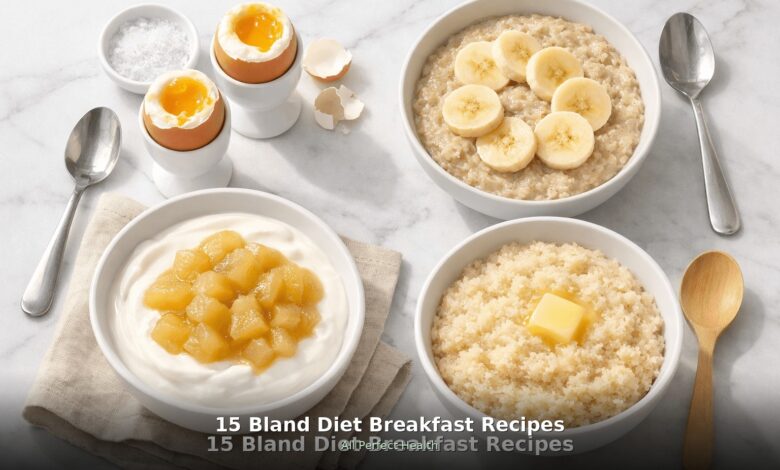
Last updated: May 2026
- Featured Video: A Gut Doctor’s Daily Plate
- What Is a Bland Diet Breakfast, and Who Needs One?
- Which Breakfast Foods Are Safe on a Bland Diet?
- Bland Diet Breakfast Recipe 1: Breakfast Couscous
- Bland Diet Breakfast Recipe 2: The Perfect Hard-Boiled Egg
- Bland Diet Breakfast Recipe 3: Scrambled Eggs with Spinach and Ricotta
- Bland Diet Breakfast Recipe 4: Vanilla Yogurt with Soft Fruit Toppings
- Bland Diet Breakfast Recipe 5: Cottage Cheese with Pear Compote
- Oatmeal Variations for a Bland Diet: 3 Recipes Worth Making
- Protein-Rich Bland Diet Breakfasts: What to Choose and Why
- Smoothies and Shakes for a Bland Diet Breakfast
- How to Add Flavor to Bland Diet Breakfasts Without Causing Problems
- Common Mistakes People Make on a Bland Diet Breakfast
Last updated: April 8, 2026
Quick Answer: A bland diet breakfast should include foods that are easy to digest, low in fat, and free from strong spices, high-acid ingredients, or excessive fiber. Good options include cooked oatmeal, plain eggs, vanilla yogurt, cottage cheese, and soft fruits like bananas and pears. These meals provide enough protein and energy to start the day without triggering digestive discomfort from conditions like gastritis, ulcers, acid reflux, or post-surgical recovery. For more ideas, consider exploring bland diet breakfast ideas that suit your dietary needs.
Key Takeaways
- A bland diet breakfast is not the same as a flavorless one — mild spices like cinnamon, ginger, and cardamom are generally well tolerated and add real flavor
- Eggs (hard-boiled, poached, or scrambled) are among the most versatile and digestive-friendly protein sources for a bland diet
- Oatmeal is a standout choice because its soluble fiber (beta-glucan) helps coat and soothe the digestive tract rather than irritating it
- Vanilla yogurt, Greek yogurt with honey, and cottage cheese all deliver protein and calcium without requiring complex preparation
- Smoothies made with banana, chia seeds, or nut butter offer a quick, no-cook option when solid food feels difficult to manage
- Couscous and soft rice are excellent grain alternatives to oatmeal for variety throughout the week
- Avoid high-fat dairy, fried eggs, citrus juices, hot sauce, and heavily spiced foods — these commonly aggravate digestive conditions
- Most bland diet breakfasts take under 15 minutes to prepare, making them practical for everyday use
- People recovering from surgery, managing ulcers or gastritis, or dealing with IBS flare-ups benefit most from these meal choices
- Flavor can be added safely through low-acid fruits, mild herbs, honey, and small amounts of cinnamon or vanilla extract
Expert insight: Dr. Will Bulsiewicz is a board-certified gastroenterologist and author of “Fiber Fueled.” In this video, he walks through what a gut doctor actually eats every day — directly supporting the bland diet breakfast principles in this article.
What Is a Bland Diet Breakfast, and Who Needs One?
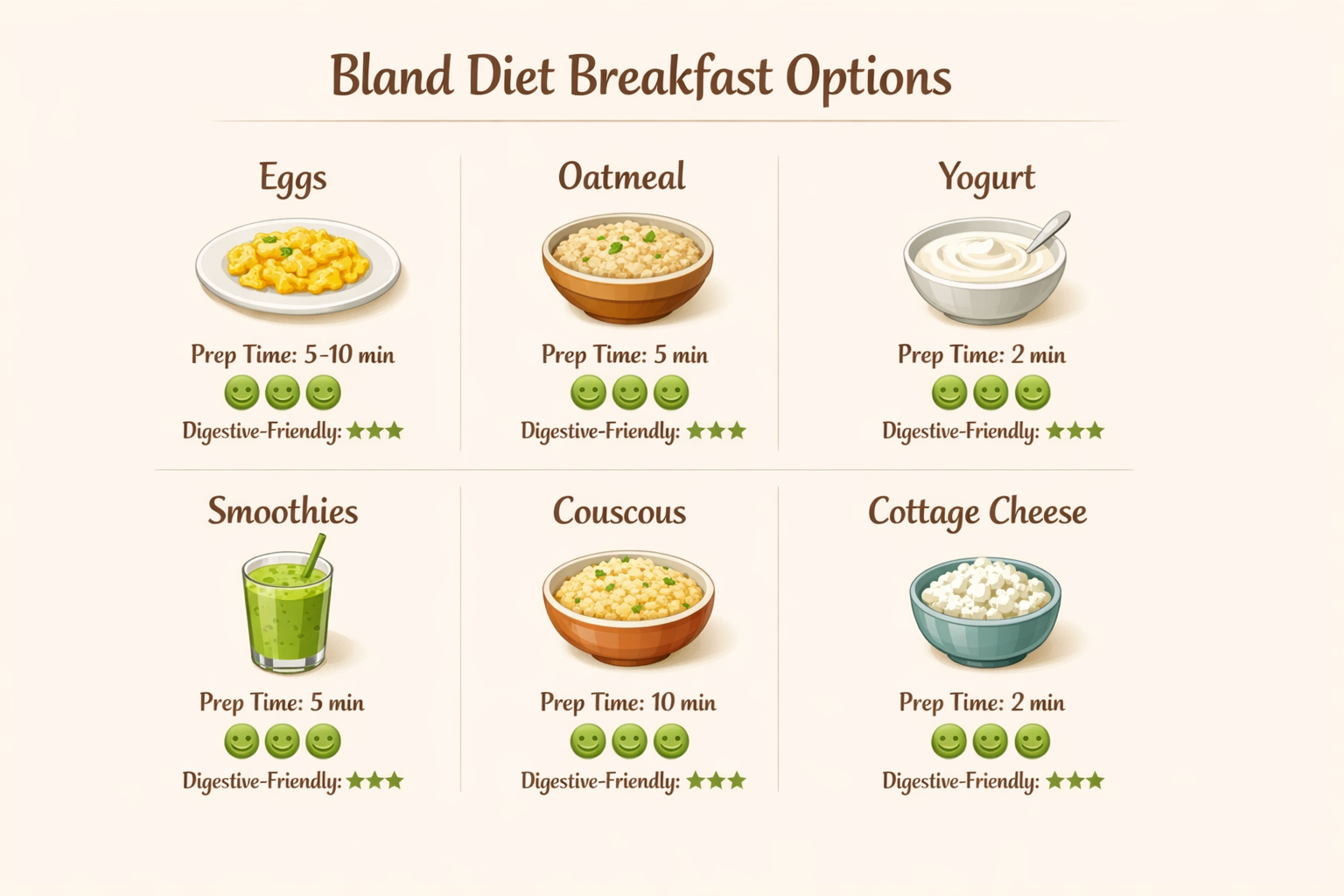
A bland diet breakfast is a morning meal specifically designed to minimize digestive stress. It relies on foods that are soft in texture, low in fat, mildly seasoned, and easy for the stomach and intestines to process. It is not a permanent eating style for most people — it’s a therapeutic approach used during recovery or flare-ups.
Incorporating bland diet breakfast ideas into your morning routine can make a significant difference in your digestive comfort and overall energy levels.
Who typically follows a bland diet at breakfast:
- People managing gastritis, peptic ulcers, or acid reflux (GERD)
- Individuals recovering from gastrointestinal surgery or a stomach illness
- Those experiencing nausea, vomiting, or diarrhea during illness recovery
- People with irritable bowel syndrome (IBS) during symptomatic periods
- Anyone advised by a doctor or dietitian to reduce digestive load temporarily
What makes a breakfast “bland diet approved”:
- Cooked or soft foods rather than raw, crunchy, or fibrous ones
- Low to moderate fat content (avoids slowing gastric emptying)
- No citrus, tomato-based sauces, or high-acid ingredients
- Minimal or no alcohol, caffeine (in large amounts), or carbonation
- Mild seasoning only — small amounts of cinnamon, ginger, vanilla, or salt are usually fine
For a broader look at gut health and digestive wellness, including what foods support a healthy microbiome long-term, that resource covers the topic in depth.
Which Breakfast Foods Are Safe on a Bland Diet?
The safest bland diet breakfast foods are those that require minimal digestive effort — cooked grains, eggs, low-fat dairy, ripe soft fruits, and mild nut butters. Here is a practical breakdown by category.
Grains and starches:
- Cooked oatmeal (plain or mildly spiced)
- Cream of wheat or rice porridge
- White or whole wheat couscous
- Plain white toast or white rice
- Low-fiber cereals without added sugar
Protein sources:
- Hard-boiled, poached, or scrambled eggs
- Plain Greek yogurt or vanilla yogurt
- Cottage cheese
- Smooth nut butters (almond, peanut) in small amounts
- Mild white fish or tofu if eating a savory breakfast
Fruits:
- Bananas (ripe)
- Cooked or canned pears
- Applesauce (unsweetened)
- Melons (cantaloupe, honeydew)
- Cooked apples
Dairy:
- Low-fat milk or fortified almond milk
- Ricotta cheese
- Plain or lightly flavored yogurt
- Mild cheeses in small amounts
Foods to avoid at breakfast on a bland diet:
- Citrus fruits and juices (orange, grapefruit, lemon)
- Fried or greasy foods (bacon, sausage, hash browns cooked in excess oil)
- Whole spices in large quantities, chili, hot sauce
- High-fat cream cheese or full-fat dairy in large portions
- Raw onions, garlic, or peppers
- Caffeinated beverages in large quantities (a small cup of weak tea is usually fine)
Bland Diet Breakfast Recipe 1: Breakfast Couscous
Breakfast couscous is one of the most underrated bland diet options. It cooks in under five minutes, has a soft and easily digestible texture, and absorbs mild flavors well.
Why it works for a bland diet: Couscous is a refined grain with a gentle texture that sits easily in an unsettled stomach. Whole wheat couscous adds a bit more fiber and nutrients without being harsh on digestion.
Basic recipe (serves 2):
- Bring 1 cup of milk (dairy or unsweetened almond milk) to a gentle simmer in a small saucepan
- Stir in ¾ cup of whole wheat couscous and remove from heat
- Cover and let sit for 5 minutes until the liquid is absorbed
- Fluff with a fork and add a pinch of cinnamon and a small amount of ground ginger
- Top with sliced ripe banana, a spoonful of vanilla yogurt, or a drizzle of honey
Optional toppings that stay bland-diet friendly:
- Chopped pecans (small amount, well tolerated by most)
- Sliced strawberries (if tolerated — some people with acid reflux prefer to skip)
- A light dusting of cardamom
- Unsweetened applesauce stirred through
Prep time: Under 10 minutes. No cooking experience needed.
Bland Diet Breakfast Recipe 2: The Perfect Hard-Boiled Egg
Hard-boiled eggs are a cornerstone of bland diet eating. They are high in protein, easy to prepare in batches, portable, and gentle on the digestive system when prepared without added fat or spice. One large egg provides approximately 6 grams of protein and a range of B vitamins, including B12 and choline — both important for energy and nerve function.
For a full nutritional breakdown, see this guide on calories in a hard-boiled egg.
Step-by-step method for a perfect hard-boiled egg:
- Place eggs in a single layer at the bottom of a saucepan — do not stack them
- Cover with cold water by at least one inch
- Bring to a full boil over medium-high heat
- Once boiling, reduce heat slightly and cook for 9 minutes for a fully set yolk
- Transfer immediately to an ice bath (a bowl of cold water with ice) for at least 5 minutes
- Peel under running water for easiest shell removal
Tips:
- Older eggs peel more easily than very fresh ones
- The ice bath stops the cooking process and prevents the grey ring around the yolk that forms when eggs overcook
- Batch-cook 6 eggs on Sunday and refrigerate for up to 5 days — this makes bland diet mornings much easier
Serve with: Plain toast, a small portion of applesauce, or alongside oatmeal for a more complete meal.
Bland Diet Breakfast Recipe 3: Scrambled Eggs with Spinach and Ricotta
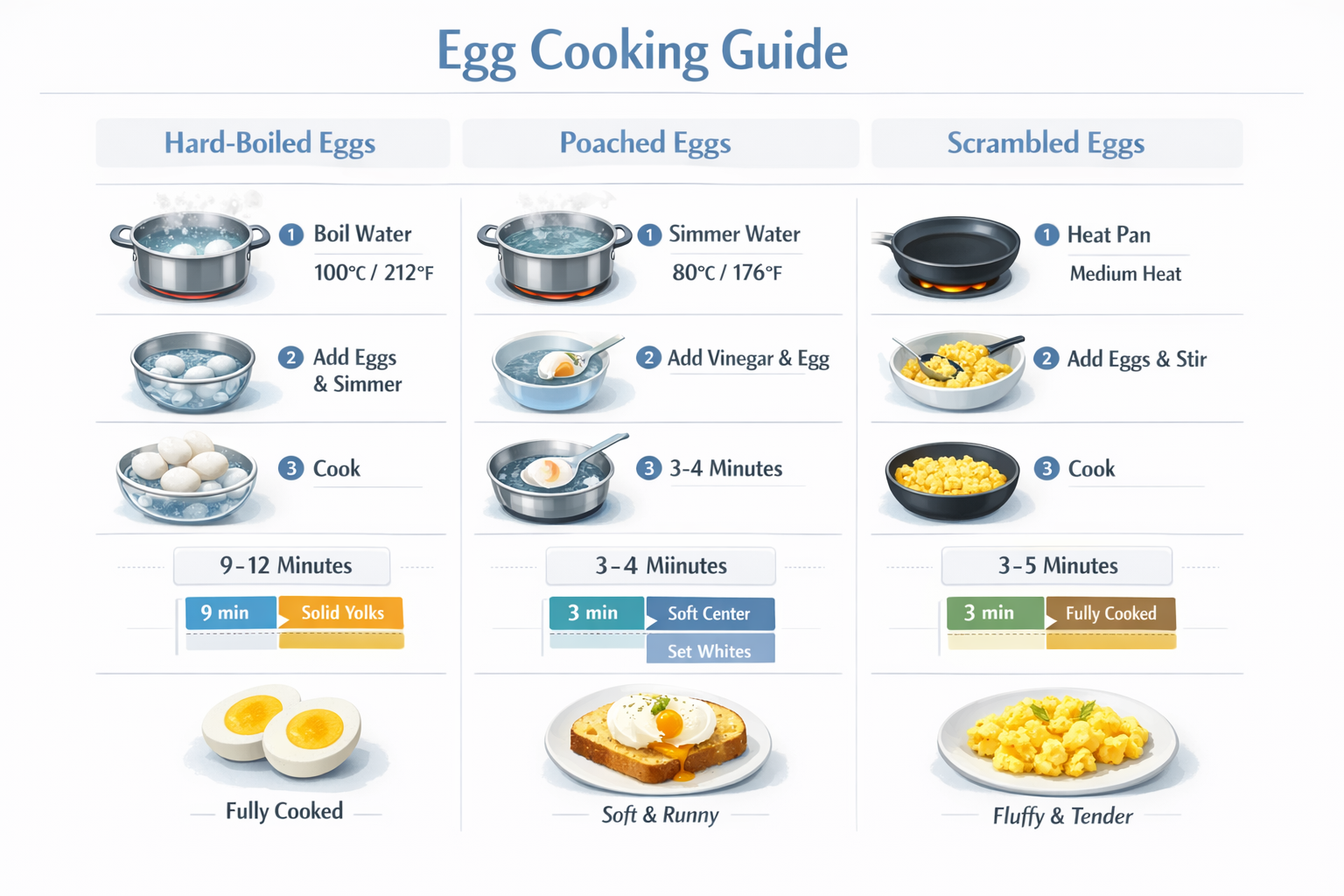
Scrambled eggs with spinach and ricotta is a savory, protein-rich breakfast that fits comfortably within bland diet guidelines when prepared with care. The key is keeping the fat content moderate and avoiding aggressive seasoning.
Why this works: Ricotta is one of the mildest cheeses available, with a creamy texture and low acidity. Spinach, when wilted rather than served raw, becomes soft and easy to digest. Together, they elevate plain scrambled eggs without introducing digestive triggers.
Ingredients (serves 1):
- 2 large eggs
- 2 tablespoons ricotta cheese
- 1 small handful of fresh spinach leaves
- 1 teaspoon olive oil
- 1 scallion, finely sliced (optional — omit if onions trigger symptoms)
- Salt and white pepper to taste
Method:
- Warm olive oil in a non-stick pan over low-medium heat
- If using scallion, cook for 1 minute until softened
- Add spinach and stir until just wilted, about 1 minute
- Whisk eggs with ricotta until combined, then pour into the pan
- Stir gently and continuously over low heat until eggs are just set — slightly underdone is better than overdone for texture
- Season lightly with salt and white pepper (white pepper is milder than black)
Common mistake: Cooking scrambled eggs over high heat makes them rubbery and harder to digest. Low and slow is the method that produces the softest result.
Suitable for: Gastritis, ulcers, and post-surgical recovery diets. If you have been advised to avoid all fats temporarily, use a non-stick pan with minimal or no oil and skip the ricotta.
Bland Diet Breakfast Recipe 4: Vanilla Yogurt with Soft Fruit Toppings
Plain vanilla yogurt is one of the simplest and most effective bland diet breakfasts. It requires zero preparation, delivers a solid protein and calcium hit, and pairs well with a range of mild toppings.
Choosing the right yogurt:
- Look for low-fat or full-fat plain yogurt with vanilla added, or Greek yogurt with a small drizzle of honey
- Avoid yogurts with citrus flavors, high sugar content, or artificial sweeteners (which can trigger digestive symptoms in some people)
- Greek yogurt contains more protein per serving than regular yogurt — typically 15–17 grams per 170g serving compared to 8–9 grams in regular yogurt
Bland-diet-friendly toppings:
- Sliced ripe banana
- Cooked or canned pear pieces (drained)
- A small drizzle of honey
- A sprinkle of plain granola (if tolerated)
- A pinch of cinnamon
When to choose yogurt over eggs: Yogurt is the better choice when nausea makes the smell or texture of cooked eggs unappealing, or when you need something cold and easy to eat quickly. It also works well as a second component alongside oatmeal or couscous.
Bland Diet Breakfast Recipe 5: Cottage Cheese with Pear Compote
Cottage cheese with pear compote is a protein-rich, low-acid breakfast that is particularly well suited to people managing ulcers or recovering from stomach illness. The combination is mild, slightly sweet, and satisfying without being heavy.
Why pears work well: Pears are one of the gentler fruits for digestive conditions. When cooked, they become soft and easy to break down, and their natural sweetness reduces the need for added sugar.
How to make pear compote:
- Peel and dice 2 ripe pears, removing the core
- Place in a small saucepan with 2 tablespoons of water
- Cook over low heat for 8–10 minutes, stirring occasionally, until soft
- Mash lightly with a fork for a chunky texture, or blend for a smooth sauce
- Allow to cool slightly before serving
Cottage cheese base:
- Blend ½ cup of cottage cheese with 1–2 tablespoons of milk until smooth and creamy
- This removes the curdy texture that some people find off-putting when unwell
Serve: Spoon the cottage cheese cream into a bowl and top with the warm or cooled pear compote. A small pinch of cinnamon or vanilla extract can be added to either component.
Nutritional note: Cottage cheese is a good source of casein protein, which digests slowly and supports sustained satiety. It is also relatively low in fat when using low-fat varieties and provides calcium — important for people whose illness may be limiting overall food intake. For more on foods rich in calcium and why they matter, that guide covers daily requirements and top sources.
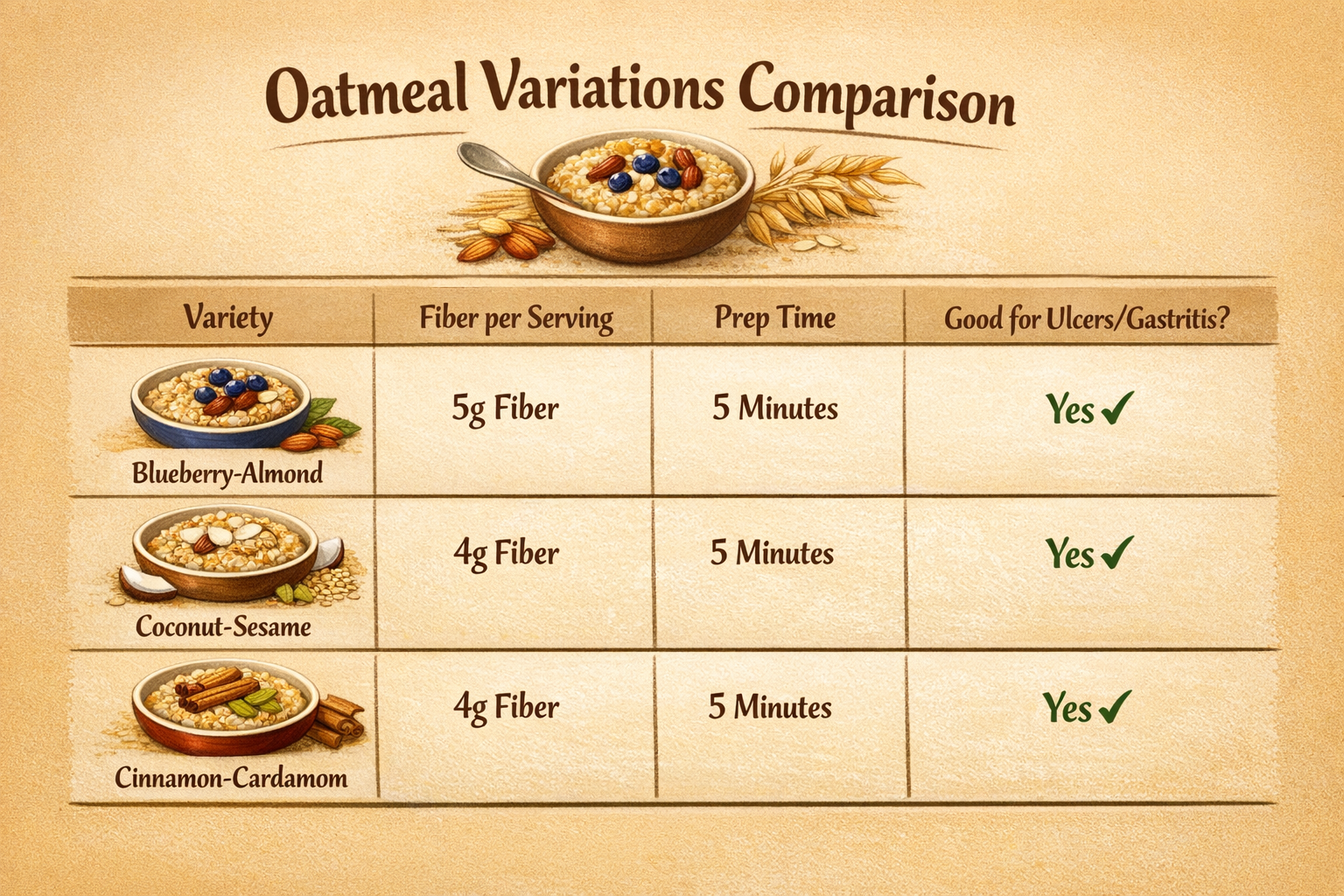
Oatmeal Variations for a Bland Diet: 3 Recipes Worth Making
Oatmeal is arguably the most well-rounded bland diet breakfast food. It is filling, easy to prepare, inexpensive, and its soluble fiber content — specifically beta-glucan — has been shown in multiple studies to support digestive health and help manage cholesterol levels. Rolled oats and instant oats are both suitable; steel-cut oats take longer to cook and have a chewier texture that may be harder to tolerate during acute digestive flare-ups.
Oatmeal with Blueberries and Almonds
This variation adds antioxidant-rich blueberries and a small amount of sliced almonds for texture and healthy fat. Blueberries are low in acid compared to other berries and are generally well tolerated on a bland diet. Almonds add crunch and protein, though they should be used in small quantities and sliced or chopped finely rather than eaten whole if digestion is compromised.
Basic method: Cook ½ cup of rolled oats in 1 cup of water or low-fat milk over medium heat until creamy. Top with a small handful of fresh or frozen (thawed) blueberries and 1 tablespoon of sliced almonds. A drizzle of honey adds sweetness without acidity.
Roasted Coconut Sesame Oatmeal
This variation takes inspiration from Asian breakfast traditions and produces a creamy, slightly nutty bowl that feels more substantial than plain oatmeal. Toast 1 teaspoon of sesame seeds and 1 tablespoon of unsweetened shredded coconut in a dry pan for 2–3 minutes until lightly golden. Stir into cooked oatmeal along with a small drizzle of honey or maple syrup. The toasting process deepens the flavor significantly without adding any digestive irritants.
Suitable for: People who find plain oatmeal monotonous and want variety without straying from bland diet principles.
Cinnamon Oatmeal with Cloves and Cardamom
This is a warming, spiced oatmeal that works particularly well in cooler months. Cinnamon, cloves, and cardamom are all mild enough to be used in small quantities on a bland diet, and each carries its own set of potential health benefits — cinnamon in particular has been studied for its anti-inflammatory properties. For more on cinnamon’s benefits and its broader uses, that article is worth reading.
Method: Cook oatmeal as normal, then stir in ¼ teaspoon cinnamon, a small pinch of ground cloves, and a pinch of cardamom. Sweeten with honey or maple syrup. Top with sliced banana or a spoonful of vanilla yogurt.
This recipe is: Plant-based, vegan, and gluten-free when made with certified gluten-free oats.
Protein-Rich Bland Diet Breakfasts: What to Choose and Why
Getting enough protein at breakfast matters even on a bland diet. Protein supports tissue repair (especially relevant post-surgery), helps regulate blood sugar, and reduces the likelihood of energy crashes mid-morning that lead to poor food choices later in the day.
Greek Yogurt with Honey and Granola
Greek yogurt is one of the most efficient protein sources for a bland diet breakfast. A 170g serving of low-fat Greek yogurt typically delivers 15–17 grams of protein along with calcium and live probiotic cultures, which may support gut health during recovery. Add a teaspoon of honey for gentle sweetness and a small amount of plain granola for texture — choose a low-sugar variety without dried citrus peel or chocolate chips.
Choose this if: You want a no-cook, high-protein option that takes under two minutes to prepare.
Scrambled Eggs with Spinach and Tomatoes
A variation on the ricotta scramble described earlier, this version uses diced tomatoes for added flavor. Note that tomatoes are mildly acidic — if you have active acid reflux or gastritis, omit the tomatoes or use only a very small amount of ripe, low-acid tomato. For most people on a bland diet for reasons other than acid-related conditions, small amounts of tomato are fine.
Protein content: Two large eggs provide approximately 12 grams of protein. Adding a tablespoon of feta or ricotta adds another 2–3 grams.
Avocado Toast with Smoked Salmon
Avocado toast with smoked salmon is a higher-fat option that suits people on a bland diet for reasons other than fat malabsorption or pancreatitis. Avocado provides heart-healthy monounsaturated fats and potassium, while smoked salmon adds omega-3 fatty acids and approximately 16 grams of protein per 85g serving. For a full look at avocado’s health benefits, including its cardiovascular and cognitive effects, that guide covers the research in detail.
Bland diet note: Skip the red onion, capers, and arugula if your digestive system is particularly sensitive. A simpler version — mashed avocado on plain toast with a slice of smoked salmon — delivers the same nutritional benefit with less digestive load.
Smoothies and Shakes for a Bland Diet Breakfast
Smoothies are a practical bland diet breakfast option when solid food is unappealing, when nausea is present, or when time is short. The key is keeping ingredients mild and avoiding citrus, high-acid fruits, and excessive fiber that could aggravate symptoms.
Banana and Peanut Butter Smoothie
Blend one ripe banana with 1 cup of low-fat milk, 1 tablespoon of smooth peanut butter, and a small pinch of cinnamon. This smoothie is filling, high in potassium and protein, and has a naturally sweet flavor that requires no added sugar. Ripe bananas are particularly well tolerated on a bland diet because their starch has converted to simple sugars, making them easier to digest.
Protein content: Approximately 10–12 grams per serving, depending on the milk and peanut butter used.
Banana Coconut Smoothie
Blend one ripe banana with 1 cup of coconut milk (light variety for lower fat) and 1 tablespoon of almond butter or tahini. This three-ingredient smoothie is creamy, naturally sweet, and provides a good balance of carbohydrates, fat, and protein. It works well for people who cannot tolerate dairy.
Berry Chia Seed Smoothie
Blend ½ cup of frozen blueberries, ½ cup of frozen raspberries, 1 cup of low-fat milk or oat milk, and 1 tablespoon of chia seeds. Let the smoothie sit for 2–3 minutes after blending to allow the chia seeds to begin absorbing liquid — this creates a thicker, more satisfying texture. Blueberries and raspberries are lower in acid than strawberries or citrus and are generally well tolerated on a bland diet.
Note on chia seeds: Chia seeds are high in fiber and omega-3 fatty acids. During acute digestive flare-ups, start with a small amount (½ teaspoon) and increase gradually. For more on high-fiber foods and how to incorporate them without digestive discomfort, that resource is a practical starting point.
How to Add Flavor to Bland Diet Breakfasts Without Causing Problems
The most common frustration with a bland diet is the perceived lack of flavor. The solution is understanding which flavor-adding ingredients are safe and which are not — and then using them consistently.
Safe flavor additions for bland diet breakfasts:
| Ingredient | How to Use It | Why It’s Safe |
|---|---|---|
| Cinnamon | Stir into oatmeal, yogurt, or couscous | Anti-inflammatory, low-acid, well tolerated |
| Vanilla extract | Add to yogurt, smoothies, or oatmeal | Mild flavor, no digestive irritants |
| Honey | Drizzle over yogurt, fruit, or toast | Natural sweetener, low-acid |
| Ginger (ground) | Small pinch in oatmeal or smoothies | Supports nausea relief, anti-inflammatory |
| Cardamom | Add to couscous or oatmeal | Mild, warming flavor |
| Fresh mint | Garnish smoothies or yogurt | Soothing for the digestive tract |
| Maple syrup | Small drizzle on oatmeal or couscous | Natural, low-acid sweetener |
Flavor additions to avoid or limit:
- Black pepper in large amounts (white pepper is milder)
- Garlic and raw onion
- Hot sauce, chili flakes, or cayenne
- Citrus zest or juice
- Strong vinegars
Practical tip: Build flavor through layering rather than relying on a single strong ingredient. A bowl of oatmeal with cinnamon, vanilla yogurt, honey, and banana tastes significantly more interesting than plain oatmeal — and every ingredient in that combination is bland-diet safe.
For a broader look at anti-inflammatory foods that also support digestive health, including which herbs and spices have the strongest evidence behind them, that guide is worth bookmarking.
Common Mistakes People Make on a Bland Diet Breakfast
Even well-intentioned bland diet breakfasts can go wrong. These are the most frequent errors and how to fix them.
1. Eating too little protein
Plain toast and weak tea is not a sufficient bland diet breakfast. Without adequate protein, energy levels drop quickly and recovery is slower. Always include at least one protein source — eggs, yogurt, cottage cheese, or nut butter.
2. Assuming “bland” means no seasoning at all
This leads to meals that are so unpleasant people abandon the diet entirely. Mild spices like cinnamon, ginger, and vanilla are not only safe but actively beneficial for digestive health.
3. Using full-fat dairy in large amounts
High-fat foods slow gastric emptying and can worsen symptoms of acid reflux and gastroparesis. Use low-fat or reduced-fat dairy options, particularly during the acute phase of a digestive condition.
4. Drinking large amounts of coffee or citrus juice
Both are highly acidic and can worsen gastritis, reflux, and ulcer symptoms significantly. Swap coffee for weak herbal tea (chamomile, ginger, or peppermint) and skip citrus juice entirely during flare-ups.
5. Not varying the menu
Eating the same bland breakfast every day leads to appetite fatigue and nutritional gaps. Rotate between oatmeal, eggs, yogurt, couscous, and smoothies throughout the week to maintain both nutritional variety and eating motivation.
6. Returning to a normal diet too quickly
The bland diet is a transition, not a permanent state, but reintroducing trigger foods too soon can set recovery back significantly. Reintroduce foods gradually and one at a time, noting any return of symptoms.
Bland Breakfast Builder
Pick your main ingredient to get a bland breakfast idea:
Frequently Asked Questions About Bland Diet Breakfast
What is the easiest bland diet breakfast to make?
Vanilla yogurt with sliced banana and a drizzle of honey. It requires no cooking, takes under two minutes, and provides protein, carbohydrates, and easily digestible natural sugars.
Can I drink coffee on a bland diet?
Generally, no — or only in very small amounts. Coffee is acidic and stimulates gastric acid production, which can worsen gastritis, ulcers, and acid reflux. Weak herbal teas are a better morning beverage choice.
Is oatmeal good for a bland diet?
Yes. Oatmeal is one of the best bland diet breakfast foods. Its soluble fiber forms a gel-like substance in the digestive tract that can help soothe irritation rather than aggravate it. Use plain rolled oats or instant oats rather than steel-cut oats during acute flare-ups.
Can I eat eggs every day on a bland diet?
Yes, for most people. Eggs are a complete protein and are well tolerated by the digestive system when cooked without excessive fat. Hard-boiled, poached, or gently scrambled eggs are all appropriate daily options.
How long do I need to follow a bland diet?
This depends entirely on the underlying condition and should be guided by a doctor or dietitian. For mild stomach illness, a bland diet may only be needed for a few days. For gastritis or ulcer management, it may be recommended for several weeks.
Is Greek yogurt allowed on a bland diet?
Yes. Plain or lightly flavored Greek yogurt is one of the most recommended bland diet foods. Its probiotic content may also support gut recovery. Avoid flavored varieties with citrus or high sugar content.
Can I have smoothies on a bland diet?
Yes, as long as they avoid high-acid fruits (citrus, pineapple), excessive fiber, or high-fat ingredients. Banana-based smoothies with low-fat milk or nut butter are ideal.
What fruits are safe for a bland diet breakfast?
Ripe bananas, cooked pears, applesauce, cantaloupe, and honeydew melon are among the safest choices. Avoid citrus fruits, pineapple, and large amounts of raw berries during acute flare-ups.
Is avocado toast suitable for a bland diet?
For most bland diet conditions, yes — avocado is low in acid and rich in healthy fats. However, for people with fat malabsorption or pancreatitis, high-fat foods like avocado should be limited or avoided.
Can I add honey to bland diet breakfasts?
Yes. Honey is a mild, low-acid natural sweetener that is generally well tolerated on a bland diet. Some research even suggests honey may have a mild protective effect on the gastric mucosa, though it should not replace medical treatment.
What should I drink at breakfast on a bland diet?
Water, weak herbal tea (chamomile, ginger, peppermint), or low-fat milk are the safest options. Avoid coffee, citrus juice, carbonated drinks, and alcohol.
Is a bland diet the same as a low-fiber diet?
Not exactly. A bland diet focuses on reducing digestive irritation through soft textures, mild seasoning, and low-acid foods. A low-fiber diet specifically restricts fiber intake. Some bland diet foods (oatmeal, for example) are actually moderately high in soluble fiber, which is beneficial. Your doctor may recommend both simultaneously depending on your condition.
Related Reading
If you found this guide useful, these resources cover related topics in depth:
- Gut health and digestive wellness — a comprehensive look at supporting your digestive system through food and lifestyle
- 10 ways to soothe your stomach naturally — practical remedies for nausea, bloating, and digestive discomfort
- Anti-inflammatory foods: ultimate guide — which foods reduce systemic inflammation and support recovery
- High-fiber foods: the complete list — how to reintroduce fiber safely as you transition off a bland diet
- Healthy choice meals — meal ideas for when you’re ready to expand beyond bland diet eating
This article is for informational purposes only and does not constitute medical advice. If you have been diagnosed with a digestive condition or have been advised to follow a bland diet by a healthcare provider, follow their specific guidance, as individual needs vary.
Healthy Meals for Weight Loss in (2026)
Nutrition info of Banana -Ideal for Good Health 2026

Dave James has spent 30+ years reading health and longevity research, and has run All Perfect Health for the past five. His background is in Australian mining and industrial engineering — disciplines built on questioning claims, measuring outcomes, and respecting evidence. He writes about what the research actually says, including where the experts disagree.
More about Dave & this site →
Part of the Fibre, Gut & Metabolic Health cluster