Pesticides vs Plant Toxins: Which Is the Bigger Threat to Your Health and the Environment?
Last updated: May 16, 2026
Quick Answer: Both synthetic pesticides and naturally occurring plant toxins carry real risks, but the comparison is not straightforward. In real-world terms, the dose, the compound, and the exposure route determine the danger. Synthetic pesticides raise legitimate concerns about chronic low-dose exposure and environmental damage. Natural plant toxins are often underestimated but can be genuinely harmful at high intakes. For most people eating a varied, well-prepared diet, neither poses an acute threat — but both deserve more than a dismissal.
🔑 Key Takeaways
- Plants produce their own chemical defenses — compounds like solanine, oxalates, lectins, and cyanogenic glycosides — that can cause real harm at sufficient doses.
- Synthetic pesticides, including neonicotinoids and pyrethroids, are designed to kill organisms and carry documented risks to human health and ecosystems at certain exposure levels.
- Regulatory residue limits are set with safety margins, but long-term, low-dose cumulative exposure remains an area of active scientific debate.
- Organic produce reduces synthetic pesticide exposure but does not eliminate plant toxins — and organic pesticides are not automatically safer.
- Cooking, soaking, and food preparation significantly reduce both synthetic residues and many natural plant toxins.
- Environmental damage from synthetic pesticides — particularly to pollinators, soil microbiomes, and waterways — is better documented than the environmental impact of plant toxins.
- The question of “Pesticides vs Plant Toxins: Which Is the Bigger Threat to Your Health and the Environment?” has no single answer. Context, dose, and individual vulnerability all matter.
- A sensible starting point is to diversify your diet, prepare food properly, and reduce unnecessary pesticide exposure where practical.
In this guide
- What Are We Actually Comparing Here?
- How Do Synthetic Pesticides Affect Human Health?
- How Dangerous Are Natural Plant Toxins in a Real-World Diet?
- Pesticides vs Plant Toxins: Which Is the Bigger Threat to Your Health and the Environment? — The Environmental Dimension
- Does Organic Food Actually Solve the Problem?
- Who Is Most Vulnerable — and When Does It Actually Matter?
- How to Reduce Your Exposure to Both — Practical Steps That Actually Work
- Pesticides vs Plant Toxins: Which Is the Bigger Threat to Your Health and the Environment? — The Honest Summary
- Frequently Asked Questions
- Conclusion: What Matters Most Is This
What Are We Actually Comparing Here?
The debate around Pesticides vs Plant Toxins: Which Is the Bigger Threat to Your Health and the Environment? often gets hijacked by two opposing camps — those who insist synthetic chemicals are poisoning us all, and those who argue that natural toxins in plants are far more dangerous than anything sprayed on a field. Both positions contain some truth. Neither tells the whole story.
Let’s keep this practical.
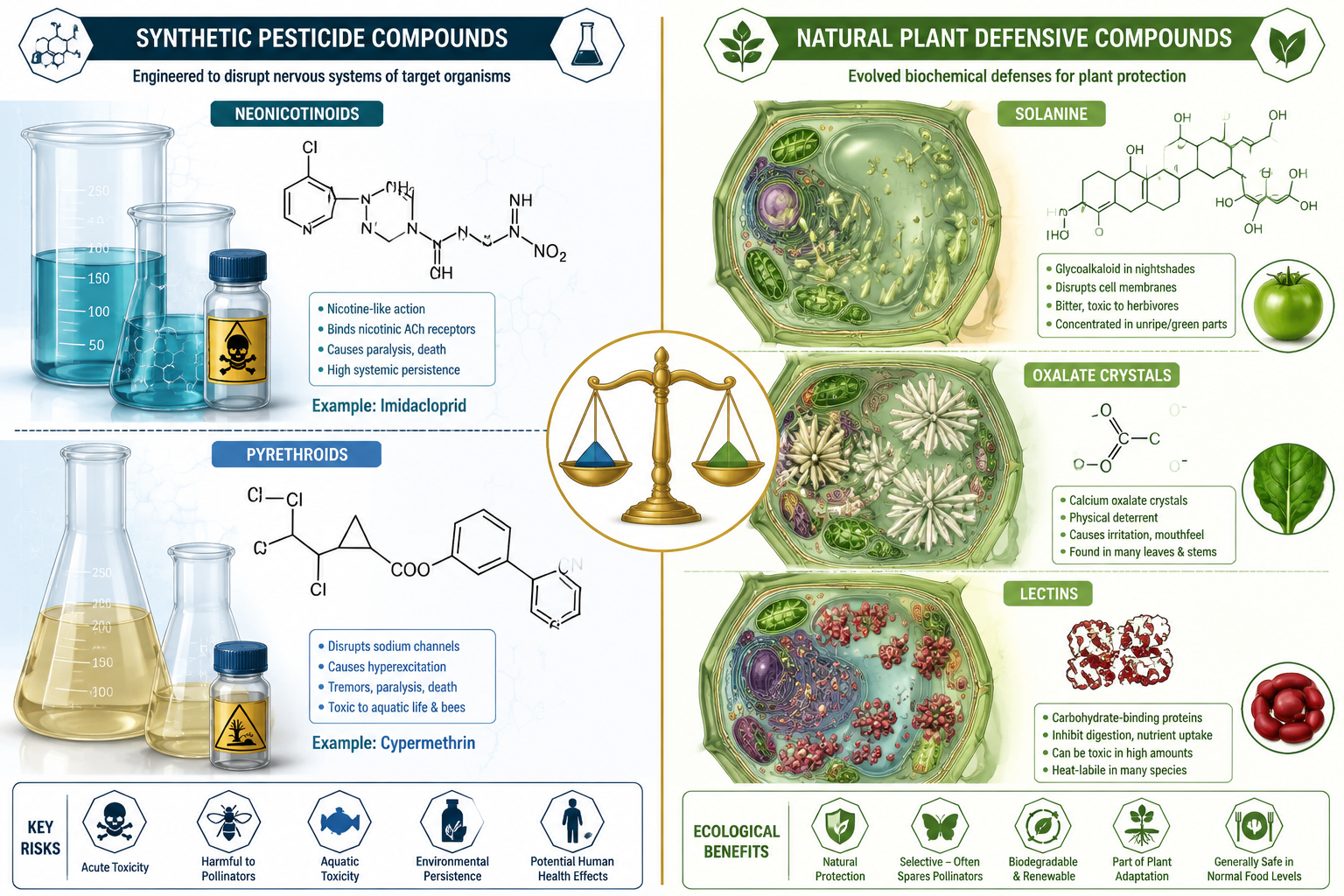
Synthetic pesticides are chemical compounds manufactured to control insects, weeds, fungi, and other organisms that damage crops. They include well-known classes such as:
- Organophosphates (e.g., chlorpyrifos) — nerve agents that disrupt acetylcholinesterase
- Neonicotinoids (e.g., imidacloprid, clothianidin) — systemic insecticides absorbed into plant tissue
- Pyrethroids (e.g., permethrin, cypermethrin) — synthetic versions of natural pyrethrin, targeting insect nervous systems
- Glyphosate — the world’s most widely used herbicide, classified as a probable human carcinogen by IARC in 2015, though regulatory agencies remain divided
Plant toxins are compounds that plants produce naturally, often as defenses against insects, fungi, and herbivores. They include:
- Solanine and chaconine — in potatoes and green tomatoes
- Lectins — in raw kidney beans, wheat, and legumes
- Oxalates — in spinach, rhubarb, and almonds
- Cyanogenic glycosides — in raw cassava, bitter almonds, and apple seeds
- Glucosinolates — in cruciferous vegetables like broccoli and Brussels sprouts
- Phytic acid — in grains and seeds, which binds minerals and reduces absorption
For a deeper look at how these natural compounds work in the body, see our guide on plant toxins and antinutrients — why our ancestors cooked.
How Do Synthetic Pesticides Affect Human Health?
The evidence suggests that acute pesticide poisoning — from high-dose occupational or accidental exposure — is well-documented and serious. The more contested question is what chronic, low-dose dietary exposure does over years and decades.
What the research shows:
- Organophosphates have the strongest evidence for neurodevelopmental harm in children, even at low exposure levels. Studies from agricultural communities link prenatal exposure to reduced IQ and attention problems.
- Neonicotinoids are systemic — they move through the plant and cannot be washed off. Residues appear in pollen, nectar, and food. Their effects on human health at dietary exposure levels are still being studied, but animal data raise concerns about thyroid disruption and reproductive effects.
- Pyrethroids are considered lower-risk for humans at typical dietary exposures, but they are highly toxic to aquatic invertebrates.
- Glyphosate residues are found in oats, wheat, and processed foods. The human health risk at typical dietary levels remains genuinely uncertain — regulatory agencies in the US and EU have reached different conclusions.
What the numbers look like in 2026:
Global pesticide use has not declined meaningfully despite COP15 biodiversity commitments made in 2022. Neonicotinoids remain in widespread use in North America and Asia, though the EU has restricted several compounds. The UK’s post-Brexit pesticide review has been slower than many health advocates expected.
“The dose makes the poison” — Paracelsus, 16th century. This principle still applies, but it was written before anyone was eating trace amounts of dozens of different synthetic compounds every day.
The practical concern is not one pesticide at one meal. It is the cumulative load across a lifetime.
How Dangerous Are Natural Plant Toxins in a Real-World Diet?
Natural plant toxins are genuinely harmful at high doses. The question is whether typical dietary exposure reaches those doses — and for most people eating a varied, cooked diet, it usually does not.
Here is where hype gets in the way. Some popular diet movements — particularly carnivore and strict elimination diets — frame plant toxins as a primary health threat. The evidence does not fully support that position for the general population, but it does not dismiss it entirely either.
Real risks from plant toxins:
| Toxin | Found In | Risk at High Intake | Reduced By |
|---|---|---|---|
| Solanine | Green potatoes, green tomatoes | Nausea, vomiting, neurological effects | Avoiding green/sprouted potatoes |
| Lectins | Raw kidney beans | Severe food poisoning (phytohaemagglutinin) | Boiling for at least 10 minutes |
| Oxalates | Spinach, rhubarb, beets | Kidney stones in susceptible individuals | Cooking, calcium-rich foods |
| Cyanogenic glycosides | Raw cassava, bitter almonds | Cyanide poisoning at high doses | Cooking, fermentation |
| Phytic acid | Grains, legumes, seeds | Mineral absorption reduction | Soaking, sprouting, fermentation |
| Glucosinolates | Cruciferous vegetables | Thyroid interference at very high raw intake | Cooking (partially) |
The important nuance: many plant toxins have dual roles. Glucosinolates in broccoli are associated with cancer-protective effects at normal dietary levels. Polyphenols — which are technically plant defense compounds — are among the most studied health-promoting substances in the diet. For more on this, see our article on what polyphenols are and why they matter.
The simplest way to look at it is this: plant toxins are a real concern in specific contexts (raw kidney beans, green potatoes, very high raw oxalate intake in kidney stone formers), but they are not a reason to avoid vegetables as a category.
Pesticides vs Plant Toxins: Which Is the Bigger Threat to Your Health and the Environment? — The Environmental Dimension
When it comes to environmental damage, the comparison shifts considerably. This is where synthetic pesticides carry the heavier burden of evidence.
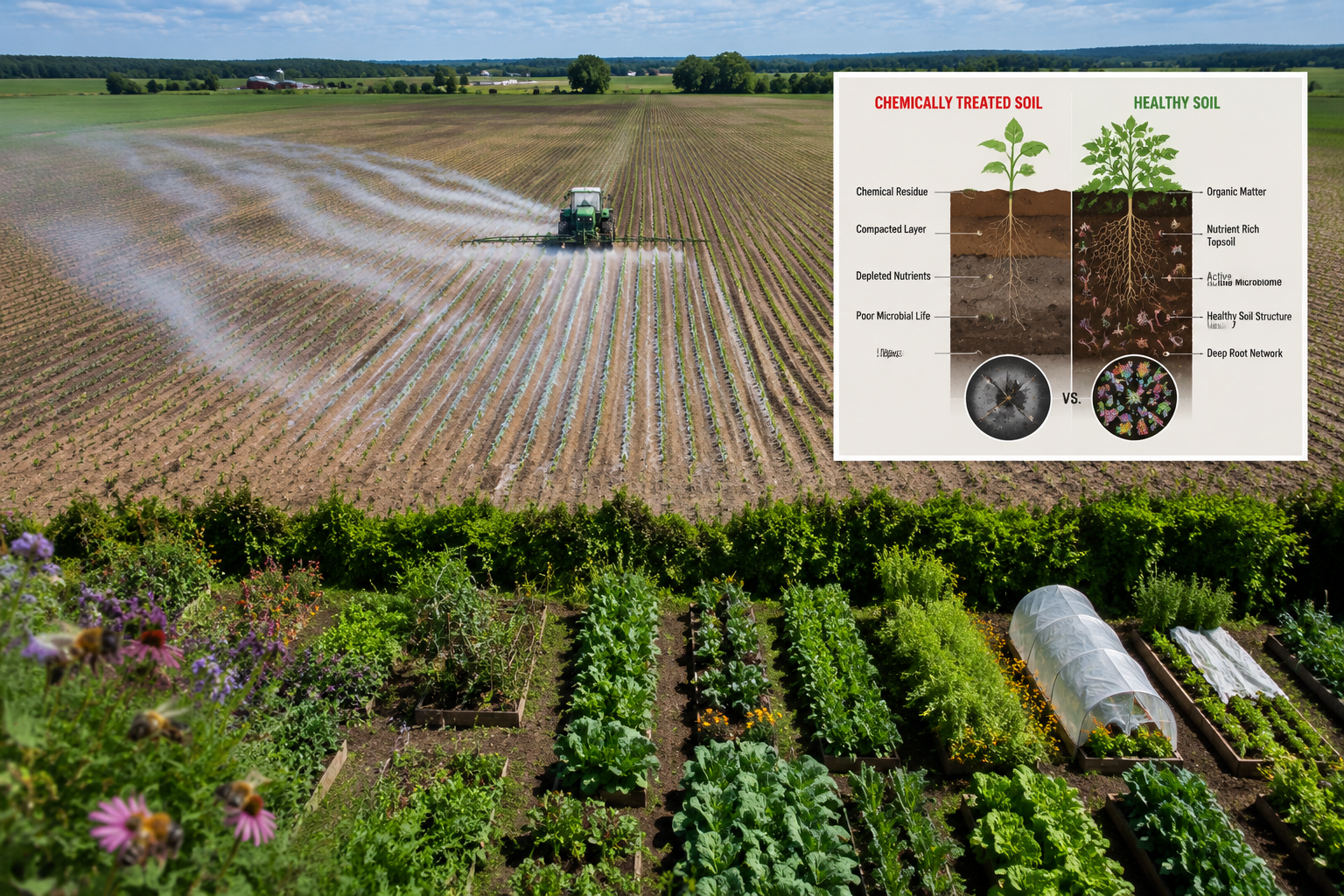
Synthetic pesticides and the environment:
- Pollinators: Neonicotinoids are persistently linked to bee colony collapse, impaired navigation, and reproductive failure in bees. The EU banned outdoor use of three major neonicotinoids in 2018, though emergency authorisations have continued in several member states.
- Soil microbiome: Repeated herbicide and pesticide application disrupts soil bacterial and fungal communities, reducing nutrient cycling and long-term soil health. This is a slow-moving crisis with compounding effects.
- Waterways: Pyrethroids and organophosphates run off into streams and rivers, where they are acutely toxic to aquatic invertebrates and fish. Glyphosate has been detected in groundwater across agricultural regions.
- Bioaccumulation: Some pesticide compounds accumulate in fat tissue and move up the food chain, concentrating in predatory species including humans.
Plant toxins and the environment:
Natural plant toxins do affect ecosystems — they deter herbivores, shape plant-animal interactions, and influence soil chemistry through root exudates. But their environmental impact is largely contained within evolved ecological relationships. They do not bioaccumulate in the same way, do not persist in waterways at harmful levels, and do not disrupt pollinator populations.
The stronger evidence points to synthetic pesticides as the more significant environmental threat, by a considerable margin.
For context on how broader environmental factors affect human health, see our guide on environmental factors that affect human health.
Does Organic Food Actually Solve the Problem?
Organic produce reduces exposure to synthetic pesticides, but it does not eliminate pesticide exposure entirely, and it does nothing to reduce naturally occurring plant toxins.
What organic certification means:
- Prohibits most synthetic pesticides and herbicides
- Permits certain approved organic pesticides, including copper sulfate, spinosad, and pyrethrin (the natural precursor to synthetic pyrethroids)
- Does not require zero pesticide residue — it requires that prohibited substances are not intentionally applied
What it does not mean:
- Organic crops can still carry residues from neighbouring farms via drift or contaminated water
- Organic pesticides are not automatically safer — copper sulfate, for example, accumulates in soil and is toxic to earthworms
- Plant toxin content is unaffected by organic status
The honest assessment: Choosing organic for the “dirty dozen” crops — those with consistently higher synthetic residue loads, such as strawberries, spinach, and peaches — is a reasonable, practical step. Expecting organic certification to solve all food safety concerns is not realistic.
A sensible starting point is to wash all produce thoroughly, vary your diet, and prioritise organic for high-residue crops when budget allows.
Who Is Most Vulnerable — and When Does It Actually Matter?
Not everyone faces the same risk from either pesticides or plant toxins. Vulnerability depends on age, health status, genetics, and dietary patterns.
Higher-risk groups for synthetic pesticide exposure:
- Children and infants — developing nervous systems are more sensitive to neurotoxic compounds like organophosphates
- Pregnant women — prenatal exposure to certain pesticides is associated with adverse birth outcomes
- Agricultural workers — occupational exposure is far higher than dietary exposure and represents the clearest documented risk
- People with impaired detoxification — liver disease or certain genetic variants (e.g., PON1 polymorphisms) reduce the body’s ability to metabolise organophosphates
Higher-risk groups for plant toxin harm:
- People prone to kidney stones — high oxalate intake from foods like raw spinach or rhubarb can increase risk
- Those with thyroid conditions — very high raw cruciferous vegetable intake may affect thyroid function, particularly with iodine deficiency
- Infants given inappropriate foods — raw or improperly prepared cassava, for example, poses a genuine cyanide risk
- Anyone eating large quantities of raw kidney beans — this is a genuine food safety issue, not a theoretical one
For the majority of healthy adults eating a varied, cooked diet, the day-to-day risk from both sources is low — but it is not zero, and it is not the same for everyone.
How to Reduce Your Exposure to Both — Practical Steps That Actually Work
The good news is that simple, consistent food preparation habits reduce exposure to both synthetic pesticide residues and natural plant toxins without requiring a complete dietary overhaul.
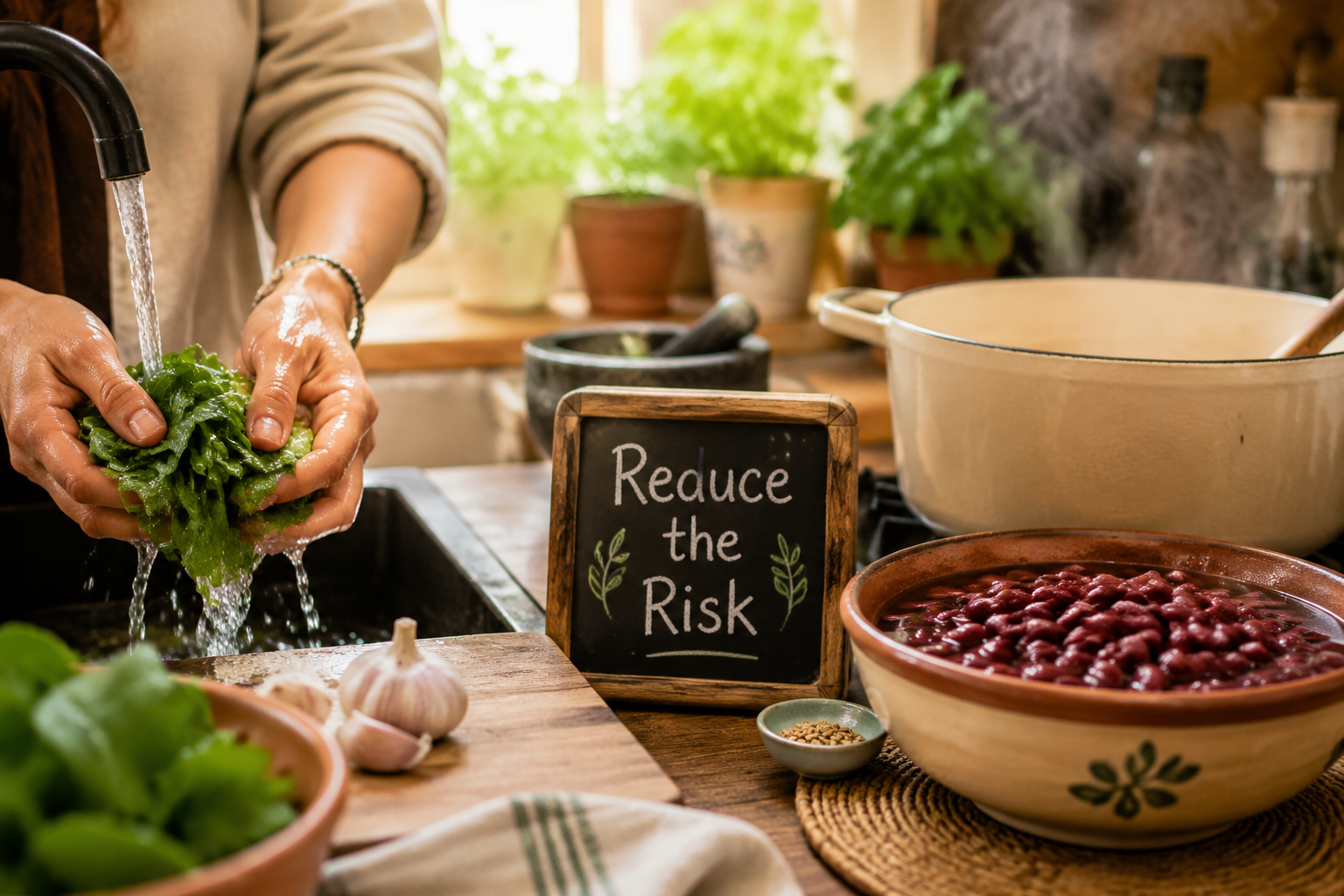
For synthetic pesticide residues:
- Wash produce under running water for at least 30 seconds — this removes surface residues but not systemic ones (neonicotinoids)
- Peel where appropriate — peeling apples, cucumbers, and carrots removes a significant portion of surface residues
- Prioritise organic for high-residue crops — strawberries, spinach, kale, peaches, and apples consistently top residue monitoring lists
- Vary your diet — eating a wide range of foods prevents overexposure to any single compound
- Trim outer leaves of leafy vegetables like lettuce and cabbage, where residues concentrate
For natural plant toxins:
- Cook kidney beans properly — boil for at least 10 minutes; slow cookers do not reach a high enough temperature to destroy lectins reliably
- Avoid green or sprouted potatoes — solanine concentrates in green flesh and sprouts; discard these portions entirely
- Soak grains and legumes — reduces phytic acid content and improves mineral absorption
- Cook oxalate-rich vegetables — boiling spinach reduces oxalate content by roughly 30–87% depending on the study
- Do not eat raw cassava — always cook thoroughly; this applies particularly to bitter varieties
These steps are not complicated. Keep it simple and consistent, and the cumulative benefit over time is meaningful. For practical guidance on eating well day-to-day, our healthy meals guide offers a useful starting point.
Pesticides vs Plant Toxins: Which Is the Bigger Threat to Your Health and the Environment? — The Honest Summary
Here is the real issue: this is not a binary question with a clean answer.
If you are asking about acute, high-dose risk: Natural plant toxins (raw kidney beans, green potatoes, raw cassava) can cause serious harm faster than typical dietary pesticide exposure. Pesticide poisoning at dietary residue levels is rarely acute.
If you are asking about chronic, long-term health risk: The evidence for harm from chronic low-dose pesticide exposure — particularly organophosphates and neonicotinoids — is stronger and more consistent than the evidence for harm from natural plant toxins in a normal varied diet.
If you are asking about environmental risk: Synthetic pesticides are the clear concern. The documented effects on pollinators, soil health, and waterways are not matched by any comparable impact from naturally occurring plant compounds.
If you are asking what you should do about it: Focus on the basics. Vary your diet. Prepare food properly. Reduce unnecessary pesticide exposure where it is practical and affordable. Do not let fear of either category drive you away from eating vegetables — the evidence for their overall health benefit is far stronger than the evidence for harm from their natural chemical content.
The basics still do the heavy lifting here.
For more on how food choices connect to inflammation and long-term health, see our guide on anti-inflammatory foods for gut health and our overview of the health benefits of natural foods and herbs.
Frequently Asked Questions
Q: Are natural plant toxins more dangerous than synthetic pesticides?
At high doses, some plant toxins (like phytohaemagglutinin in raw kidney beans) cause faster, more severe harm than typical dietary pesticide residues. But for chronic health risk across a lifetime, the evidence leans toward synthetic pesticides — particularly organophosphates — as the more significant concern.
Q: Does washing fruit and vegetables remove pesticides?
Washing removes surface residues to a meaningful degree but does not remove systemic pesticides like neonicotinoids, which are absorbed into plant tissue. Peeling and varying your diet are additional practical steps.
Q: Is organic produce free of pesticides?
No. Organic certification prohibits most synthetic pesticides but permits certain approved organic compounds. Residue drift from neighbouring farms can also occur. Organic produce generally carries lower synthetic residue loads, but it is not pesticide-free.
Q: Can you get food poisoning from plant toxins?
Yes. Raw or undercooked kidney beans contain phytohaemagglutinin, a lectin that causes severe nausea, vomiting, and diarrhoea within hours. Green potatoes contain solanine, which can cause neurological symptoms at high intake. These are real food safety risks, not theoretical ones.
Q: Are neonicotinoids dangerous to eat?
The human health risk from dietary neonicotinoid residues at current exposure levels is uncertain. Animal studies suggest potential thyroid and reproductive effects, but human data at dietary doses are limited. The clearest documented harm is to pollinators and aquatic ecosystems.
Q: Should people with kidney stones avoid spinach?
People with a history of calcium oxalate kidney stones are generally advised to moderate high-oxalate foods including raw spinach, rhubarb, and beets. Cooking spinach reduces oxalate content substantially. This is worth discussing with a healthcare provider based on individual history.
Q: Do plant toxins affect gut health?
Some do. Lectins and phytic acid can irritate the gut lining and reduce mineral absorption in susceptible individuals. Proper preparation — cooking, soaking, fermenting — significantly reduces these effects. For more on this, see our gut health and digestive wellness guide.
Q: Is glyphosate dangerous?
This is genuinely contested. The IARC classified glyphosate as a “probable human carcinogen” in 2015, based largely on animal and occupational exposure data. The US EPA and European Food Safety Authority have maintained that it is unlikely to be carcinogenic at typical dietary exposures. The debate continues, and the precautionary approach — reducing unnecessary exposure — is reasonable.
Q: Are cruciferous vegetables bad for the thyroid?
At normal dietary amounts, no. Very high raw intake of cruciferous vegetables (broccoli, kale, Brussels sprouts) can theoretically interfere with iodine uptake in people who are already iodine-deficient. For most people eating a varied diet with adequate iodine, this is not a practical concern. Cooking reduces glucosinolate content further.
Q: What is the single most practical thing someone can do to reduce pesticide exposure?
Vary your diet. No single food, eaten in moderation as part of a diverse diet, will deliver enough of any one compound to cause harm. Diversity is the most reliable protection against cumulative overexposure to any specific residue or toxin.
Conclusion: What Matters Most Is This
The question of Pesticides vs Plant Toxins: Which Is the Bigger Threat to Your Health and the Environment? does not have a single winner. It depends on whether you are talking about acute versus chronic risk, individual health versus ecosystem health, and typical dietary exposure versus occupational or high-dose scenarios.
The main takeaway is:
- Natural plant toxins are a genuine concern in specific, avoidable situations — primarily improper food preparation
- Synthetic pesticides carry more documented risk for chronic low-dose exposure and are the dominant environmental concern
- Neither category justifies avoiding vegetables or whole foods as a group
- Simple, consistent habits — washing, cooking, soaking, varying your diet — address both risks effectively
Actionable next steps:
- Learn which crops carry the highest synthetic residue loads and prioritise organic for those where budget allows
- Cook kidney beans properly — always boil, never rely on a slow cooker alone
- Discard green or sprouted potato flesh entirely
- Soak legumes and grains before cooking to reduce antinutrients
- Eat a wide variety of foods rather than large amounts of any single item
- If you have specific health conditions (kidney stones, thyroid disease, pregnancy), get personalised advice from a healthcare provider
There is no magic in it. Common sense backed by evidence, applied consistently, is what actually moves the needle.
📂 Plant Toxins & Antinutrients
This article is part of our cluster. You are reading the featured article below.
- → Enzyme Inhibitors in Raw Plant Foods: Why Cooking Matters More Than Influencers Admit
- YOU ARE HERE Pesticides vs Plant Toxins: Which Is the Bigger Threat to Your Health and the Environment?
- → Global Toxicity Hotspots: Plant Toxins Amplified in China, Brazil, US Crops
- → Plant Toxins and Brain Fog: New 2026 Studies Linking Phytates to Cognitive Decline
- → Climate Change and Plant Toxins: Rising Levels of Alkaloids and Glycosides in Crops
- → Histamine Intolerance and Plant Lectins: The Overlooked Gut-Brain Connection
- → Antinutrients and Athletic Performance: How Plant Toxins Sabotage Endurance and Recovery
- → Kids and Plant Toxins: Antinutrient Impacts on Growth, ADHD, and Developing Brains
- → Phytoestrogens Beyond Soy: Flax, Nuts, and Fertility Impacts in 2026 Research
- → Synergistic Plant Toxin Effects: How Oxalates Amplify Lectin Damage in the Gut
- → Antinutrients and Skin Health: How Tannins and Phytoestrogens Trigger Eczema Flares
- → What Plant Toxins Actually Do to Your Body: Effects on Digestion, Absorption and Inflammation
Evidence and further reading

Dave James has spent 30+ years reading health and longevity research, and has run All Perfect Health for the past five. His background is in Australian mining and industrial engineering — disciplines built on questioning claims, measuring outcomes, and respecting evidence. He writes about what the research actually says, including where the experts disagree.
More about Dave & this site →