Enzyme Inhibitors in Raw Plant Foods: Why Cooking Matters More Than Influencers Admit
Last updated: May 16, 2026
Quick Answer: Raw plant foods contain naturally occurring enzyme inhibitors and other antinutrients that can meaningfully reduce nutrient absorption and, in some cases, cause digestive harm. Cooking, fermentation, and sprouting are not optional extras — they are the preparation methods that make many plant foods genuinely nourishing. The raw food movement gets some things right, but on enzyme inhibitors specifically, the science has been consistently clear for decades.
Key Takeaways
- Enzyme inhibitors are compounds found naturally in many raw plant foods, including legumes, grains, seeds, and some vegetables. Their job in nature is to protect the plant, not to feed you.
- Trypsin inhibitors in raw legumes block protein digestion. Cooking deactivates them. Eating raw kidney beans, for example, can cause acute gastrointestinal illness.
- Phytates (phytic acid) bind to minerals like zinc, iron, calcium, and magnesium, reducing how much your body absorbs. Heat, fermentation, and sprouting all reduce phytate levels.
- Lectins are heat-sensitive proteins found in high concentrations in raw beans and grains. Proper cooking eliminates most of the concern.
- The “raw is always better” claim is not supported by the evidence for foods that contain significant antinutrients. For some foods, cooking increases bioavailability substantially.
- Fermentation and sprouting are legitimate alternatives to cooking for reducing antinutrients, and they add their own nutritional benefits.
- Most people eating a varied, predominantly cooked diet are not at serious risk. The concern is highest for those relying heavily on raw legumes, unprocessed grains, or following strict raw food protocols.
- Context matters. A handful of raw spinach in a salad is not the same as eating raw kidney beans daily.
In this guide
- What Are Enzyme Inhibitors and Why Do Plants Make Them?
- Why Enzyme Inhibitors in Raw Plant Foods Matter More Than Most Influencers Admit
- Which Raw Plant Foods Carry the Highest Enzyme Inhibitor Load?
- How Cooking Reduces Enzyme Inhibitors: The Actual Mechanisms
- Fermentation and Sprouting: Legitimate Alternatives to Cooking
- What Does This Mean for Nutrient Absorption in Practice?
- The Raw Food Argument: What It Gets Right and Where It Goes Wrong
- Practical Guidelines: How to Get the Most From Plant Foods in 2026
- FAQ: Enzyme Inhibitors in Raw Plant Foods
- Conclusion: The Main Takeaway
What Are Enzyme Inhibitors and Why Do Plants Make Them?
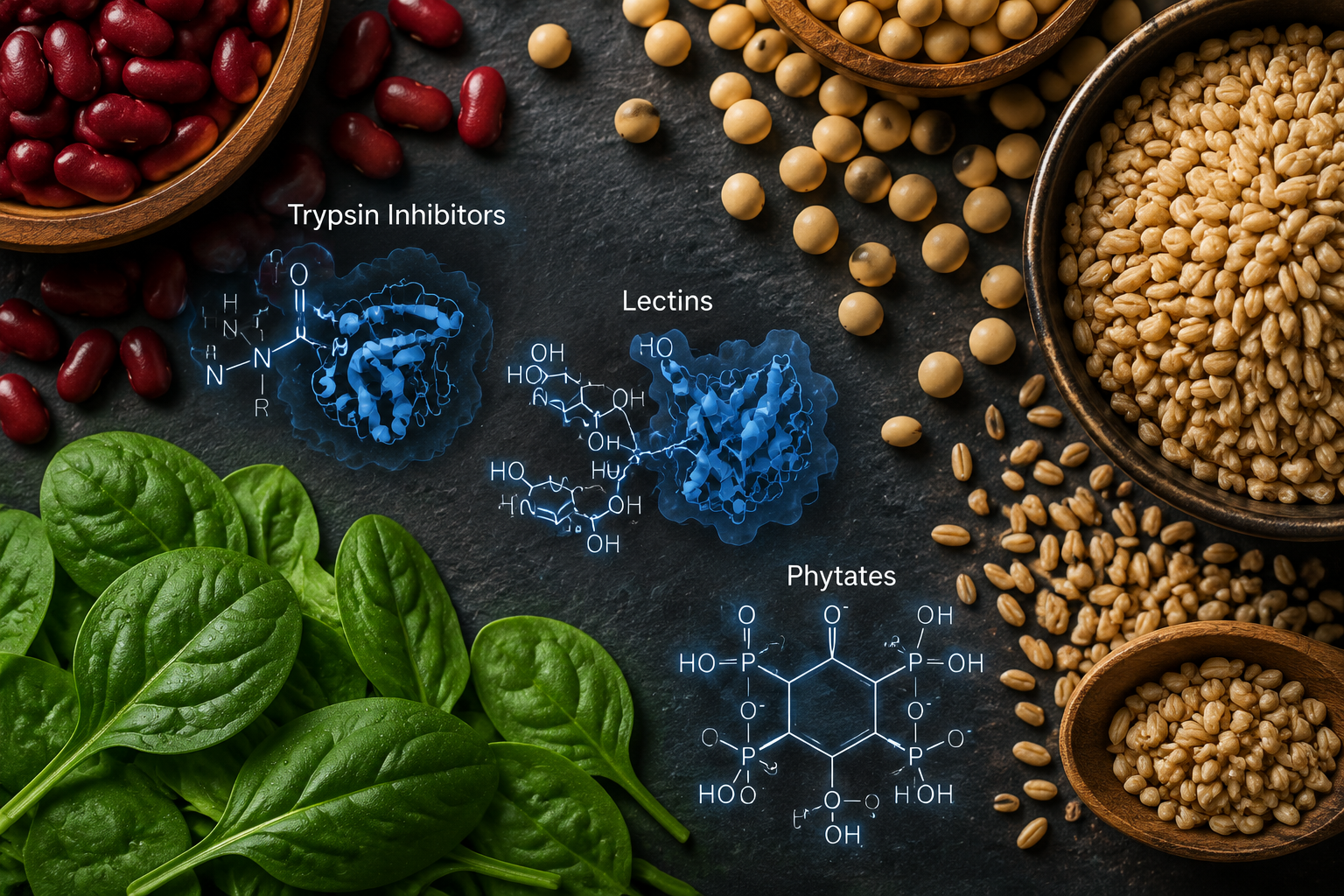
Enzyme inhibitors in raw plant foods are compounds that interfere with the digestive enzymes your body uses to break down food. They are not accidents of plant biology. They are deliberate chemical defenses.
Plants cannot run from predators. Instead, they evolved chemical strategies to discourage insects, animals, and microbes from eating them — especially their seeds, which carry the next generation. Enzyme inhibitors are part of that defense system.
The main categories worth understanding:
| Compound | Found In | Main Effect |
|---|---|---|
| Trypsin inhibitors | Soybeans, raw legumes, grains | Block protein digestion |
| Chymotrypsin inhibitors | Potatoes, cereals | Reduce protein breakdown |
| Phytates (phytic acid) | Grains, seeds, legumes | Bind minerals, reduce absorption |
| Lectins | Beans, lentils, wheat, nightshades | Disrupt gut lining, resist digestion |
| Oxalates | Spinach, beets, nuts | Bind calcium and iron |
| Protease inhibitors | Soybeans, raw egg whites | Inhibit multiple digestive enzymes |
These are not exotic or rare compounds. They are present in many everyday plant foods. The question is not whether they exist — the evidence on that is settled — but whether the amounts in typical diets matter, and what preparation methods actually change the picture.
For a broader look at how these compounds interact with the body, the article on plant toxins and antinutrients covers the foundational science in detail.
Why Enzyme Inhibitors in Raw Plant Foods Matter More Than Most Influencers Admit
Here is the real issue: the raw food community tends to frame cooking as a process that destroys nutrients. That is partially true for some heat-sensitive vitamins. But it completely ignores the other side of the equation — that cooking also destroys antinutrients, including enzyme inhibitors that actively work against your ability to absorb what you eat.
Let’s keep this practical. If you eat a food containing significant trypsin inhibitors, your body produces more pancreatic enzymes to compensate. Over time, chronic overconsumption of raw antinutrient-rich foods has been associated in animal studies with pancreatic stress, though the direct human evidence at normal dietary levels is less clear. What is clearer is the acute effect: eating raw or undercooked kidney beans causes nausea, vomiting, and diarrhea within a few hours, reliably, because of lectins called phytohaemagglutinins.
This is not a fringe claim. The UK’s Food Standards Agency has documented cases of kidney bean poisoning from undercooked beans. The mechanism is well understood.
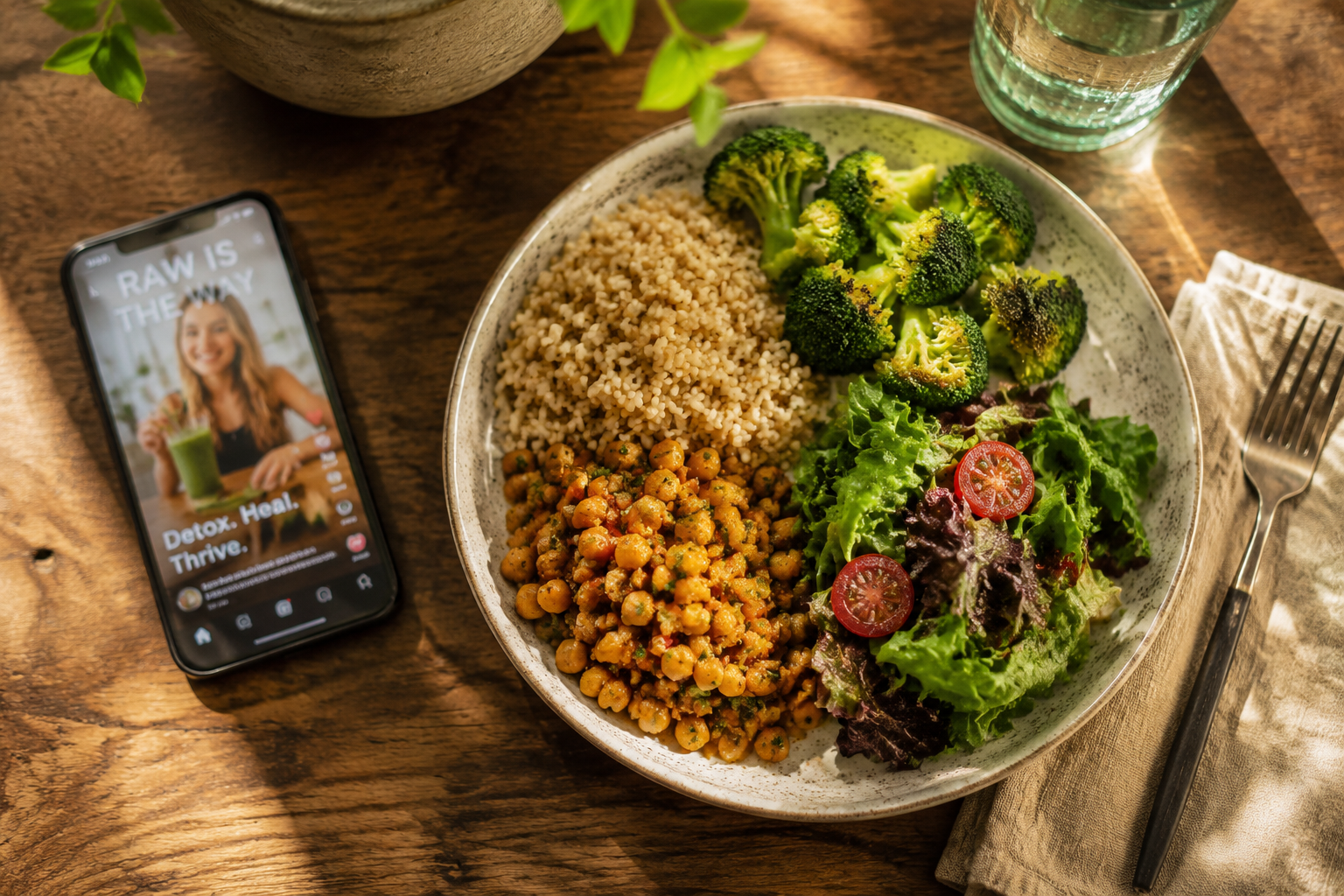
The influencer framing tends to go like this: “Cooking destroys enzymes in food, so raw is better for digestion.” In plain English, this argument has a flaw. The enzymes in plant foods are not the enzymes your body uses to digest food. Your digestive enzymes are produced by your own body — in your saliva, stomach, pancreas, and small intestine. The enzymes in raw plants are largely irrelevant to your digestion, and in many cases, the plant’s enzyme inhibitors actively interfere with yours.
This is where hype gets in the way of something genuinely useful. A raw vegetable salad is a fine thing. Raw sprouted seeds can be nutritious. But the blanket claim that raw is superior to cooked across all plant foods is not supported by the evidence.
Which Raw Plant Foods Carry the Highest Enzyme Inhibitor Load?
Not all raw plant foods are equal in this regard. The concern is highest for foods with dense concentrations of antinutrients, particularly legumes and grains.
High concern (significant antinutrient load when raw):
- Kidney beans — contain phytohaemagglutinin lectins at levels that cause acute poisoning when raw or undercooked. Boiling for at least 10 minutes is essential.
- Soybeans — high in trypsin inhibitors. Raw soy is not safe for regular consumption. Cooking, fermentation (miso, tempeh), or industrial processing reduces inhibitor activity substantially.
- Raw chickpeas and lentils — contain phytates and trypsin inhibitors. Soaking and cooking significantly reduces both.
- Raw grains (wheat, oats, corn) — contain phytates that bind zinc and iron. Fermentation (sourdough) or cooking improves mineral bioavailability.
- Raw peanuts — contain trypsin inhibitors and aflatoxin risk (from mold). Roasting addresses both.
Moderate concern (manageable with normal preparation):
- Spinach and chard — high in oxalates, which bind calcium and iron. Light cooking reduces oxalate content by 30–50%, though raw in moderation is generally fine for most people.
- Brassicas (broccoli, cabbage, kale) — contain glucosinolates and goitrogens. Light steaming preserves most nutrients while reducing goitrogenic activity, which matters more for people with thyroid conditions.
Lower concern (generally fine raw):
- Most fruits
- Cucumber, lettuce, celery, bell peppers
- Herbs like parsley, basil, mint
The simplest way to look at it is this: the further a food is from a seed or legume, the lower the enzyme inhibitor load tends to be. Leaves and fruits generally carry less antinutrient burden than seeds, beans, and grains.
For more on how antinutrients interact with gut function specifically, the gut health and digestive wellness guide is worth reading alongside this article.
How Cooking Reduces Enzyme Inhibitors: The Actual Mechanisms
Cooking works because most enzyme inhibitors are proteins, and proteins denature with heat. Denaturing means the protein loses its three-dimensional shape, and without that shape, it cannot function. A trypsin inhibitor that has been denatured by boiling cannot inhibit trypsin.
The evidence on this is consistent and has been replicated across many studies:
- Boiling kidney beans for 10 minutes followed by full cooking eliminates phytohaemagglutinin activity to safe levels. Slow cooking at temperatures below 80°C (176°F) is actually worse than no cooking at all for lectins — it can increase toxicity. This is the slow cooker problem that catches people out.
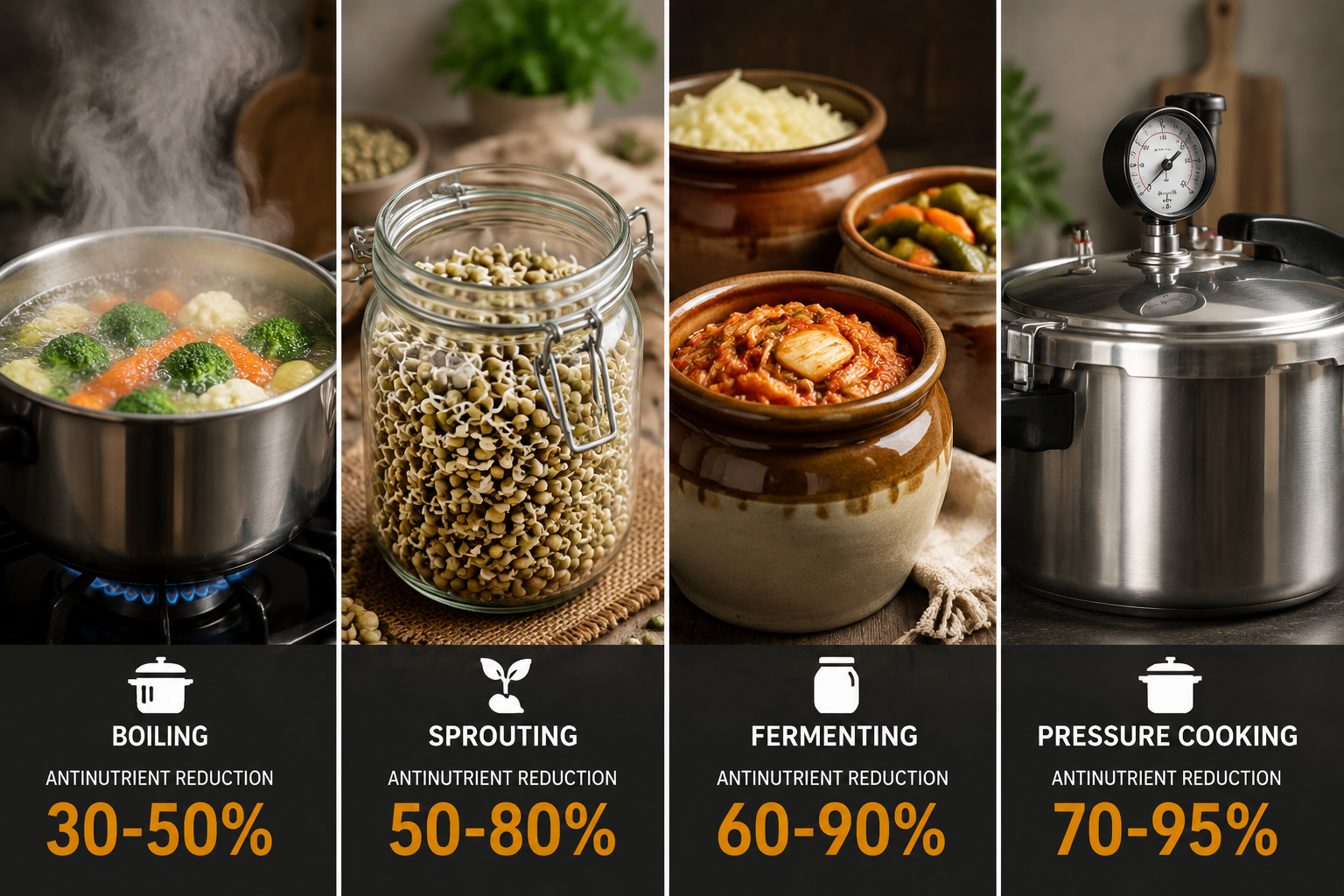
- Boiling soybeans for 20–30 minutes reduces trypsin inhibitor activity by around 80–90% in most studies.
- Autoclaving (pressure cooking) is the most effective method for legumes, reducing most antinutrients to negligible levels faster than standard boiling.
- Phytates are more heat-stable than protein-based inhibitors. Cooking alone does not eliminate phytates as effectively as fermentation or sprouting does. This is an important distinction.
The numbers matter here. A 90% reduction in trypsin inhibitor activity from cooking is not a minor detail. It is the difference between a food that supports protein absorption and one that works against it.
Fermentation and Sprouting: Legitimate Alternatives to Cooking
Cooking is not the only answer. Fermentation and sprouting are traditional food preparation methods that have been used for thousands of years, and the science explains why they work.
Sprouting activates the seed’s own enzymes, which break down phytates and other antinutrients as part of the germination process. Sprouted lentils, for example, have meaningfully lower phytate content than unsprouted lentils. Sprouting also increases the availability of certain B vitamins and vitamin C. The trade-off is that sprouting does not fully eliminate lectins in legumes — cooking after sprouting is still advisable for beans.
Fermentation uses microbial activity (bacteria, yeasts) to break down antinutrients enzymatically. Sourdough fermentation, for example, reduces phytate content in wheat by 50–90% depending on fermentation time and the microbial strains involved. Tempeh and miso — both fermented soy products — have dramatically lower trypsin inhibitor activity than raw soybeans, and they also provide probiotic and prebiotic benefits.
Soaking is a simpler step that reduces phytates and lectins partially, particularly when the soaking water is discarded. It is a useful first step but not sufficient on its own for high-antinutrient foods like kidney beans.
A practical hierarchy for reducing enzyme inhibitors and antinutrients:
- Pressure cooking — fastest, most effective for lectins and trypsin inhibitors
- Boiling — effective for most protein-based inhibitors, less so for phytates
- Fermentation — best for phytates, also reduces lectins over time
- Sprouting — good for phytates and some inhibitors, combine with cooking for legumes
- Soaking — useful starting step, not sufficient alone
This connects to a broader point about ancestral food preparation. Our ancestors cooked, fermented, soaked, and dried their foods not because they had nutritional science degrees, but because they learned through experience that these methods made food safer and more sustaining. For more context on this, the article on why our ancestors cooked plant foods is directly relevant.
What Does This Mean for Nutrient Absorption in Practice?
The practical impact of enzyme inhibitors on nutrient absorption depends on diet patterns, not single meals. Context matters.
For someone eating a varied diet that includes well-cooked legumes, fermented foods, and a mix of raw and cooked vegetables, enzyme inhibitors are unlikely to cause meaningful nutritional deficiency. The body has compensatory mechanisms, and the total dietary load is what matters.
The concern increases under specific conditions:
- High reliance on raw legumes or unprocessed grains as protein or calorie staples
- Strict raw food diets where cooking is avoided across the board
- Populations with marginal zinc or iron status — phytate-rich diets can push borderline deficiency into clinical deficiency
- Individuals with compromised digestive function who have less capacity to compensate for inhibited enzyme activity
In real-world terms, the most practical concern for most adults in 2026 is not acute poisoning — it is the quieter issue of reduced mineral absorption from phytate-rich diets that are not properly prepared. Zinc and iron deficiency are genuinely common globally, and phytates are a contributing factor in populations relying heavily on unfermented, unsoaked grains and legumes.
For those interested in how mineral absorption works more broadly, the foods rich in calcium guide covers absorption factors in useful detail, including the role of antinutrients.
The Raw Food Argument: What It Gets Right and Where It Goes Wrong
We need to separate fact from hype here, and that means being fair to both sides.
What the raw food argument gets right:
- Some heat-sensitive vitamins (vitamin C, folate, some B vitamins) are reduced by cooking, particularly boiling in large amounts of water
- Raw fruits and many raw vegetables are genuinely nutritious and beneficial
- Overcooking can reduce the polyphenol content of some foods — though this is often overstated
- Eating more vegetables and whole plant foods in any form is generally positive
Where the raw food argument goes wrong:
- It conflates “cooking reduces some vitamins” with “raw is always nutritionally superior” — these are not the same claim
- It ignores the substantial evidence that cooking increases the bioavailability of many nutrients by breaking down cell walls and deactivating inhibitors
- It misrepresents the role of food enzymes in human digestion — plant enzymes are not your digestive enzymes
- It underweights the real risks of raw or undercooked high-antinutrient foods, particularly legumes
- It treats cooking as a single uniform process, when steaming, fermenting, and pressure cooking have very different effects on different nutrients
That is a strong claim — that raw is universally better — and it needs strong proof. The evidence does not support it as a blanket statement. The stronger evidence points to preparation method mattering more than raw versus cooked as a binary.
The what are polyphenols article is useful context here, because polyphenol bioavailability is one area where the raw-versus-cooked question gets genuinely nuanced.
Practical Guidelines: How to Get the Most From Plant Foods in 2026
Based on current evidence, here is a sensible starting point for getting the nutritional benefit from plant foods while managing enzyme inhibitors and antinutrients effectively.
For legumes (beans, lentils, chickpeas):
- Always soak dried legumes for 8–12 hours, discard soaking water
- Boil kidney beans vigorously for at least 10 minutes before any further cooking
- Use a pressure cooker when possible — it is the most reliable method
- Canned legumes are pre-cooked and safe; rinse to reduce sodium
For grains:
- Choose fermented grain products (sourdough bread) over standard yeasted bread when possible
- Oats benefit from overnight soaking before cooking
- Whole grains are nutritionally superior to refined grains despite higher phytate content, because the overall nutritional package is better — but preparation matters
For vegetables:
- Light steaming is generally the best balance between preserving vitamins and reducing antinutrients
- Raw salad vegetables (cucumber, lettuce, peppers, tomatoes) are fine as-is
- High-oxalate vegetables like spinach and chard are fine raw in moderation; blanching or light cooking reduces oxalate load for those with kidney stone risk
For seeds and nuts:
- Soaking raw nuts for several hours reduces phytate content
- Roasting reduces trypsin inhibitors and addresses mold risk in peanuts
- Sprouted seeds are a good option for adding raw texture with lower antinutrient load
Keep it simple and consistent. The goal is not perfection — it is making preparation choices that genuinely improve what your body can use from the food you eat.
For a broader look at anti-inflammatory eating patterns that incorporate well-prepared plant foods, the anti-inflammatory foods ultimate guide and the best anti-inflammatory foods for gut health are both worth reading.
FAQ: Enzyme Inhibitors in Raw Plant Foods
Q: Are enzyme inhibitors in raw plant foods dangerous?
It depends on the food and the amount. Raw kidney beans contain lectins at levels that cause acute illness. Most other enzyme inhibitors at typical dietary levels cause reduced nutrient absorption rather than acute harm. The risk increases with heavy reliance on raw or improperly prepared legumes and grains.
Q: Does cooking destroy all the nutrients in vegetables?
No. Cooking reduces some heat-sensitive vitamins (particularly vitamin C and folate) but increases the bioavailability of many other nutrients by breaking down cell walls and deactivating inhibitors. The net effect depends on the food and the cooking method. Steaming generally preserves more vitamins than boiling.
Q: Is a raw food diet safe?
A raw food diet that avoids legumes and relies mainly on fruits, vegetables, nuts, and sprouted seeds can be nutritionally adequate with careful planning. However, it carries real risks of protein and mineral deficiency, particularly zinc and iron, partly because of phytate-related absorption issues. It is not recommended without professional nutritional guidance.
Q: Do sprouted beans still need to be cooked?
For most legumes, yes. Sprouting reduces phytates significantly but does not fully eliminate lectins in beans. Sprouted lentils and mung beans carry lower risk than kidney beans, but cooking after sprouting is still the safest approach for high-lectin legumes.
Q: Why does slow cooking sometimes make beans more toxic?
Certain lectins, particularly in kidney beans, require temperatures above 80°C (176°F) to denature. Slow cookers that maintain temperatures below this threshold can actually increase lectin activity compared to raw beans. Always boil kidney beans vigorously before adding to a slow cooker.
Q: Are phytates all bad?
No. Phytates also have antioxidant properties and may have protective effects against certain cancers and cardiovascular disease in some research contexts. The concern is specifically about their effect on mineral absorption, which matters most when mineral intake is already marginal. In a nutrient-sufficient diet, phytates are not a major problem.
Q: Does fermentation really reduce antinutrients significantly?
Yes. Sourdough fermentation can reduce phytate content in wheat by 50–90% depending on conditions. Tempeh and miso have dramatically lower trypsin inhibitor activity than raw soybeans. Fermentation is one of the most effective methods for improving the nutritional quality of grain and legume-based foods.
Q: Should I avoid raw spinach because of oxalates?
Not necessarily. Raw spinach in a salad is fine for most people. The concern about oxalates is most relevant for people with a history of calcium oxalate kidney stones, or those eating very large amounts of high-oxalate foods daily. Light cooking reduces oxalate content meaningfully for those who need to manage intake.
Q: What is the best cooking method for preserving nutrients while reducing antinutrients?
Pressure cooking is most effective for eliminating lectins and trypsin inhibitors in legumes. For vegetables, light steaming is the best balance. Fermentation is the most effective method for reducing phytates in grains.
Q: Do raw food influencers ever get this right?
Some do. The better voices in that space acknowledge that fermentation and sprouting are valid preparation methods and that certain foods genuinely should not be eaten raw. The problem is the blanket claim that raw is always superior, which is not what the evidence shows.
Conclusion: The Main Takeaway
The conversation about raw versus cooked food is not really about raw versus cooked. It is about preparation methods and what they do to the nutritional quality and safety of specific foods.
Enzyme inhibitors in raw plant foods are real, well-documented, and in some cases clinically significant. The evidence on this has been consistent for decades. Cooking, fermentation, and sprouting are not modern interventions — they are the preparation methods that allowed humans to safely and effectively use legumes, grains, and seeds as food staples.
The basics still do the heavy lifting here. Soak your legumes. Cook your beans properly. Choose fermented grain products when you can. Eat a wide variety of vegetables, both raw and lightly cooked. Do not let influencer framing convince you that a preparation step your ancestors figured out thousands of years ago is somehow working against you.
A sensible starting point is this: match your preparation method to the food. Raw fruits and salad vegetables are generally fine as-is. Legumes, grains, and seeds need proper preparation — whether that is cooking, soaking, sprouting, or fermentation. That is not a complicated message. It just tends to get lost in the noise.
For further reading on related topics, the health benefits of natural foods and herbs evidence-based guide provides a solid foundation, and the article on what plant toxins actually do to your body goes deeper on the mechanisms covered here.
Safety and nuance
Cooking and preparation can reduce some enzyme inhibitors, but this is not a reason to fear every raw plant food or make extreme diet changes. If you have digestive disease, food allergies, nutrient deficiencies, kidney problems, are pregnant, or are planning major dietary changes for a child, work with a qualified clinician or dietitian.
Evidence and further reading

Dave James has spent 30+ years reading health and longevity research, and has run All Perfect Health for the past five. His background is in Australian mining and industrial engineering — disciplines built on questioning claims, measuring outcomes, and respecting evidence. He writes about what the research actually says, including where the experts disagree.
More about Dave & this site →
📂 Plant Toxins & Antinutrients
This article is part of the APH cluster. Use the links below to move between the pillar and child articles.
- Read the pillar: Plant Toxins, Antinutrients and Why Our Ancestors Cooked: The Complete Evidence-Based Guide
- → What Plant Toxins Actually Do to Your Body: Effects on Digestion, Absorption and Inflammation
- YOU ARE HERE Enzyme Inhibitors in Raw Plant Foods: Why Cooking Matters More Than Influencers Admit
- → How Traditional Food Preparation Reduces Antinutrients: Soaking, Sprouting, Fermenting and Cooking
- → Synergistic Plant Toxin Effects: How Oxalates Amplify Lectin Damage in the Gut
- → Histamine Intolerance and Plant Lectins: The Overlooked Gut-Brain Connection
- → Plant Toxins and Brain Fog: New 2026 Studies Linking Phytates to Cognitive Decline
- → Antinutrients and Skin Health: How Tannins and Phytoestrogens Trigger Eczema Flares
- → Kids and Plant Toxins: Antinutrient Impacts on Growth, ADHD, and Developing Brains
- → Pesticides vs Plant Toxins: Which Is the Bigger Threat to Your Health and the Environment?
- → Climate Change and Plant Toxins: Rising Levels of Alkaloids and Glycosides in Crops
- → Global Toxicity Hotspots: Plant Toxins Amplified in China, Brazil, US Crops