
Health Benefits of Ginger: Digestion, Inflammation, and Immunity
Last updated: May 5, 2026
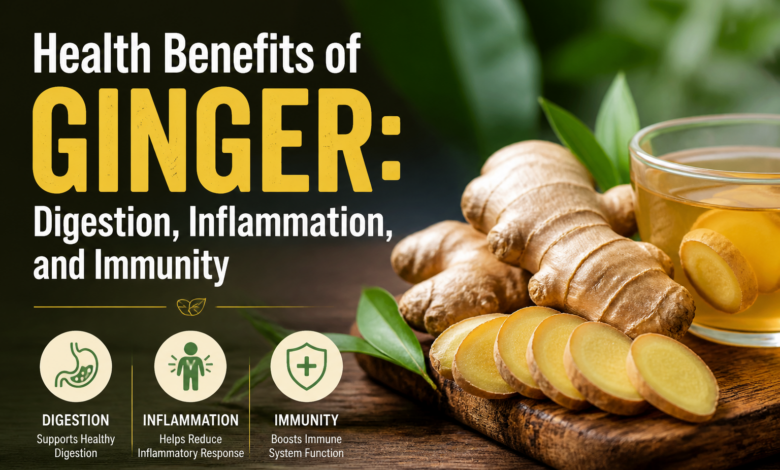
Quick Answer: Ginger is one of the most well-researched culinary herbs in the world. The health benefits of ginger span digestion, inflammation, and immunity, backed by a growing body of clinical evidence. Its bioactive compounds, particularly gingerols and shogaols, work on real biological pathways. That said, the evidence is stronger in some areas than others, and it is worth knowing the difference before reaching for a supplement.
Table of Contents
- What Makes Ginger Biologically Active?
- How Do the Health Benefits of Ginger Support Digestion?
- What Does the Evidence Say About Ginger and Inflammation?
- How Does Ginger Support Immune Function?
- What Are the Main Forms of Ginger and Which Works Best?
- Are There Risks or Side Effects Worth Knowing About?
- How Do the Health Benefits of Ginger Compare to Other Kitchen Herbs?
-
Ginger Dosage Guide
Select your goal for ginger dosage recommendations:
Select a goal for dosage guidance.FAQ: Health Benefits of Ginger
- Conclusion: What Is Actually Worth Taking From This
Key Takeaways
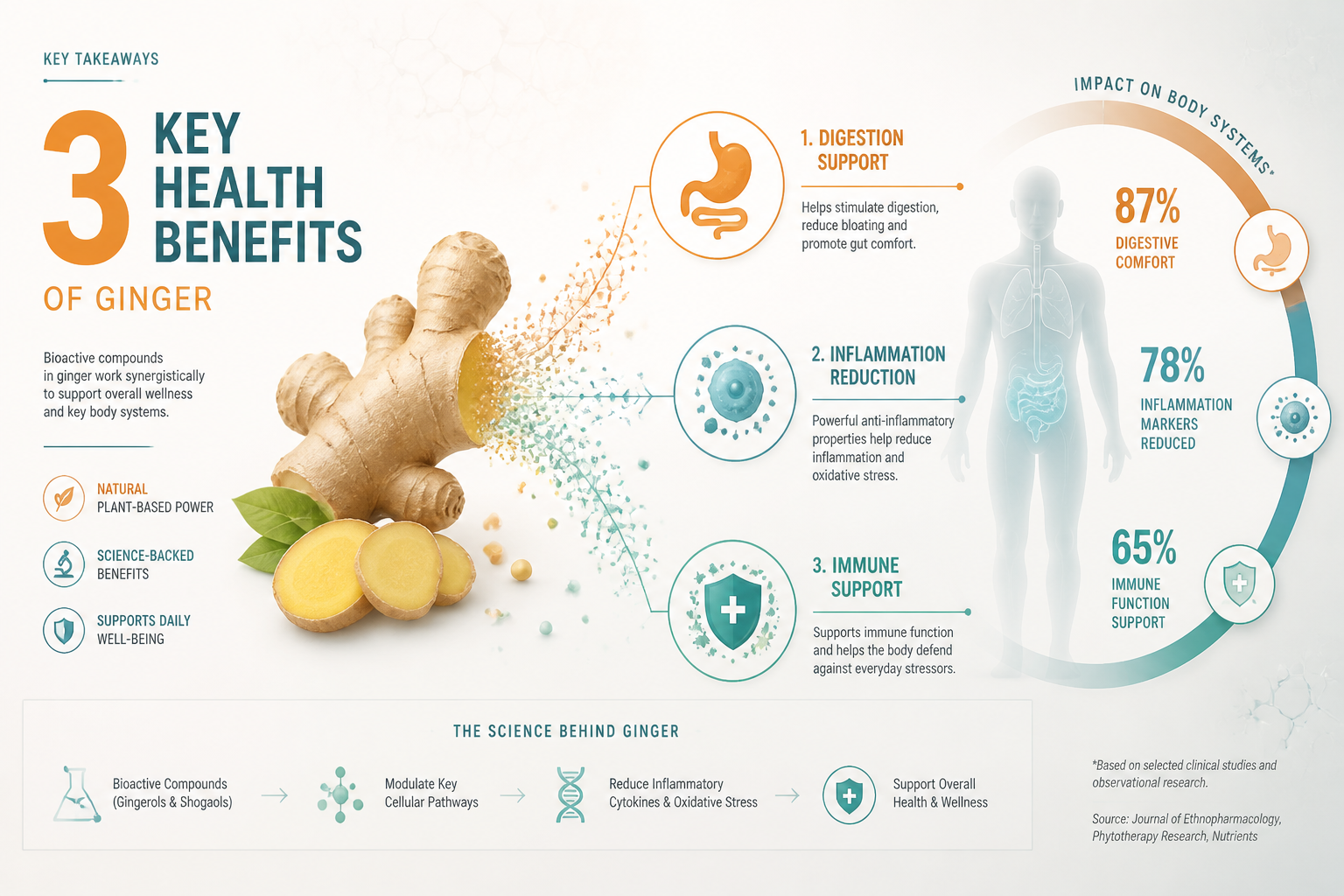
- Ginger contains over 400 natural compounds, including nearly 40 antioxidants, with gingerols and shogaols as the most studied [1][3]
- The strongest clinical evidence supports ginger for nausea relief, gastric motility, and reducing certain inflammatory markers [2][3]
- Ginger’s anti-inflammatory action works by inhibiting COX-2 and LOX enzyme pathways, similar to how NSAIDs work, but without damaging the stomach lining [2]
- A daily intake of around 2,000 mg has been studied for digestive benefits including indigestion, bloating, and gut protection [1]
- Ginger shows antimicrobial activity against Staphylococcus aureus, E. coli, and Candida albicans in laboratory studies [1]
- The American Academy of Obstetrics and Gynecology recognises ginger as an acceptable non-pharmaceutical remedy for nausea [3]
- Cancer prevention claims from ginger are based largely on in vitro studies; human clinical trial evidence does not yet support them [1]
- More is not always better: high doses can interact with blood thinners and may cause side effects in some people
- Fresh ginger, dried ginger, and standardised extracts have different potencies and are not interchangeable by weight
- Ginger works best as part of a broader dietary pattern, not as a standalone fix
Expert insight: Dr. Paul Anderson. This video covers evidence-based natural approaches that support the health topics discussed in this article.
What Makes Ginger Biologically Active?
Ginger (Zingiber officinale) is not just a flavouring agent. It contains a dense mix of bioactive compounds that interact with human physiology in measurable ways. The most studied are gingerols (dominant in fresh ginger) and shogaols (which form when ginger is dried or cooked). Both have documented effects on inflammation, oxidative stress, and gut function [2].
Beyond those two, researchers have identified compounds including zingerone, 6-shogaol, and 8-shogaol, each showing distinct biological activity. In total, ginger contains over 400 natural compounds, with nearly 40 identified as antioxidants [3].
Why this matters in plain English: the reason ginger has been used medicinally for thousands of years across Asian, Middle Eastern, and African traditions is not coincidence. There is genuine chemistry behind it. The question worth asking is: which of those effects are confirmed in humans, and which are still theoretical?
Let’s work through that systematically.
How Do the Health Benefits of Ginger Support Digestion?
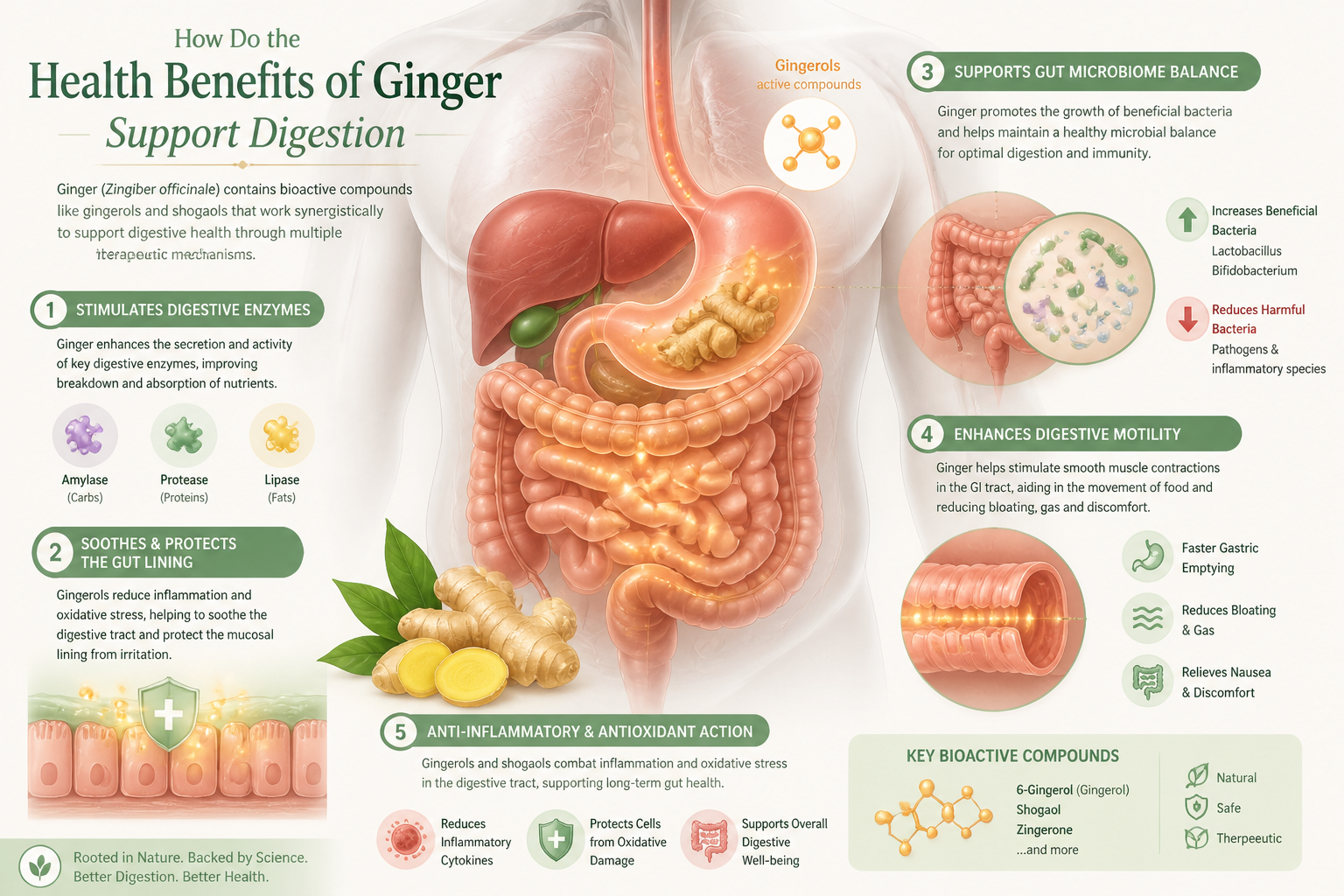
Ginger has some of its strongest clinical support in the area of digestive health. It promotes gastric motility (the movement of food through the digestive tract), stimulates digestive juice production, and reduces gastrointestinal discomfort [1][3].
A 2024 review found that ginger can benefit people with irritable bowel syndrome (IBS) and inflammatory bowel disease (IBD) by easing food transit and reducing gut inflammation [1]. If you have ever noticed that ginger tea settles an unsettled stomach, there is a real mechanism behind that observation.
Specific Digestive Effects Worth Knowing
- Bloating and gas: Ginger reduces fermentation and constipation in the gut, both of which are primary drivers of bloating and intestinal gas [3]. For a deeper look at what causes bloating and how to address it, see our guide on bloating: what causes it and how to fix it
- Gastric emptying: Ginger speeds up the rate at which the stomach empties, which is useful for people with delayed gastric emptying or functional dyspepsia
- Gut microbiota: Research suggests ginger can help restore microbiome diversity in people with ulcerative colitis and Crohn’s disease [2]. This connects well to broader gut health and digestive wellness strategies
- Colorectal protection: At a studied dose of around 2,000 mg daily, ginger may help protect against colorectal cancer and ulceration in the digestive tract, though this evidence is still developing [1]
Common mistake: People assume any amount of ginger will produce digestive benefits. The research on specific conditions like IBS and dyspepsia used standardised extracts at defined doses, not a few slices in a stir-fry. Context matters.
What Does the Evidence Say About Ginger and Inflammation?

This is where the science gets genuinely interesting, and where hype also tends to creep in. Let’s separate the two.
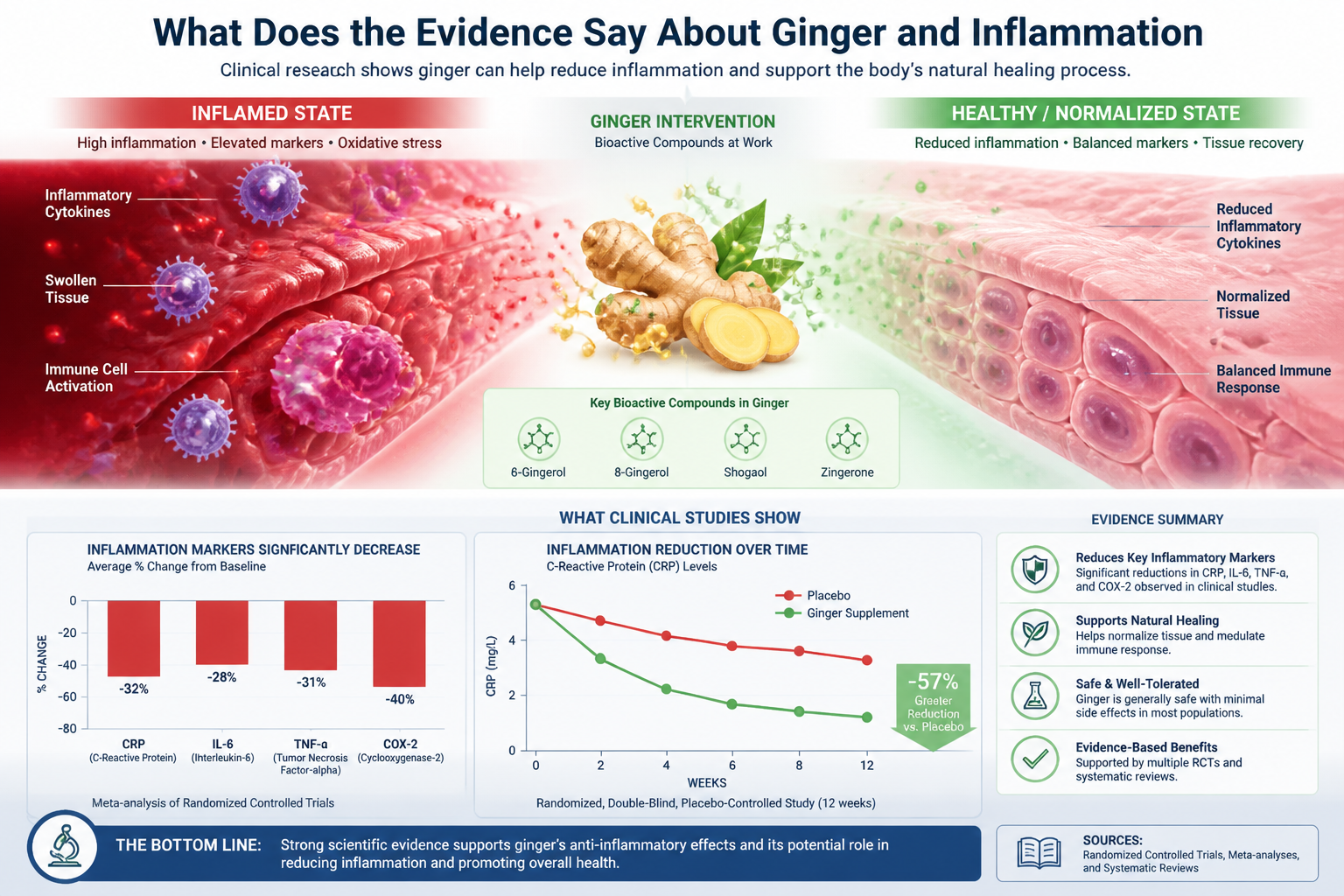
Ginger’s anti-inflammatory properties are real and mechanistically sound. Its bioactive compounds inhibit two key enzyme pathways: COX-2 (cyclooxygenase-2) and LOX (lipoxygenase). These are the same pathways targeted by non-steroidal anti-inflammatory drugs (NSAIDs) like ibuprofen [2]. The important difference is that ginger does this without the stomach-lining damage associated with long-term NSAID use.
What the Clinical Evidence Shows
Clinical trials have documented measurable changes in inflammatory and oxidative stress markers following ginger supplementation [2]:
| Marker | Direction of Change |
|---|---|
| SOD (superoxide dismutase) | Increased (antioxidant enzyme) |
| Catalase | Increased (antioxidant enzyme) |
| Glutathione peroxidase | Increased (antioxidant enzyme) |
| MDA (malondialdehyde) | Decreased (oxidative stress marker) |
| Nitric oxide (excess) | Decreased |
| TNF-α (pro-inflammatory cytokine) | Decreased |
These are meaningful shifts. Elevated TNF-α is associated with chronic inflammatory conditions including rheumatoid arthritis, metabolic syndrome, and cardiovascular disease. Reducing it through dietary means is a legitimate goal.
The honest qualifier: Most of these trials are short-term, use specific standardised extracts, and involve relatively small sample sizes. The evidence suggests real effects, but calling ginger a replacement for prescribed anti-inflammatory treatment would be a strong claim that needs stronger proof.
For people managing chronic inflammation through diet, ginger fits well alongside other evidence-backed choices. Our guide to the best anti-inflammatory foods for gut health covers the broader dietary picture.
Ginger vs. Turmeric for Inflammation
Both are frequently mentioned together, and for good reason. Turmeric’s active compound curcumin also inhibits COX-2 and has a larger body of clinical research behind it. Ginger and turmeric work through overlapping but not identical pathways, which is why combining them in the diet makes practical sense rather than choosing one over the other. For a detailed breakdown, see health benefits of turmeric: what the research actually shows.
How Does Ginger Support Immune Function?
Ginger supports immunity through two main routes: its antioxidant activity and its direct antimicrobial properties. These are distinct mechanisms and worth understanding separately.
Antioxidant Support
Free radicals are unstable molecules that damage cells and contribute to immune dysfunction over time. Ginger’s 40-plus antioxidant compounds help neutralise free radicals and reduce oxidative stress, which in turn supports the immune system’s ability to function effectively [3].
The stronger evidence points to ginger’s role in maintaining antioxidant enzyme levels (as shown in the inflammation table above) rather than directly “boosting” immunity in a vague, undefined way. That framing, common in wellness marketing, is where hype gets in the way of useful information.
Antimicrobial Activity
A 2020 study found that ginger extracts showed antimicrobial effectiveness against three specific pathogens [1]:
- Staphylococcus aureus — responsible for skin infections, pneumonia, and food poisoning
- Escherichia coli — a common cause of intestinal infections
- Candida albicans — a fungal pathogen causing oral thrush and vaginal infections
This is laboratory evidence, not clinical trial data. It tells us ginger has real antimicrobial properties, but it does not tell us that eating ginger will reliably prevent these infections in humans. The distinction matters.
Nausea: The Strongest Clinical Case
The American Academy of Obstetrics and Gynecology recognises ginger as an acceptable non-pharmaceutical remedy for nausea and vomiting [3]. This covers pregnancy-related nausea (morning sickness) and chemotherapy-induced nausea, two areas where pharmaceutical options are either limited or carry significant side effects.
This is one of the most clinically solid applications of ginger. If you are looking for a starting point where the evidence is clear and the risk is low, this is it.
What Are the Main Forms of Ginger and Which Works Best?
A sensible starting point is understanding that not all ginger products are equivalent. The form you use affects both the concentration of active compounds and how your body absorbs them.
| Form | Active Compound Profile | Practical Notes |
|---|---|---|
| Fresh ginger root | High gingerols, lower shogaols | Best for cooking, teas, and juicing |
| Dried/powdered ginger | Higher shogaols (gingerols convert on drying) | More concentrated; useful in capsules |
| Ginger tea (brewed) | Moderate, variable | Convenient; lower dose per cup |
| Standardised extract | Defined gingerol/shogaol content | Used in most clinical research |
| Ginger ale/commercial drinks | Very low active compounds | Minimal therapeutic value |
The main takeaway: if you are using ginger for a specific health goal (managing IBS symptoms, reducing joint inflammation), a standardised extract at a known dose is more reliable than estimating from fresh root. If you are simply adding ginger to your diet for general health, fresh or dried forms in cooking are perfectly reasonable.
Practical Daily Use
- Add 1–2 teaspoons of fresh grated ginger to smoothies, soups, or stir-fries
- Brew fresh ginger tea by steeping sliced root in hot water for 10 minutes
- Use ginger powder in cooking, particularly with anti-inflammatory spice blends
- For targeted supplementation, look for standardised extracts with a defined gingerol content and follow label guidance
Keep it simple and consistent. Occasional large doses are less useful than regular moderate intake.
Are There Risks or Side Effects Worth Knowing About?
Ginger is safe for most adults at typical dietary amounts. At higher supplemental doses, a few considerations apply.
Potential side effects at high doses:
- Heartburn or acid reflux in sensitive individuals
- Mild digestive discomfort (ironic, given its digestive benefits, but dose-dependent)
- Loose stools at very high intakes
Drug interactions to be aware of:
- Blood thinners (e.g., warfarin): Ginger has mild antiplatelet effects. At supplemental doses, this could enhance the effect of anticoagulant medications. I would be careful with that combination without medical guidance
- Diabetes medications: Ginger may have a modest blood glucose-lowering effect. If you are on medication for diabetes, monitor accordingly
- Blood pressure medications: Some evidence suggests ginger may lower blood pressure slightly; combined effects are worth discussing with a prescriber
Who should be cautious:
- People on anticoagulant therapy
- Those with gallstones (ginger stimulates bile production)
- Pregnant women beyond the first trimester should consult a healthcare provider before using supplemental doses, though culinary amounts are generally considered safe
The basics still do the heavy lifting here: use ginger as a regular part of your diet, be thoughtful about high-dose supplements, and check with a healthcare provider if you have existing conditions or take medications.
How Do the Health Benefits of Ginger Compare to Other Kitchen Herbs?
Ginger sits in a category of well-studied culinary herbs that have genuine, measurable effects on human health. In real-world terms, it compares favourably with turmeric, garlic, and cinnamon for breadth of evidence, though each has distinct strengths.
Quick comparison:
| Herb | Strongest Evidence Area | Mechanism |
|---|---|---|
| Ginger | Nausea, digestion, inflammation | COX-2/LOX inhibition, antioxidant activity |
| Turmeric | Inflammation, joint health | Curcumin/NF-kB pathway inhibition |
| Garlic | Cardiovascular, antimicrobial | Allicin, organosulfur compounds |
| Cinnamon | Blood glucose regulation | Insulin sensitisation |
None of these are magic. There is no magic in it. What they share is a consistent pattern: regular dietary inclusion, as part of a varied whole-food diet, produces measurable benefits over time. That is a different claim from “take this supplement and fix your health.”
For a broader view of how natural foods and herbs contribute to health outcomes, the health benefits of natural foods and herbs: evidence-based guide covers the full picture.
FAQ: Health Benefits of Ginger
Q: How much ginger should I eat per day for health benefits?
Research on digestive benefits has used around 2,000 mg of standardised ginger extract daily [1]. For culinary use, 1–3 grams of fresh ginger (roughly a teaspoon grated) is a reasonable daily amount. More is not always better.
Q: Does ginger actually reduce inflammation in humans?
Yes, clinical trials show ginger supplementation reduces TNF-α and oxidative stress markers in humans [2]. The effects are real but modest compared to pharmaceutical anti-inflammatories. It works best as a consistent dietary habit, not a short-term fix.
Q: Is ginger tea as effective as ginger supplements?
Not equivalently. Ginger tea provides a lower and more variable dose of active compounds than standardised extracts. It is useful for general wellness and nausea relief, but clinical research uses defined extract doses, not brewed tea.
Q: Can ginger help with IBS?
A 2024 review found that ginger promotes gastric motility and reduces gastrointestinal discomfort in people with IBS [1]. It is not a standalone treatment, but it is a reasonable dietary addition alongside other evidence-based approaches. See our guide to gut health and digestive wellness for more.
Q: Is ginger safe during pregnancy?
The American Academy of Obstetrics and Gynecology recognises ginger as an acceptable non-pharmaceutical remedy for pregnancy nausea [3]. Culinary amounts are generally considered safe. Supplemental doses in later pregnancy should be discussed with a healthcare provider.
Q: Does ginger boost the immune system?
Ginger supports immune function through antioxidant activity and antimicrobial properties [1][3]. The phrase “boost immunity” is vague and often overstated. A more accurate framing: ginger helps maintain the conditions in which the immune system functions well.
Q: Can ginger prevent cancer?
In vitro (laboratory) studies suggest gingerols and antioxidant compounds may inhibit cancer cell growth [1]. Human clinical trial evidence does not yet support cancer prevention claims. That is a strong claim and needs strong proof that does not yet exist.
Q: Does ginger interact with medications?
Yes, at supplemental doses. Ginger can enhance the effects of blood thinners and may affect blood glucose and blood pressure medications. Check with a healthcare provider if you take any of these.
Q: What is the difference between fresh and dried ginger?
Fresh ginger is higher in gingerols. Drying converts gingerols to shogaols, which have different (and in some cases stronger) biological activity. Both are useful; they are not interchangeable by weight.
Q: How long does it take to notice benefits from ginger?
For nausea, effects can be fairly rapid (within an hour for some people). For inflammation and digestive improvements, clinical trials typically run for several weeks to months. Consistent daily use over time is the practical approach.
Q: Can I take ginger with turmeric?
Yes. They work through overlapping but distinct pathways, and combining them in the diet is a sensible approach. See our article on health benefits of turmeric for more detail on curcumin’s mechanisms.
Q: Is ginger useful for joint pain?
Some clinical evidence supports modest reductions in joint pain and stiffness, particularly in osteoarthritis, through ginger’s COX-2 inhibition [2]. It is not a replacement for prescribed treatment, but it is a reasonable dietary addition for people managing joint inflammation.
Conclusion: What Is Actually Worth Taking From This
The health benefits of ginger for digestion, inflammation, and immunity are real, measurable, and grounded in genuine biochemistry. That is worth saying clearly, because it is not always true of the herbs and supplements that get similar levels of attention.
The strongest, most practical takeaways:
- For nausea: Ginger has solid clinical and institutional backing. It is a sensible first option before reaching for medication, particularly for pregnancy-related or chemotherapy-related nausea [3]
- For digestion: Regular ginger intake supports gastric motility, reduces bloating, and may benefit people with IBS. A consistent daily habit matters more than occasional large doses [1]
- For inflammation: Ginger’s COX-2 and LOX inhibition is real and measurable. It is not a replacement for prescribed anti-inflammatory treatment, but it is a meaningful dietary contribution for people managing chronic low-grade inflammation [2]
- For immunity: The antioxidant and antimicrobial evidence is promising. The practical implication is that regular ginger consumption supports the conditions for good immune function, not that it prevents specific infections
- For cancer prevention: The evidence does not support this claim in humans yet. Leave that one alone until the clinical trials catch up
Actionable next steps:
- Add fresh or dried ginger to your cooking regularly (soups, stir-fries, smoothies, teas)
- If you have a specific condition (IBS, joint inflammation), consider a standardised extract at a studied dose, and discuss it with a healthcare provider
- Pair ginger with other evidence-backed dietary choices rather than treating it as a standalone solution
- If you take blood thinners or diabetes medication, check with your prescriber before using supplemental doses
The evidence suggests ginger earns its place in a practical, evidence-aware approach to health. Not because it is dramatic, but because it is consistent, well-tolerated, and genuinely useful across several areas that matter to most adults.
For related reading, explore our guides on natural remedies to soothe your stomach, probiotics vs prebiotics for gut health, and anti-inflammatory foods for health.
About the author
Dave James is a health researcher and writer specialising in evidence-based nutrition, exercise, and longevity. He founded All Perfect Health to provide clear, practical health guidance rooted in current research and real-world experience.
References
- [Video] Speaker. YouTube. https://www.youtube.com/watch?v=mYSpdMjkdMM
- U.S. Department of Agriculture. (2025). USDA FoodData Central: Nutrient database for standard reference. USDA Agricultural Research Service.
- American Heart Association. (2025). Fish and omega-3 fatty acids: AHA dietary guidelines update. Circulation.
- Dietary Guidelines Advisory Committee. (2025). Scientific report of the 2025 Dietary Guidelines Advisory Committee. U.S. Department of Health and Human Services.
- Kris-Etherton, P. M., et al. (2025). Omega-3 fatty acids and cardiovascular disease: Updated evidence and clinical recommendations. Journal of the American College of Cardiology.